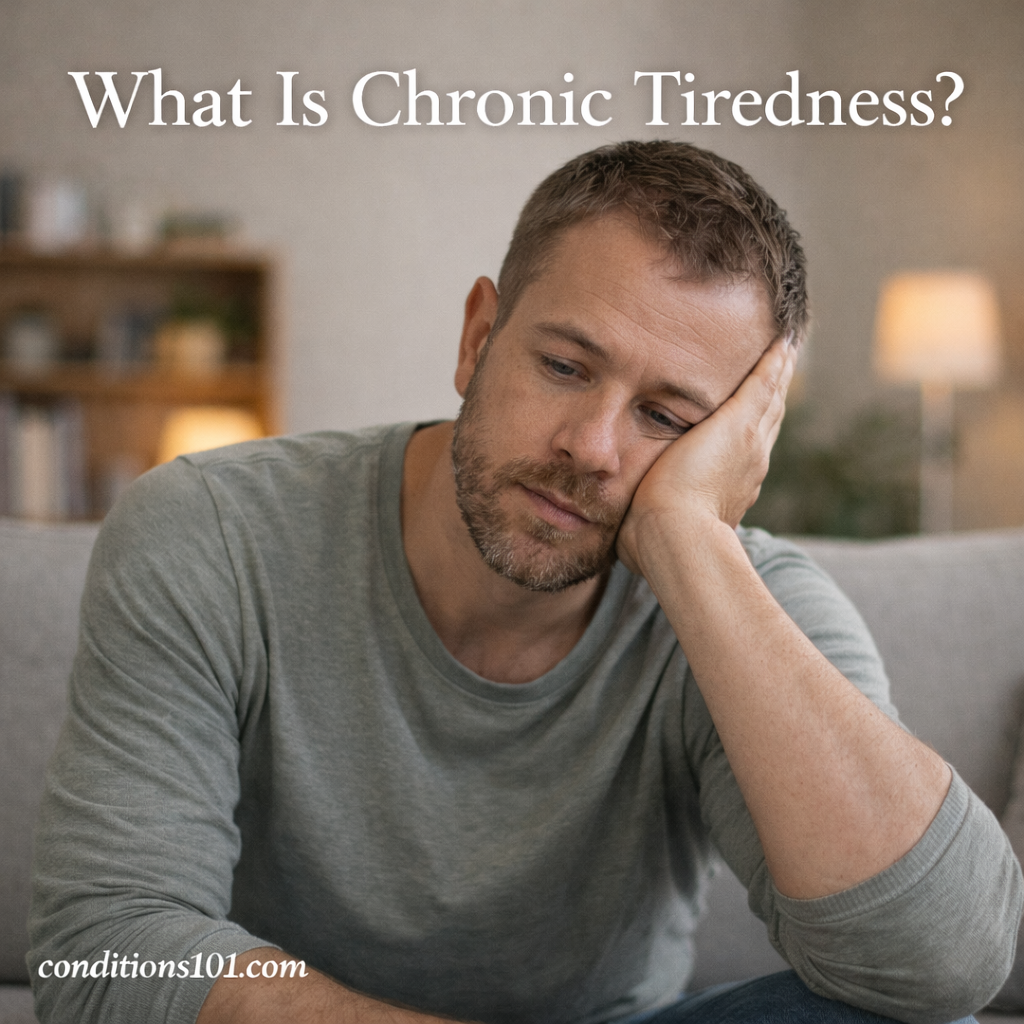
Chronic tiredness refers to a persistent feeling of physical or mental exhaustion that lasts for an extended period of time. Unlike everyday tiredness that improves with rest or sleep, chronic tiredness tends to linger and may affect daily functioning, focus, and overall energy levels.
This article explains chronic tiredness from an educational perspective—what the term means, how it differs from short-term fatigue, and what factors are commonly associated with ongoing tiredness—without providing medical advice, diagnosis, or treatment.
Understanding Chronic Tiredness
Chronic tiredness is a descriptive term rather than a medical diagnosis. It is often used to describe long-lasting fatigue that continues for weeks or months and does not fully resolve with typical rest.
People experiencing chronic tiredness may notice that:
- Energy levels remain consistently low
- Rest does not feel fully restorative
- Physical or mental effort feels more demanding than expected
The experience and intensity of chronic tiredness can vary widely between individuals.
Chronic Tiredness vs. Normal Tiredness
Feeling tired is a normal part of life, especially after physical activity, mental effort, or insufficient sleep. Chronic tiredness differs mainly in duration and recovery.
Normal Tiredness
- Develops after exertion or poor sleep
- Improves with rest or recovery
- Usually short-term
Chronic Tiredness
- Persists over long periods
- May fluctuate but does not fully resolve
- Can be present even after adequate rest
This distinction helps explain why chronic tiredness often feels more disruptive to daily routines.
How Chronic Tiredness Develops
Chronic tiredness does not usually result from a single factor. Instead, it often reflects a combination of influences that affect the body’s ability to restore energy.
Energy Balance Over Time
The body relies on regular cycles of activity and recovery. When demands consistently outweigh recovery, feelings of tiredness may accumulate.
Physical and Mental Load
Ongoing physical demands, mental effort, or emotional strain can contribute to sustained fatigue when they occur without sufficient recovery time.
Common Characteristics of Chronic Tiredness
People often describe chronic tiredness using similar patterns of experience, such as:
- Persistent low energy throughout the day
- Feeling drained even after sleep
- Reduced motivation or stamina
- Increased effort required for routine tasks
- Difficulty maintaining focus or alertness
These experiences may vary in intensity from day to day.
Factors Commonly Associated With Chronic Tiredness
Chronic tiredness is influenced by many everyday and environmental factors.
Sleep Patterns
- Irregular sleep schedules
- Non-restorative sleep
- Frequent sleep disruption
Sleep quality often plays a central role in long-term energy levels.
Daily Routines
- Long work hours
- Limited breaks or downtime
- Repetitive physical or mental tasks
Over time, these patterns can contribute to ongoing tiredness.
Stress and Mental Load
Mental and emotional stress can interact with physical energy systems, sometimes amplifying feelings of fatigue even without intense physical activity.
Lifestyle and Environmental Influences
External factors may also shape how chronic tiredness is experienced.
Physical Environment
- Noise, lighting, or temperature discomfort
- Demanding work or home environments
Activity Levels
- Extended periods of inactivity
- Sudden increases in physical effort
- Lack of consistent movement balance
Both overexertion and prolonged inactivity can influence perceived energy levels.
Chronic Tiredness and Daily Life
Chronic tiredness often becomes noticeable during ordinary activities, including:
- Getting through a workday
- Managing household responsibilities
- Social engagement
- Physical tasks that were once manageable
Because it develops gradually, people may adapt to these changes over time without immediately recognizing how persistent the tiredness has become.
Chronic Tiredness Across Different Life Stages
Long-term tiredness can appear at any age, though contributing factors may differ.
Younger Adults
- Academic or work demands
- Irregular schedules
- Social and lifestyle pressures
Middle Adulthood
- Balancing work, family, and responsibilities
- Ongoing mental and physical demands
Older Adults
- Changes in sleep patterns
- Altered daily rhythms
- Shifts in physical endurance
Individual experiences vary widely within each stage.
Common Terms Related to Chronic Tiredness
Understanding related terminology can help clarify discussions about fatigue.
- Fatigue: A general term for tiredness or lack of energy
- Energy levels: A subjective sense of physical or mental readiness
- Endurance: The ability to sustain activity over time
- Recovery: The process of restoring energy after effort
These terms are often used interchangeably but may carry different meanings depending on context.
Chronic Tiredness as a Descriptive Experience
Chronic tiredness is best understood as a long-lasting experience rather than a single condition. It reflects how the body and mind respond to sustained demands, limited recovery, or ongoing strain over time.
Recognizing chronic tiredness as a pattern can support awareness of personal energy limits and daily balance without focusing on diagnosis or treatment.
Key Takeaways
- Chronic tiredness refers to persistent, long-term fatigue
- It differs from normal tiredness mainly in duration and recovery
- Multiple factors often contribute to ongoing low energy
- Sleep, routines, stress, and environment all play roles
- Experiences vary widely between individuals
Understanding chronic tiredness provides a foundation for learning about energy balance and long-term fatigue patterns.