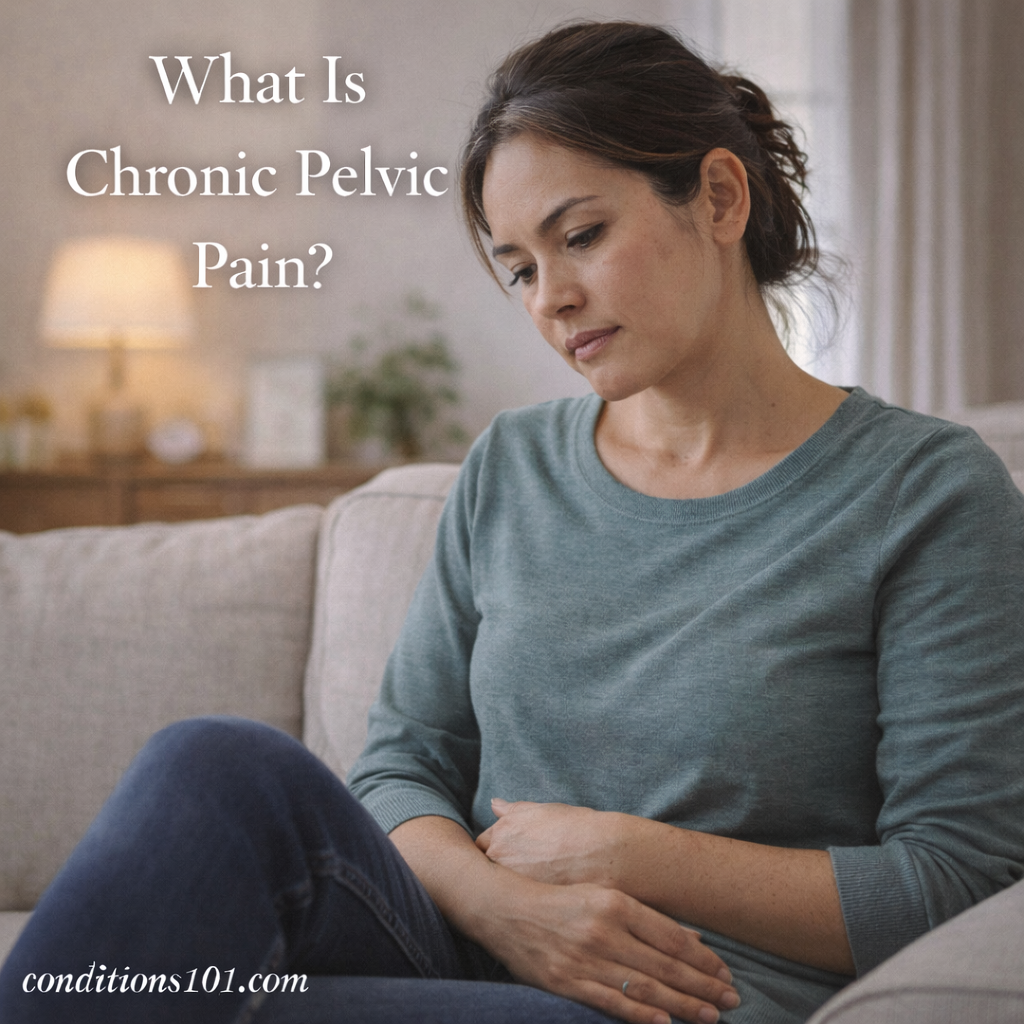
Chronic pelvic pain is a term used to describe ongoing or recurring discomfort felt in the lower abdomen or pelvic region that lasts for an extended period of time. The word chronic generally refers to pain or discomfort that persists for months rather than days or weeks.
Chronic pelvic pain is not a diagnosis by itself. It is a descriptive term commonly used in educational and clinical discussions to describe a pattern of long-lasting pelvic discomfort without identifying a single cause.
This article is for general informational purposes only and does not provide medical advice, diagnosis, or treatment.
Understanding Pelvic Pain in Simple Terms
The pelvic area includes structures such as muscles, joints, nerves, and organs located in the lower part of the torso. Because many systems overlap in this region, discomfort can feel complex or difficult to pinpoint.
In simple terms, chronic pelvic pain means:
- Pain or discomfort located in the pelvic or lower abdominal area
- Symptoms that last for a long period of time
- Sensations that may come and go or remain fairly constant
The experience of pelvic pain can vary widely from person to person.
What “Chronic” Means in This Context
In health education, chronic refers to duration, not severity.
Chronic pelvic pain typically:
- Persists for several months or longer
- May fluctuate in intensity over time
- Can be continuous or intermittent
This distinguishes it from acute pelvic pain, which appears suddenly and resolves more quickly.
What Chronic Pelvic Pain Can Feel Like

People describe chronic pelvic pain in many different ways. The sensation is not the same for everyone.
Common descriptions include:
- Dull or aching discomfort
- Sharp or stabbing sensations
- Pressure or heaviness in the pelvic area
- Burning or pulling sensations
- Pain that worsens with certain activities or positions
The discomfort may be felt in one specific spot or spread across the lower abdomen or pelvis.
Chronic Pelvic Pain vs. Temporary Pelvic Discomfort
Pelvic discomfort can occur occasionally for many reasons. Chronic pelvic pain refers to a longer-lasting pattern.
Temporary Pelvic Discomfort
- Short-term or situational
- Often linked to a specific activity or event
- Resolves on its own
Chronic Pelvic Pain
- Lasts for months or longer
- May not have a clear trigger
- Can recur regularly
Educational discussions focus on recognizing patterns rather than identifying causes.
Common Factors That May Contribute to Chronic Pelvic Pain
Chronic pelvic pain is often influenced by multiple overlapping factors. In many cases, no single cause explains the experience.
Musculoskeletal Factors
- Pelvic muscle tension or imbalance
- Posture or movement patterns
- Strain from repetitive activities
Nervous System Factors
- Nerve sensitivity in the pelvic region
- Altered pain signaling
- Ongoing nerve irritation
Organ-Related Influences
- Digestive or urinary discomfort patterns
- Reproductive system influences
- Sensitivity in nearby structures
Emotional and Stress-Related Factors
- Ongoing stress
- Emotional strain
- Heightened body awareness
These influences may interact, shaping how pain is experienced over time.
Situational vs. Ongoing Pelvic Pain Patterns
Situational Pelvic Pain
This type may occur temporarily due to:
- Physical strain
- Short-term irritation
- Brief health changes
Situational discomfort often improves once the trigger passes.
Ongoing Pelvic Pain Patterns
Ongoing pelvic pain may:
- Persist across many months
- Affect daily comfort or routines
- Feel unpredictable or fluctuating
This pattern is often what leads to the term chronic pelvic pain being used.
Common Misconceptions About Chronic Pelvic Pain
“Chronic pelvic pain always has one clear cause”
In many cases, pelvic pain involves multiple contributing factors rather than a single explanation.
“If tests are normal, the pain isn’t real”
Pain can exist even when standard tests do not show obvious findings.
“Chronic means it will never change”
Chronic refers to duration, not permanence. Pain patterns can shift over time.
Why Understanding Chronic Pelvic Pain Matters
Learning about chronic pelvic pain can help:
- Normalize a complex and often misunderstood experience
- Reduce stigma around pelvic pain discussions
- Encourage awareness of body patterns and triggers
- Support informed, respectful conversations
Education emphasizes understanding and awareness rather than diagnosis or treatment.
Chronic Pelvic Pain as a Pattern, Not a Label
Chronic pelvic pain is best understood as a pattern of ongoing pelvic discomfort rather than a single condition. It reflects how the body responds to physical, neurological, and emotional influences over time.
Because these influences can change, pelvic pain experiences may also change.
Key Takeaways
- Chronic pelvic pain refers to long-lasting pelvic discomfort
- It is a descriptive term, not a diagnosis
- Sensations and patterns vary widely between individuals
- Multiple factors may contribute to ongoing pelvic pain
- Understanding focuses on patterns rather than causes
Learning about chronic pelvic pain provides a foundation for awareness and informed discussion in a non-medical, educational context.