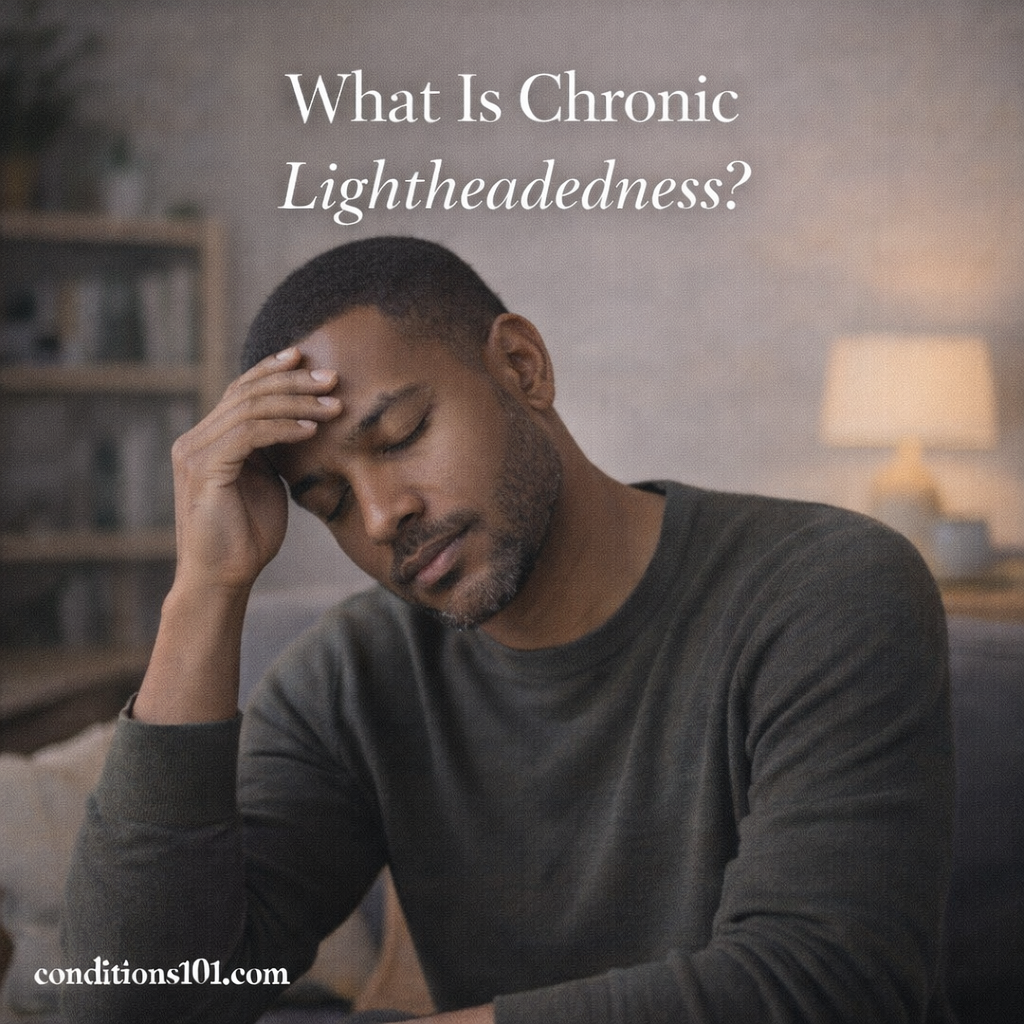
Chronic lightheadedness refers to a persistent or frequently recurring sensation of feeling faint, unsteady, or mentally “light” that lasts over an extended period of time. Unlike brief or occasional lightheadedness that may happen after standing up quickly or skipping a meal, chronic lightheadedness tends to linger or return regularly.
This experience is often described as feeling off-balance, foggy, or as if one might faint—without actually losing consciousness.
How Lightheadedness Feels
People describe lightheadedness in different ways, but common sensations include:
- Feeling faint or woozy
- A floating or airy sensation in the head
- Mild unsteadiness or imbalance
- Difficulty focusing or feeling mentally clear
- A sense of weakness without true muscle loss
Lightheadedness is a perceptual sensation, meaning how it feels can vary in intensity and clarity from person to person.
What Makes Lightheadedness “Chronic”
Lightheadedness is generally considered chronic when it:
- Persists for weeks or months, or
- Occurs frequently over time, even if it comes and goes
The term “chronic” refers to duration and pattern, not necessarily severity. Chronic lightheadedness may be mild but ongoing, or it may fluctuate between better and worse periods.
Chronic Lightheadedness vs Dizziness or Vertigo
These terms are often used interchangeably, but they describe different experiences.
Lightheadedness
- Feeling faint, foggy, or unsteady
- No spinning sensation
- Often described as “about to pass out”
Dizziness
- A broad term that may include lightheadedness or imbalance
- Can mean different things to different people
Vertigo
- A sensation that the room or body is spinning
- Usually involves movement perception
Understanding these differences helps clarify what someone is actually experiencing.
Common Patterns of Chronic Lightheadedness
Chronic lightheadedness may follow certain patterns, such as:
- Feeling worse when standing or walking
- Symptoms that increase during mental or physical fatigue
- Fluctuations throughout the day
- Periods of improvement followed by recurrence
Not everyone experiences the same pattern, and symptoms may change over time.
Possible Contributing Factors
Chronic lightheadedness can be associated with a wide range of influences, including:
- Changes in circulation or blood flow
- Nervous system signaling differences
- Stress or prolonged mental strain
- Dehydration or nutritional factors
- Sensory processing or balance-related changes
In many cases, no single factor explains the experience entirely.
Why Chronic Lightheadedness Can Be Disruptive

Even when not severe, ongoing lightheadedness can affect daily life by:
- Making concentration more difficult
- Reducing confidence during movement or standing
- Increasing mental fatigue
- Creating uncertainty about physical stability
The persistent nature of the sensation is often what makes it challenging, rather than intensity alone.
Chronic Lightheadedness Is a Description, Not a Diagnosis
The term “chronic lightheadedness” describes what someone feels, not a specific medical condition. It is commonly used in educational or descriptive contexts to explain a long-term experience of lightheaded sensations.
Different people may experience chronic lightheadedness for different reasons, and experiences can vary widely.
Key Takeaways
- Chronic lightheadedness is a long-lasting or frequently recurring sensation of feeling faint or unsteady.
- It differs from vertigo and other forms of dizziness.
- The term “chronic” refers to duration, not severity.
- Symptoms may fluctuate and vary between individuals.
- Chronic lightheadedness describes an experience rather than a single diagnosis.