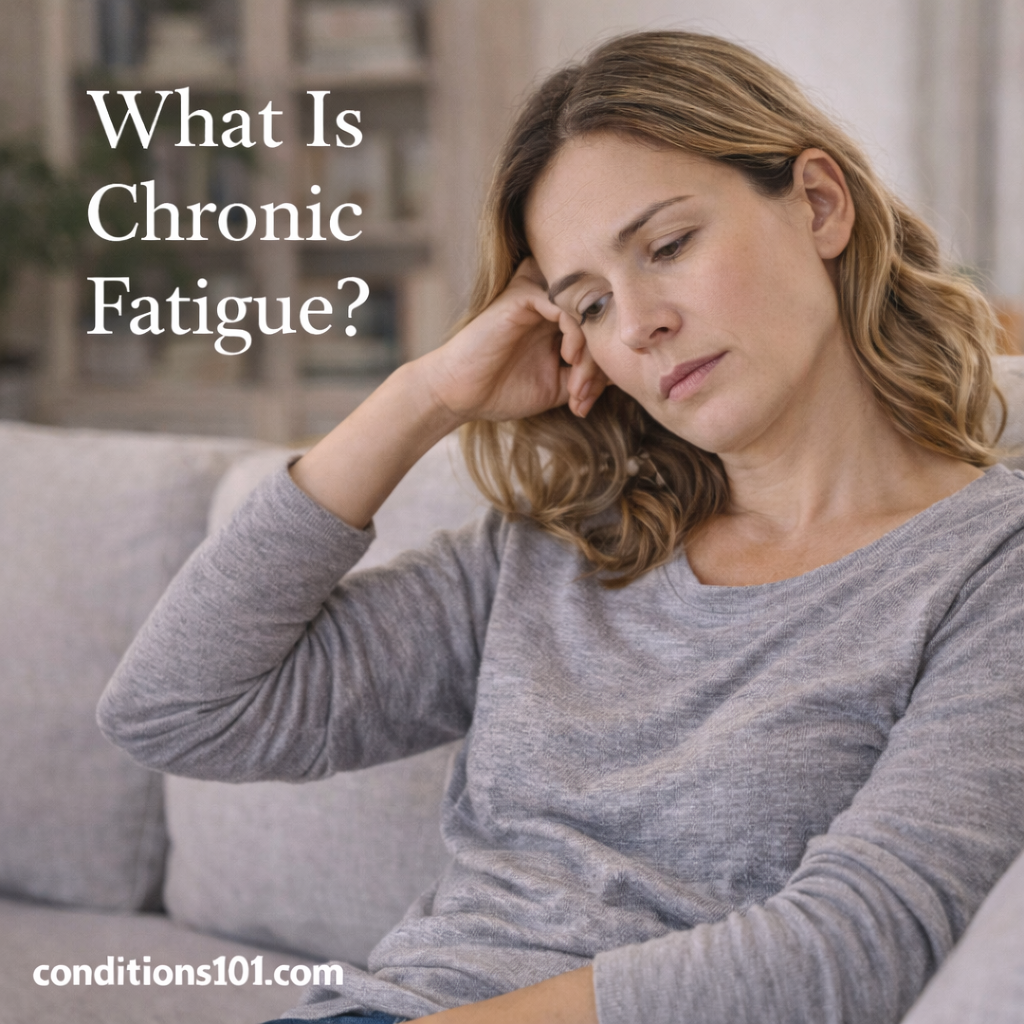
Chronic fatigue refers to persistent, ongoing tiredness or lack of energy that does not fully improve with rest. Unlike normal fatigue that follows physical activity, stress, or poor sleep, chronic fatigue tends to last for extended periods and can interfere with daily activities, concentration, and overall quality of life.
This article provides a clear, educational explanation of chronic fatigue for general informational purposes. It does not offer medical advice, diagnosis, or treatment.
Understanding Fatigue
Fatigue is a normal body response to physical exertion, mental effort, illness, or insufficient rest. It usually resolves once the underlying cause is addressed, such as sleeping, eating, or reducing stress.
Chronic fatigue differs because the feeling of exhaustion persists over time and may feel disproportionate to daily activity levels.
What Does Chronic Fatigue Feel Like?
People experience chronic fatigue in different ways, but common descriptions include:
- Ongoing physical or mental exhaustion
- Feeling drained even after rest or sleep
- Difficulty starting or completing daily tasks
- Reduced motivation or stamina
- Trouble concentrating or thinking clearly
- A sense of heaviness or low energy throughout the day
The intensity of fatigue may vary from day to day.
How Chronic Fatigue Differs From Normal Tiredness
Everyone feels tired occasionally, but chronic fatigue has distinct characteristics.
- Normal tiredness improves with rest or sleep
- Chronic fatigue persists despite adequate rest
- Normal fatigue is often linked to a clear cause
- Chronic fatigue may not have an obvious trigger
- Chronic fatigue can affect both physical and mental functioning
These differences help explain why chronic fatigue can feel more disruptive than everyday tiredness.
Common Factors Associated With Chronic Fatigue
Chronic fatigue is not a single condition and may be influenced by multiple overlapping factors.
Lifestyle and routine factors
- Ongoing stress
- Irregular sleep patterns
- Overexertion without adequate recovery
- Long-term mental or emotional strain
Physical and biological factors
- Changes in sleep quality
- Immune system activity
- Hormonal fluctuations
- Recovery following illness or infection
Environmental and social factors
- Work demands
- Limited downtime
- Disrupted daily routines
- Prolonged periods of high responsibility
Not everyone with these factors experiences chronic fatigue, and experiences vary widely.
Chronic Fatigue vs. Sleep Deprivation
Chronic fatigue is sometimes confused with simple lack of sleep, but they are not the same.
- Sleep deprivation improves when sleep is restored
- Chronic fatigue may persist even with sufficient sleep
- Chronic fatigue often affects energy throughout the entire day
- Sleep deprivation is usually linked to clear sleep loss
Understanding this distinction helps clarify why rest alone may not fully resolve chronic fatigue.
How Chronic Fatigue Can Affect Daily Life
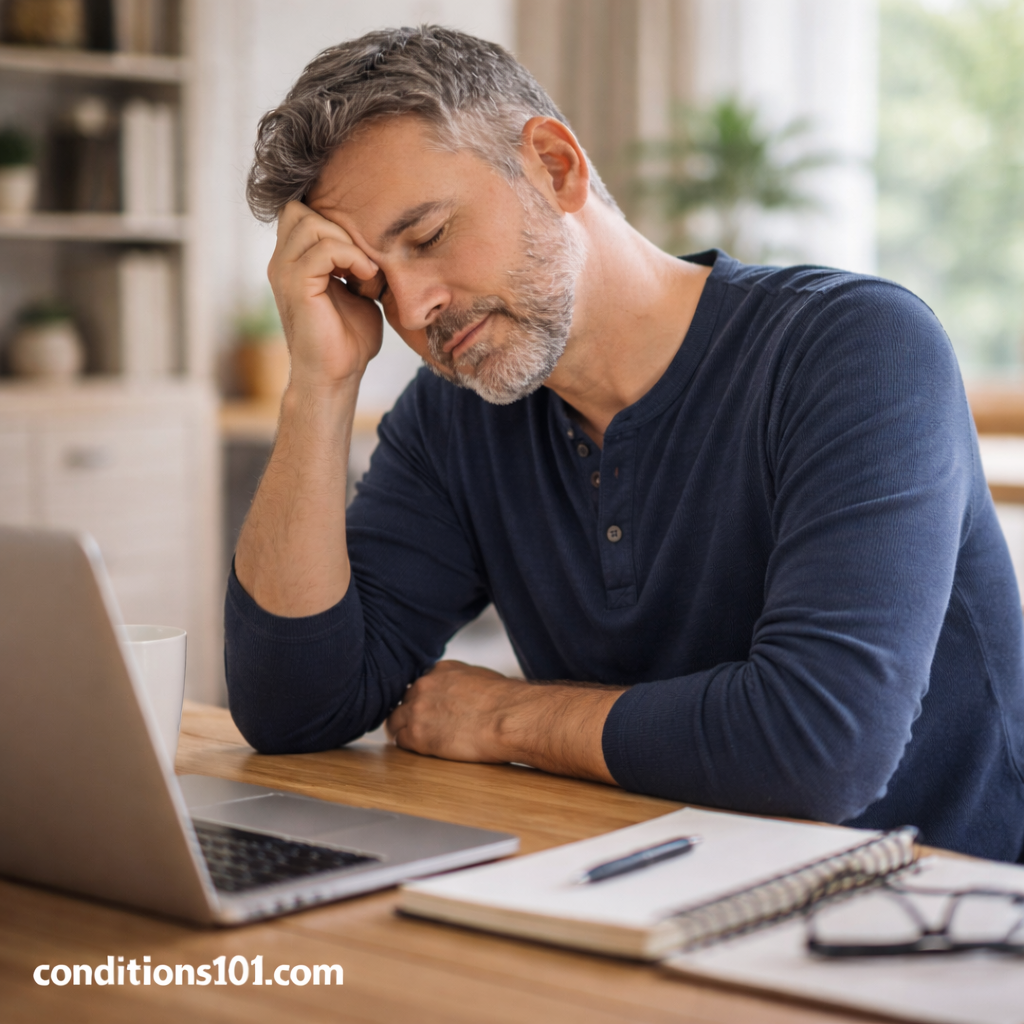
Ongoing fatigue can influence many aspects of daily living.
Some people report:
- Difficulty maintaining focus at work or school
- Reduced physical endurance
- Changes in social participation
- Increased need for rest breaks
- Feeling overwhelmed by routine tasks
The impact of chronic fatigue may fluctuate, with periods of improvement followed by times of increased exhaustion.
Chronic Fatigue and Sleep Quality
While chronic fatigue is not always caused by poor sleep, sleep quality often plays a role.
Common sleep-related patterns include:
- Feeling unrefreshed after sleep
- Needing longer sleep durations
- Difficulty maintaining consistent sleep schedules
- Increased daytime sleepiness
These patterns can contribute to the ongoing sense of fatigue.
Common Misconceptions About Chronic Fatigue
Several misunderstandings surround chronic fatigue.
- “Chronic fatigue is just laziness.”
Chronic fatigue is a real experience and not a lack of effort. - “More sleep always fixes fatigue.”
Rest alone may not fully resolve chronic fatigue. - “Only certain people experience chronic fatigue.”
Chronic fatigue can affect people of all ages and lifestyles.
Clearing up these misconceptions supports better awareness and understanding.
Chronic Fatigue as a Long-Term Health Concept
Chronic fatigue is best understood as a long-term experience involving energy regulation, sleep, and overall physical and mental demands. It may change over time and can be influenced by lifestyle, environment, and individual biology.
Learning about chronic fatigue helps build awareness of how sustained exhaustion differs from everyday tiredness.
Key Takeaways
- Chronic fatigue involves persistent exhaustion that does not fully improve with rest
- It differs from normal tiredness or short-term fatigue
- Multiple lifestyle, biological, and environmental factors may contribute
- Chronic fatigue can affect focus, energy, and daily routines
- Experiences of chronic fatigue vary widely between individuals