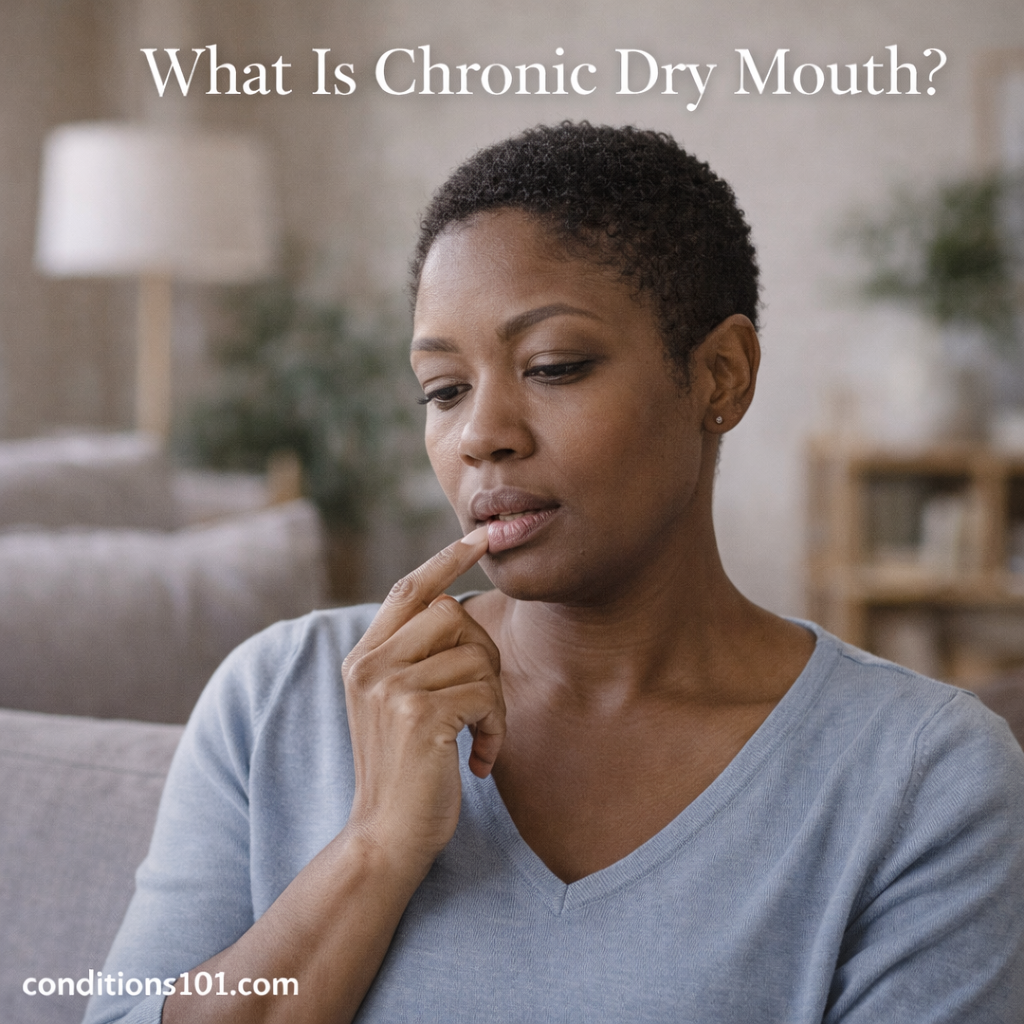
Chronic dry mouth refers to a persistent sensation of dryness in the mouth that lasts over time rather than occurring occasionally. It is a descriptive term used to explain an ongoing lack of moisture in the mouth, which may affect comfort, speech, eating, and overall oral awareness.
Dry mouth can vary in intensity and may be noticeable throughout the day or during specific situations. The term itself does not indicate a cause or diagnosis—it simply describes a recurring experience.
How Dry Mouth Occurs
Moisture in the mouth is maintained primarily by saliva. Saliva plays an important role in keeping the mouth comfortable and functioning normally.
Dry mouth can occur when:
- Saliva production is reduced
- Saliva flow is altered
- Moisture evaporates faster than it is replaced
When this imbalance persists, the sensation may be described as chronic rather than temporary.
Common Characteristics of Chronic Dry Mouth
People experiencing chronic dry mouth may describe a range of sensations.
Commonly reported features include:
- A sticky or dry feeling in the mouth
- Frequent thirst
- Difficulty swallowing dry foods
- Changes in taste perception
- A dry or rough tongue
These experiences can fluctuate and may be more noticeable at certain times of day.
Chronic Dry Mouth vs. Occasional Dry Mouth
Understanding the distinction helps clarify the term.
Occasional Dry Mouth
- Temporary
- Often linked to short-term factors such as dehydration or mouth breathing
- Resolves on its own
Chronic Dry Mouth
- Persistent or recurring
- Lasts weeks or longer
- May affect daily comfort or routines
The key difference lies in duration and consistency.
Areas Commonly Affected
Chronic dry mouth may affect multiple areas within the oral cavity, including:
- Tongue
- Lips
- Gums
- Throat
- Inner cheeks
The sensation may feel generalized or more noticeable in certain areas.
Factors That May Influence Chronic Dry Mouth
Several non-specific factors can influence how dry mouth is experienced.
Hydration and Environment
Dry air, limited fluid intake, or prolonged speaking can affect oral moisture.
Daily Habits
Mouth breathing, caffeine intake, and extended talking may contribute to dryness sensations.
Sleep Patterns
Dry mouth is often more noticeable upon waking, especially if airflow through the mouth occurs during sleep.
Stress and Awareness
Stress and increased body awareness can make dryness sensations more noticeable.
Chronic Dry Mouth in Everyday Life

People with chronic dry mouth may notice impacts on daily activities such as:
- Eating and chewing
- Speaking for long periods
- Wearing oral appliances
- Maintaining oral comfort throughout the day
The experience can range from mildly annoying to more disruptive, depending on severity.
Common Misunderstandings About Chronic Dry Mouth
Clarifying misconceptions can help frame the topic accurately.
- Chronic dry mouth is a symptom description, not a diagnosis
- Occasional dryness does not automatically mean the condition is chronic
- Dry mouth can vary from day to day
- The sensation does not always indicate an underlying illness
Understanding these points helps keep the concept neutral and informational.
Why the Term “Chronic Dry Mouth” Is Used
The term is commonly used to:
- Describe ongoing oral dryness clearly
- Differentiate long-term dryness from temporary experiences
- Support consistent communication in educational and health-related discussions
Using descriptive language allows for clearer understanding without assigning cause.
Key Takeaways
- Chronic dry mouth refers to ongoing or recurring oral dryness
- It describes a sensation, not a diagnosis
- Symptoms may include dryness, thirst, or difficulty swallowing
- Experiences vary in severity and timing
- Many everyday factors can influence how dryness is felt