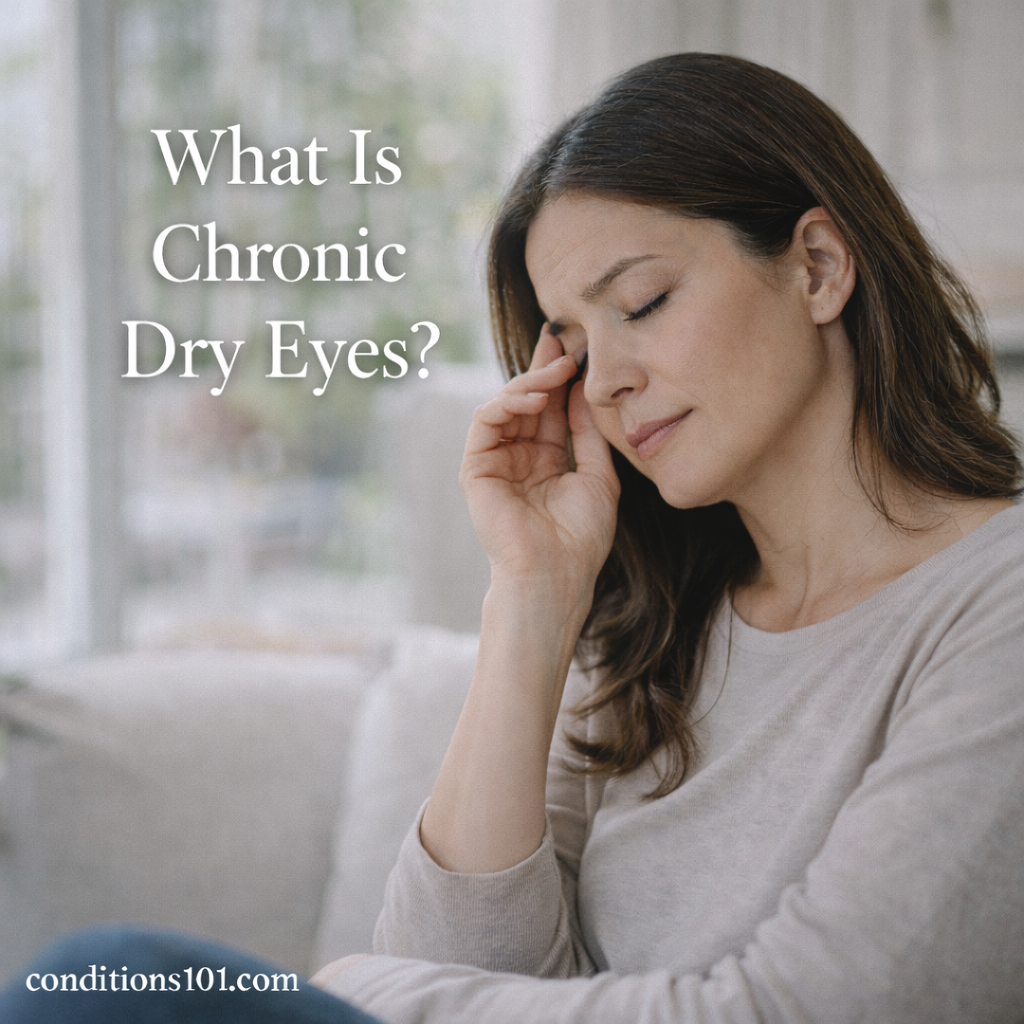
Chronic dry eyes refers to a long-lasting condition in which the eyes do not feel adequately lubricated or comfortable on a regular basis. Instead of being an occasional sensation, dryness may be noticed consistently or repeatedly over time.
Chronic dry eyes is commonly discussed in eye health education and awareness resources. It describes a pattern of ongoing eye discomfort rather than serving as a diagnosis or indicating a specific underlying disease.
Understanding Eye Moisture and Comfort
Healthy eyes rely on a stable tear film to stay comfortable and clear. Tears help:
- Keep the surface of the eye smooth
- Support clear vision
- Wash away dust and particles
- Maintain overall eye comfort
When the tear film is disrupted or insufficient, the eyes may feel dry, irritated, or tired.
What Makes Dry Eyes “Chronic”
Dry eyes may be described as chronic when symptoms persist over a long period rather than appearing only occasionally.
Chronic dry eyes may involve:
- Ongoing or frequent dryness
- Symptoms that return regularly
- Discomfort that lasts weeks or months
- Variability in intensity from day to day
The term “chronic” refers to duration, not severity.
Common Sensations Associated With Chronic Dry Eyes
People describe chronic dry eyes in different ways depending on their experience.
Commonly reported sensations include:
- Dryness or scratchiness
- Burning or stinging
- A gritty or sandy feeling
- Eye fatigue
- Sensitivity to wind or air movement
- Occasional blurred vision that improves with blinking
Not everyone experiences the same combination of sensations.
Situations Where Chronic Dry Eyes Are Often Noticed

Symptoms may become more noticeable in certain everyday environments.
These may include:
- Extended screen use
- Dry or windy weather
- Air-conditioned or heated spaces
- Reading or focused visual tasks
- Long periods without blinking
Environmental conditions can influence how noticeable dryness feels.
Chronic Dry Eyes vs. Temporary Eye Dryness
Dry eyes can be temporary or ongoing.
- Temporary dryness may occur after short-term strain or exposure
- Chronic dry eyes involve recurring or persistent symptoms
This distinction helps describe how often symptoms occur, not why they occur.
Why Chronic Dry Eyes Are Considered Lesser-Known
While occasional eye dryness is common, chronic dry eyes are less widely understood. Symptoms may be subtle, fluctuate over time, or be mistaken for general eye fatigue.
Because signs are not always visible, the condition may go unrecognized or under-discussed in everyday conversations about eye comfort.
Chronic Dry Eyes in Daily Life
Ongoing eye dryness may affect daily routines in small but noticeable ways.
Possible impacts include:
- Increased eye awareness
- More frequent blinking
- Taking breaks during visual tasks
- Changes in comfort during reading or screen time
These adjustments are often made informally as people adapt to symptoms.
Chronic Dry Eyes Are Not a Diagnosis
Chronic dry eyes is a descriptive term used to explain long-term eye dryness. It does not identify a specific cause or medical condition on its own.
Educational discussions focus on awareness and understanding rather than diagnosis or treatment.
Why Understanding Chronic Dry Eyes Matters
Learning about chronic dry eyes helps normalize persistent eye discomfort and provides language for describing ongoing symptoms.
Educational awareness supports:
- Clearer communication about eye sensations
- Better understanding of environmental influences
- More realistic expectations about eye comfort
- Recognition of long-term patterns
Key Takeaways
- Chronic dry eyes describe long-lasting or recurring eye dryness
- The condition focuses on duration rather than severity
- Common sensations include dryness, irritation, and eye fatigue
- Symptoms may be more noticeable in dry or visually demanding environments
- Chronic dry eyes differ from temporary dryness
- It is a descriptive concept, not a diagnosis