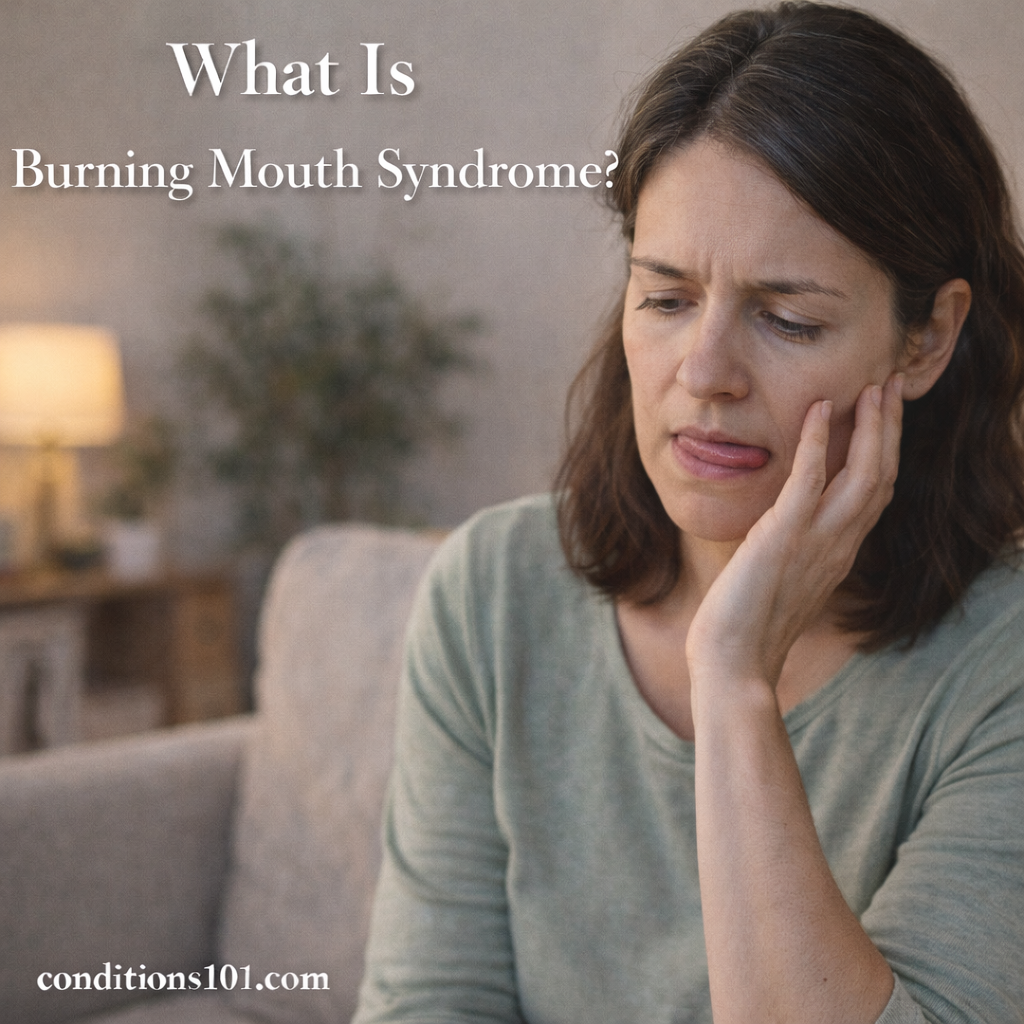
Burning Mouth Syndrome is a condition characterized by a persistent burning, scalding, or tingling sensation in the mouth without an obvious visible cause. The discomfort most commonly affects the tongue, lips, gums, or roof of the mouth, but it can involve multiple areas at the same time. The sensation may be mild or intense and can occur daily for long periods.
This article provides a clear, educational overview of what Burning Mouth Syndrome is. It is intended for general information only and does not offer medical advice, diagnosis, or treatment.
Understanding Burning Mouth Syndrome
Burning Mouth Syndrome involves ongoing oral discomfort that occurs even though the mouth often appears normal during routine examination. The sensation is typically described as burning, hot, prickling, or numb.
The condition can develop suddenly or gradually and may remain consistent or fluctuate throughout the day. For some people, symptoms worsen as the day goes on, while others experience a more constant sensation.
What Does Burning Mouth Syndrome Feel Like?

People with Burning Mouth Syndrome may experience a range of sensations that affect daily comfort.
Common descriptions include:
- A burning or scalding feeling on the tongue
- Tingling or numbness in the mouth
- A hot or metallic taste
- Dryness or a feeling of reduced saliva
- Changes in taste perception
Symptoms may affect one area or several parts of the mouth at once.
Areas Commonly Affected
Burning Mouth Syndrome can involve different oral regions.
Frequently affected areas include:
- Tongue (especially the tip or sides)
- Lips
- Gums
- Roof of the mouth
- Inner cheeks
Not everyone experiences symptoms in the same locations.
Possible Factors Associated With Burning Mouth Syndrome
Burning Mouth Syndrome does not have a single known cause. It is often considered a complex condition with multiple contributing factors.
Nerve-Related Changes
Some research suggests that altered nerve function related to taste or pain perception may play a role in the burning sensation.
Hormonal Changes
Burning Mouth Syndrome is more commonly reported during midlife and later adulthood, and hormonal shifts may influence symptom development in some individuals.
Dry Mouth Sensations
Reduced saliva flow or altered saliva composition may contribute to oral discomfort, even if dryness is not visibly obvious.
Sensory Processing Changes
The way the brain interprets sensations from the mouth may be altered, leading to persistent discomfort without visible tissue changes.
Burning Mouth Syndrome vs. Temporary Mouth Irritation
Burning Mouth Syndrome differs from short-term mouth irritation caused by factors such as hot foods, spicy ingredients, or dental procedures.
Key differences include:
- Burning Mouth Syndrome is ongoing or recurrent
- Symptoms often occur without visible irritation
- Discomfort persists even without clear triggers
Temporary irritation typically improves once the source is removed, while Burning Mouth Syndrome may continue.
Who Commonly Experiences Burning Mouth Syndrome?
Burning Mouth Syndrome can affect adults of any age, but it is more frequently reported in:
- Middle-aged and older adults
- Individuals experiencing hormonal changes
- People with ongoing oral discomfort without visible findings
It is not contagious and is not related to oral hygiene practices.
How Burning Mouth Syndrome Can Affect Daily Life
Persistent oral discomfort may influence daily routines and quality of life.
Potential effects include:
- Difficulty enjoying food or beverages
- Discomfort during speaking
- Increased awareness of mouth sensations
- Frustration due to unexplained symptoms
The level of impact varies depending on symptom intensity and frequency.
Can Burning Mouth Syndrome Change Over Time?
Yes. Symptoms of Burning Mouth Syndrome may remain stable, fluctuate, or gradually change over time. Some people experience periods of improvement followed by symptom return, while others notice more consistent patterns.
Key Takeaways About Burning Mouth Syndrome
- Burning Mouth Syndrome involves persistent burning or tingling sensations in the mouth
- The mouth often appears normal despite ongoing discomfort
- It commonly affects the tongue, lips, or gums
- The condition is descriptive rather than visibly defined
- Experiences and severity vary widely between individuals