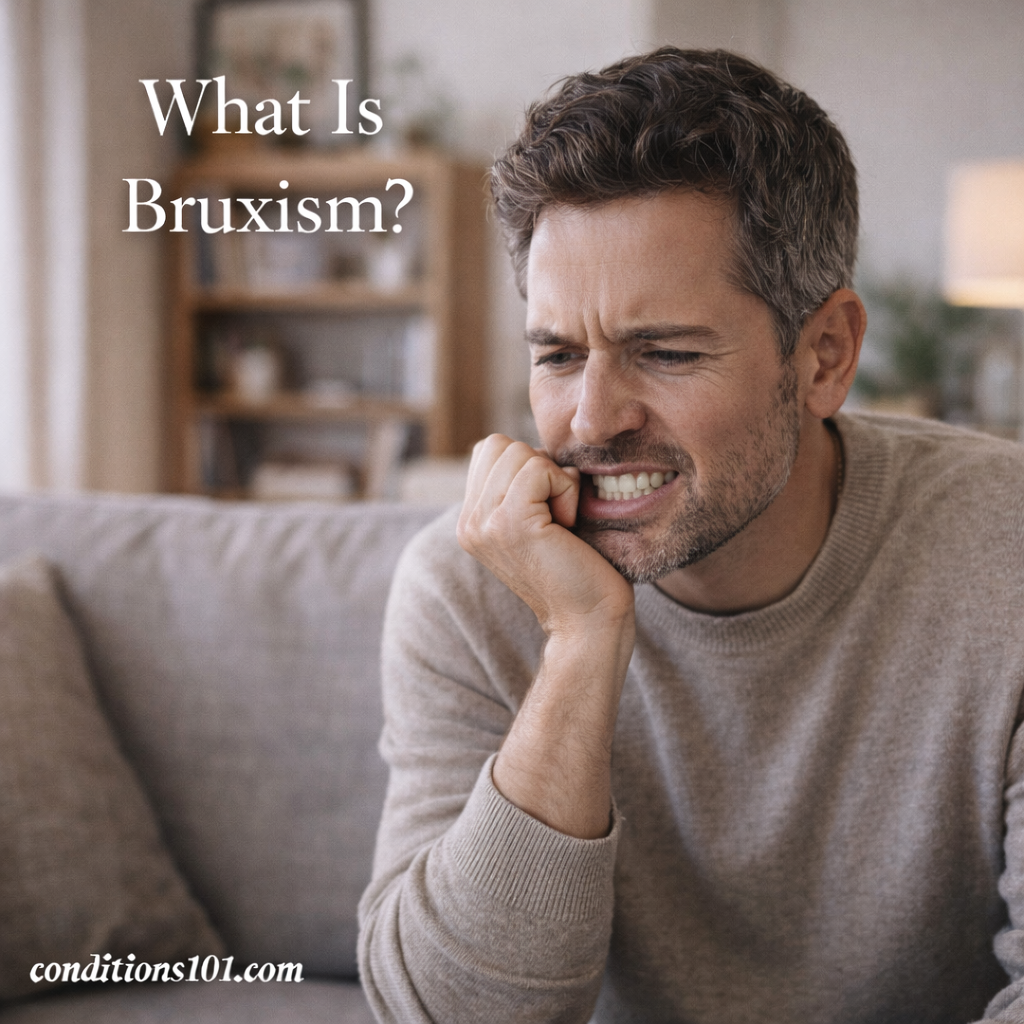
Bruxism is a term used to describe repetitive clenching, grinding, or gnashing of the teeth. It can occur during the day while a person is awake or at night during sleep. Many people are unaware they grind or clench their teeth, especially when it happens during sleep.
In educational and health information contexts, bruxism is discussed as a behavioral and muscular activity pattern, not a diagnosis. This article explains bruxism clearly and neutrally, without providing medical advice, diagnosis, or treatment.
Understanding Bruxism in Simple Terms
Bruxism involves excessive jaw muscle activity that goes beyond normal chewing, speaking, or swallowing.
It may include:
- Tight clenching of the jaw
- Grinding teeth back and forth
- Holding the jaw in a tense position
- Rhythmic jaw movements during sleep
Bruxism can occur occasionally or more frequently, and intensity can vary from mild to more noticeable.
Types of Bruxism
Bruxism is commonly categorized based on when it occurs.
Awake Bruxism
- Happens during waking hours
- Often linked to concentration, stress, or habit
- May involve clenching rather than grinding
Sleep Bruxism
- Occurs during sleep
- Often noticed by a sleep partner
- May involve audible grinding sounds
Both forms involve jaw muscle activity, but they are discussed differently in educational resources.
Common Signs Associated With Bruxism
People may become aware of bruxism through indirect signs rather than the activity itself.
Commonly discussed signs include:
- Jaw tightness or fatigue
- Tooth wear or flattening over time
- Facial muscle soreness
- Head or facial discomfort
- Stiffness around the jaw, especially after waking
These signs vary and may not be present in every individual.
How Bruxism Is Discussed in Health Education
In educational materials, bruxism is often explored at the intersection of:
- Jaw and facial muscle function
- Sleep patterns
- Stress and focus-related behaviors
- Oral and dental awareness
The emphasis is on patterns of muscle activity, not causes or outcomes.
Commonly Discussed Influences (Educational Overview)
Health education resources often mention bruxism in connection with several broad influences. These are not diagnoses or causes, but areas commonly studied or discussed.
Behavioral and Lifestyle Factors
- Concentration or mental focus
- Stressful or demanding routines
- Habitual jaw tension
Sleep-Related Factors
- Sleep stages and arousal patterns
- Disrupted or light sleep
- Nighttime muscle activity
Physical and Sensory Factors
- Jaw alignment awareness
- Facial muscle sensitivity
- Repetitive motor patterns
Bruxism is often described as multifactorial, meaning multiple influences may interact.
Bruxism vs. Jaw Clenching
Jaw clenching is often part of bruxism, but the terms are not identical.
- Jaw clenching refers to holding the teeth together tightly
- Bruxism includes clenching, grinding, or rhythmic jaw movement
Clenching may occur alone, while bruxism is a broader term covering several behaviors.
How Bruxism Can Affect Daily Life
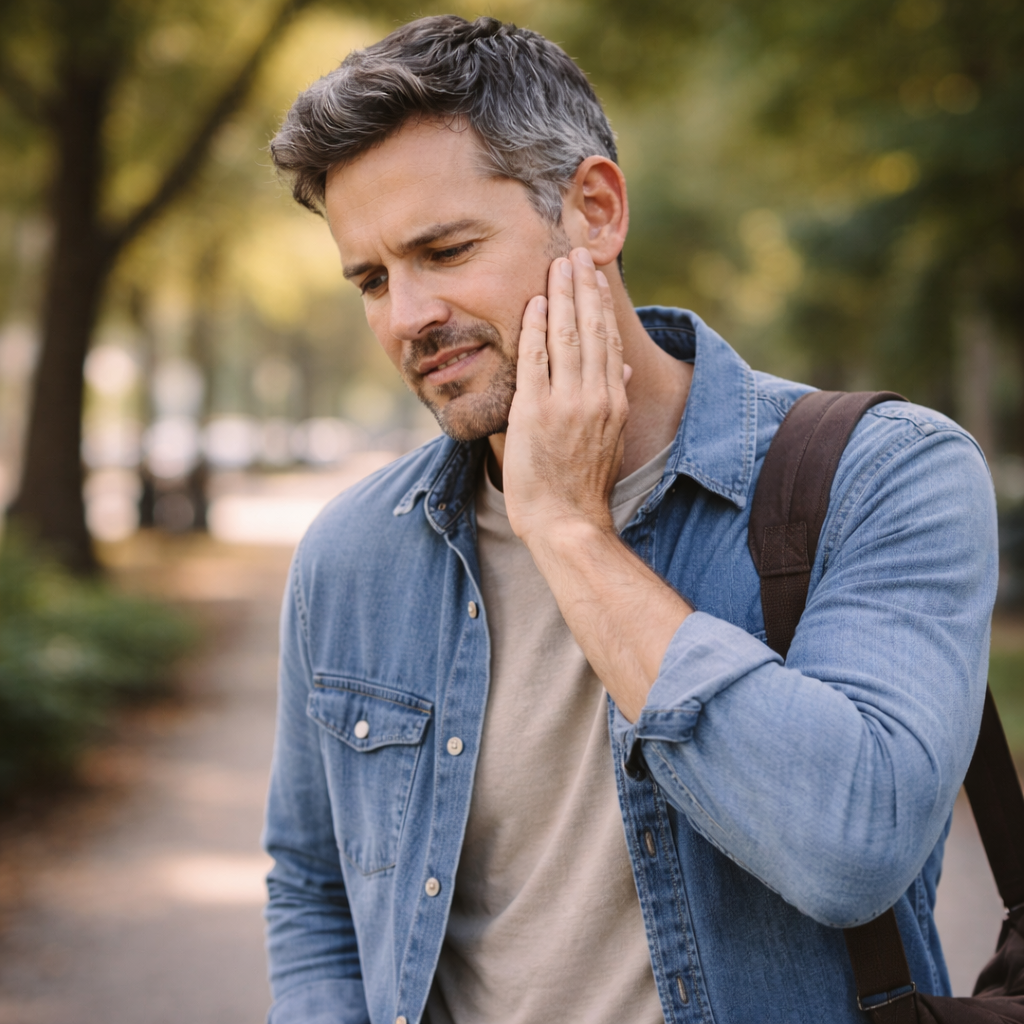
Ongoing jaw tension or grinding can influence everyday comfort and awareness.
Educational discussions often mention:
- Increased attention to jaw position
- Discomfort during chewing or talking
- Facial muscle fatigue
- Disrupted sleep awareness (for sleep bruxism)
These effects are discussed descriptively rather than as outcomes.
Why Understanding Bruxism Matters
Learning about bruxism helps support:
- Clearer understanding of jaw-related behaviors
- Better awareness of muscle tension patterns
- Accurate interpretation of dental and sleep-related information
- Reduced confusion between habits and conditions
In educational resources, bruxism is presented as a recognized pattern of activity, not a diagnosis or judgment.
Common Misconceptions About Bruxism
“Bruxism Only Happens at Night”
Bruxism can occur during the day or during sleep.
“Only People With Dental Problems Have Bruxism”
Bruxism can occur even without noticeable dental changes.
“Bruxism Is Always Obvious”
Many people are unaware they grind or clench their teeth.
Key Takeaways
- Bruxism involves clenching or grinding of the teeth
- It can occur while awake or during sleep
- Jaw muscle activity is the central feature
- Signs may include jaw tension or tooth wear
- Bruxism is discussed as a behavior pattern, not a diagnosis