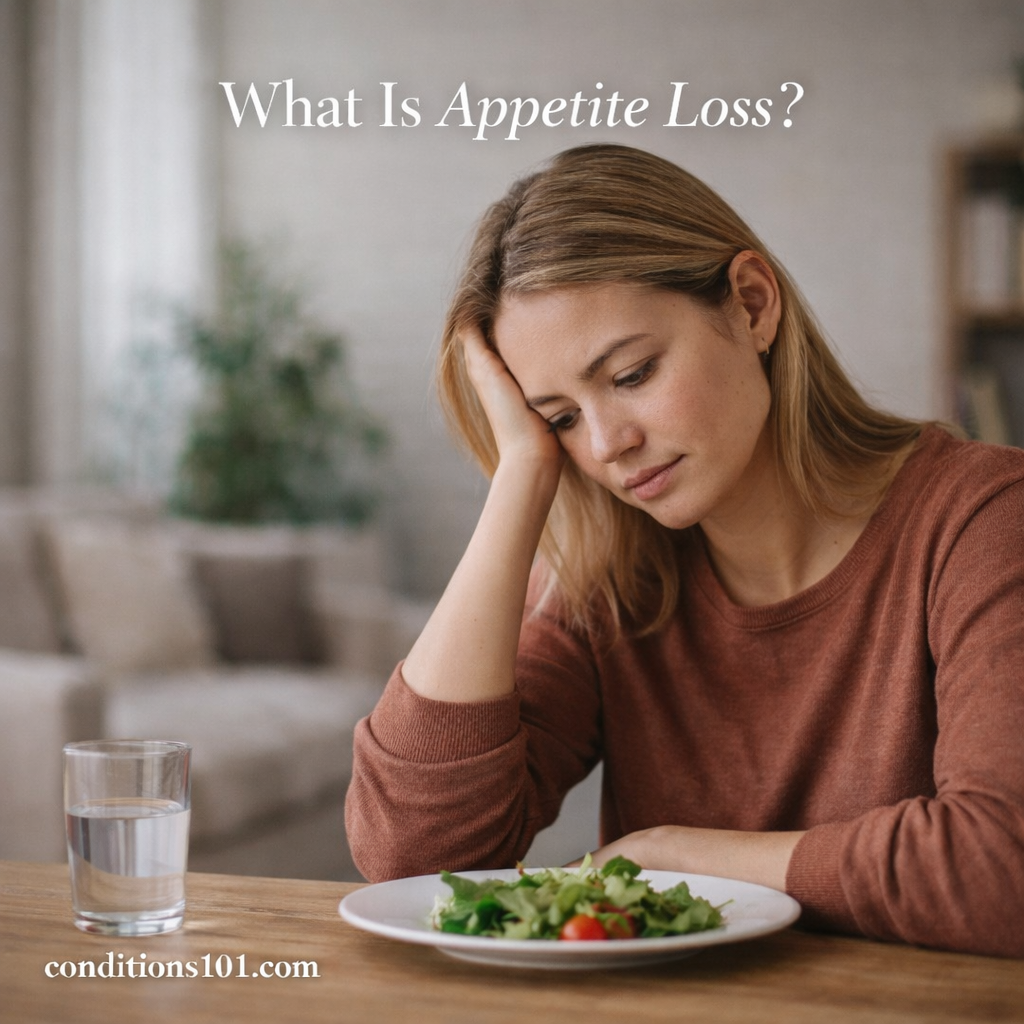
Appetite loss refers to a reduced desire to eat or a lack of interest in food. It can involve feeling full quickly, skipping meals unintentionally, or not experiencing hunger in situations where eating would normally occur.
Appetite loss is a descriptive term rather than a diagnosis. It can be temporary or ongoing and may vary in intensity from mild changes in eating patterns to a noticeable decrease in overall food intake.
How Appetite Loss Feels
Appetite loss can look different from person to person. Some people notice subtle changes, while others experience a more obvious shift in their eating habits.
Common experiences may include:
- Feeling uninterested in food
- Eating smaller portions than usual
- Skipping meals without planning to
- Feeling full sooner than expected
- Food seeming less appealing than normal
These sensations can occur even when food is readily available.
Appetite Loss vs Hunger Changes
Hunger and appetite are related but not identical.
- Hunger is a physical signal that the body needs energy.
- Appetite is influenced by thoughts, emotions, habits, and sensory cues such as smell or taste.
Appetite loss may occur even when the body still requires nourishment, while hunger cues may feel muted or delayed.
Common Factors Associated With Appetite Loss

Appetite loss often develops due to a combination of physical, emotional, and situational influences rather than a single cause.
Digestive and Physical Factors
Changes in how the digestive system feels can affect interest in eating.
Examples include:
- Feeling bloated or uncomfortable
- Nausea or stomach unease
- Changes in digestion speed
- Temporary illness or fatigue
Physical sensations can reduce the desire to eat even if hunger is present.
Emotional and Cognitive Factors
Mental and emotional states play a role in appetite regulation.
Factors may include:
- Stress or worry
- Low mood or emotional fatigue
- Mental overload
- Disrupted daily routines
These influences can alter eating patterns without involving the digestive system directly.
Lifestyle and Environmental Factors
Daily habits and surroundings can also impact appetite.
Examples include:
- Irregular meal schedules
- Changes in sleep patterns
- Travel or time zone shifts
- Reduced physical activity
- Highly distracting environments
Appetite often follows routine, so disruptions may affect eating behavior.
Short-Term vs Ongoing Appetite Loss
Appetite loss can be temporary or longer lasting.
- Short-term appetite loss may occur during busy periods, mild illness, or stressful events.
- Ongoing appetite loss refers to a continued lack of interest in food over a longer period.
The duration and pattern can provide useful context when observing changes in eating habits.
Appetite Loss and Daily Functioning
When appetite decreases, it may influence daily routines in subtle ways.
Possible effects include:
- Eating less frequently
- Reduced enjoyment of meals
- Lower energy related to reduced intake
- Changes in meal timing
The impact varies depending on how long the appetite change lasts and how significant it is.
Appetite Loss as a Symptom Description
Appetite loss is commonly used as a symptom description in health discussions. It does not point to a specific cause on its own and is often considered alongside other physical or emotional changes.
Because appetite is influenced by many systems in the body, changes can reflect a wide range of underlying influences.
Key Takeaways
- Appetite loss means reduced interest in eating or food.
- It differs from hunger and involves both physical and mental factors.
- Appetite loss can be short-term or ongoing.
- Digestive, emotional, and lifestyle influences often interact.
- It is a descriptive term, not a diagnosis.
Understanding what appetite loss is helps explain why eating patterns can change during different life situations and physical states.