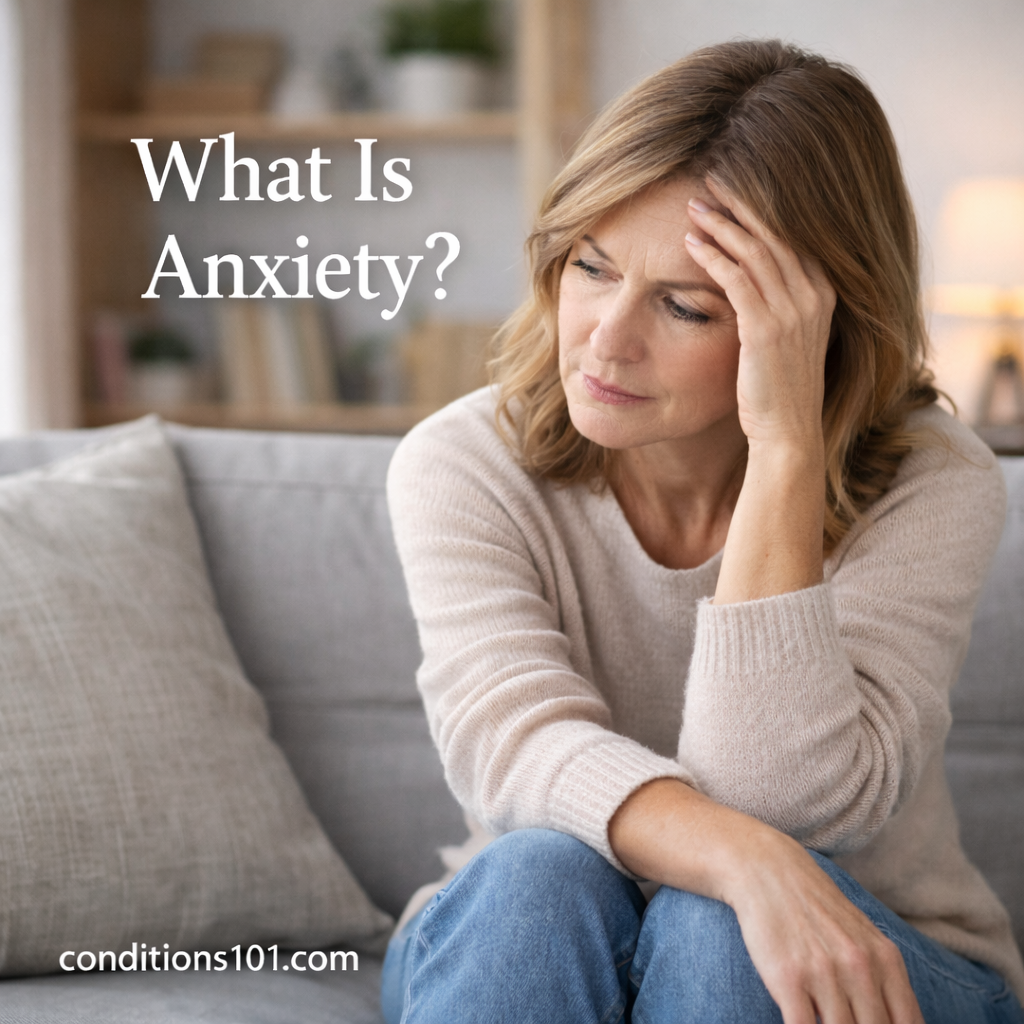
Anxiety is a natural human response involving feelings of worry, nervousness, or unease. It often appears in response to situations that feel uncertain, stressful, or challenging. In everyday life, anxiety can play a role in helping people stay alert, cautious, or prepared.
When anxiety becomes persistent, intense, or difficult to manage, it may be described as an anxiety-related condition. Anxiety exists on a wide spectrum, and experiences can vary significantly from person to person.
This article provides an educational overview of anxiety for general informational purposes only.
Understanding Anxiety as a Normal Response
Anxiety is closely linked to the body’s stress response. When a person perceives a potential threat or challenge, the brain sends signals that prepare the body to react.
This response may involve:
- Increased alertness
- Heightened focus on potential risks
- Temporary physical changes such as faster breathing or muscle tension
In short-term situations, this response can be helpful. Problems may arise when anxiety occurs frequently, lasts longer than expected, or interferes with daily functioning.
What Happens in the Body During Anxiety?
Anxiety involves interaction between the brain, nervous system, and body. Certain brain regions become more active when perceived stress or uncertainty is present.
Common body responses associated with anxiety may include:
- Increased heart rate
- Changes in breathing patterns
- Muscle tightness
- Heightened sensory awareness
These responses are part of the body’s built-in survival system and are not inherently harmful on their own.
Common Signs and Symptoms of Anxiety
Anxiety can affect both mental and physical experiences. Symptoms may range from mild to more noticeable and can vary over time.
Emotional and Cognitive Symptoms
- Ongoing worry or fear
- Feeling restless or on edge
- Difficulty concentrating
- Racing or repetitive thoughts
Physical Sensations
- Muscle tension
- Fatigue
- Sweating or chills
- Stomach discomfort
Not everyone experiences anxiety in the same way, and symptoms may come and go depending on circumstances.
Types of Anxiety-Related Conditions
Anxiety is an umbrella term that includes several recognized categories. Each type has its own features, patterns, and triggers.
Generalized Anxiety
This form is often associated with ongoing and excessive worry about everyday matters.
Social Anxiety
Social anxiety involves fear or discomfort related to social interactions or situations where one may feel observed or evaluated.
Panic-Related Anxiety
This type is linked to sudden episodes of intense fear or discomfort that may occur unexpectedly.
Specific Phobias
Phobias involve strong fear responses related to particular objects, activities, or situations.
Who Experiences Anxiety?
Anxiety can affect people of all ages and backgrounds. It is one of the most commonly discussed mental and emotional health topics worldwide.
Factors often associated with anxiety experiences include:
- Life stressors or major changes
- Personality traits such as sensitivity or perfectionism
- Family history of anxiety-related conditions
- Environmental or social pressures
Experiencing anxiety does not reflect weakness or failure. It is a common part of the human experience.
How Anxiety Can Affect Daily Life

The impact of anxiety varies widely. Some individuals experience mild effects, while others may notice greater challenges in everyday activities.
Possible effects include:
- Difficulty focusing on tasks
- Avoidance of certain situations
- Changes in sleep or energy levels
- Increased mental fatigue
The degree of impact often depends on the intensity, frequency, and duration of anxiety-related experiences.
Anxiety Over Time
Anxiety may be temporary or long-lasting. Some people experience anxiety only during specific periods, while others notice recurring patterns throughout life.
Anxiety levels may change due to:
- Life transitions
- Stressful events
- Changes in routine or environment
- Ongoing uncertainty
Understanding anxiety as something that can shift over time helps explain why experiences differ between individuals.
Common Misconceptions About Anxiety
There are several misunderstandings surrounding anxiety.
Anxiety Is Just Stress
While stress and anxiety are related, anxiety can persist even when no immediate stressor is present.
Anxiety Always Has a Clear Cause
Some anxiety experiences occur without an obvious trigger.
Anxiety Means Someone Is Weak
Anxiety is a biological and psychological response, not a character flaw.
Key Takeaways
- Anxiety is a natural response involving worry, fear, or unease
- It exists on a wide spectrum, from mild to more persistent forms
- Anxiety affects both mental and physical experiences
- Many different types of anxiety-related conditions exist
- Experiences with anxiety vary greatly from person to person