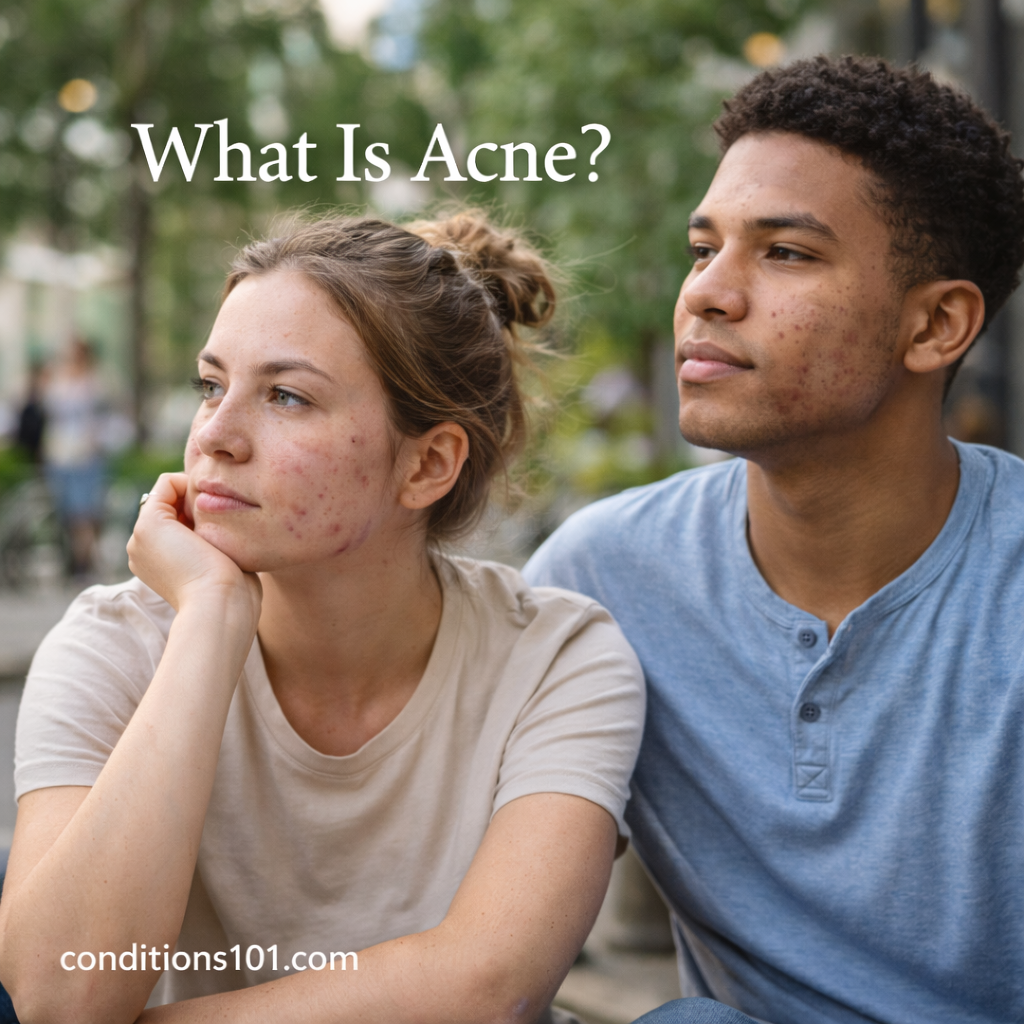
Acne is a common skin condition that develops when pores in the skin become clogged. Pores are small openings connected to hair follicles, and they allow oil and sweat to reach the skin’s surface. When these openings become blocked, visible skin changes such as bumps or spots can appear.
Acne can affect people of many ages, though it is most often associated with adolescence and young adulthood. It commonly appears on areas of the body with a higher concentration of oil-producing glands, such as the face, chest, shoulders, and back.
This article provides an educational overview of acne for general informational purposes only.
How the Skin and Pores Work
The skin contains tiny glands called sebaceous glands that produce an oily substance known as sebum. Sebum helps keep the skin moisturized and protected.
Each pore typically includes:
- A hair follicle
- A sebaceous (oil) gland
- An opening that allows oil to reach the skin’s surface
Under normal conditions, oil flows out of the pore without issue. Acne can develop when this process is disrupted.
What Happens in Acne?
Acne forms when pores become blocked by a combination of substances. These blockages can trap material beneath the skin’s surface.
Common contributing factors include:
- Excess oil production
- Dead skin cells that do not shed properly
- Bacteria that naturally live on the skin
- Blocked or narrowed pores
When these factors combine, different types of acne-related skin changes can appear.
Common Types of Acne
Acne can look different depending on how the pore is blocked and whether inflammation is present.
Non-Inflammatory Acne
These forms involve clogged pores without significant redness or swelling.
- Blackheads, which are open clogged pores
- Whiteheads, which are closed clogged pores
Inflammatory Acne
Inflammatory acne involves redness, swelling, or tenderness around the blocked pore.
- Small red bumps
- Pus-filled spots
- Deeper, more noticeable bumps under the skin
The appearance and severity of acne can vary widely from person to person.
Where Acne Commonly Appears
Acne tends to develop in areas with more oil-producing glands.
Common locations include:
- Face
- Forehead and chin
- Chest
- Upper back and shoulders
Some people experience acne in one area only, while others notice it across multiple parts of the body.
Who Experiences Acne?
Acne can affect individuals across many age groups and backgrounds.
It is often associated with:
- Hormonal changes
- Natural differences in skin oil production
- Genetic factors
- Environmental or lifestyle influences
Although acne is frequently linked to teenagers, many adults also experience it at different stages of life.
How Acne Can Affect Daily Life
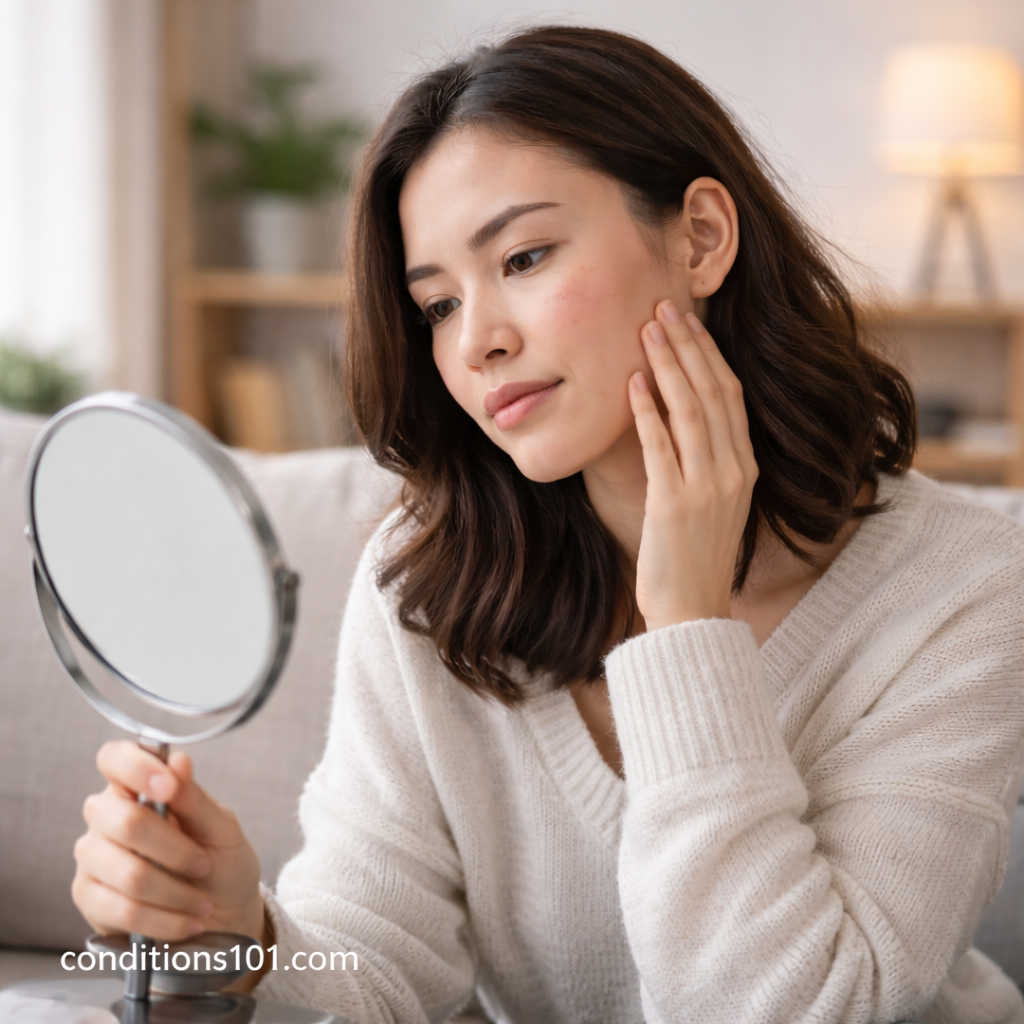
The impact of acne is not limited to physical appearance. For some individuals, it may influence daily routines or self-perception.
Possible effects include:
- Increased attention to skincare habits
- Changes in clothing choices
- Heightened awareness of appearance
- Emotional or social considerations
The degree of impact varies widely and depends on individual experiences and circumstances.
Acne Over Time
Acne may be temporary or persistent. Some people experience short-term breakouts, while others notice ongoing or recurring patterns.
Changes in acne over time may be influenced by:
- Age-related skin changes
- Shifts in hormones
- Environmental conditions
- Daily skincare routines
Because of this variability, acne experiences can differ significantly between individuals.
Common Misconceptions About Acne
There are several widespread misunderstandings about acne.
Acne Is Caused Only by Poor Hygiene
Acne is not simply the result of dirty skin. It involves internal and external factors related to how pores function.
Acne Only Affects Teenagers
While common during adolescence, acne can occur at any age.
All Acne Looks the Same
Acne can appear in many forms, ranging from small clogged pores to deeper skin changes.
Key Takeaways
- Acne is a common condition involving clogged skin pores
- It develops through a combination of oil, dead skin cells, and bacteria
- Acne can appear in different forms and on various parts of the body
- People of many ages can experience acne
- Acne experiences and severity vary widely