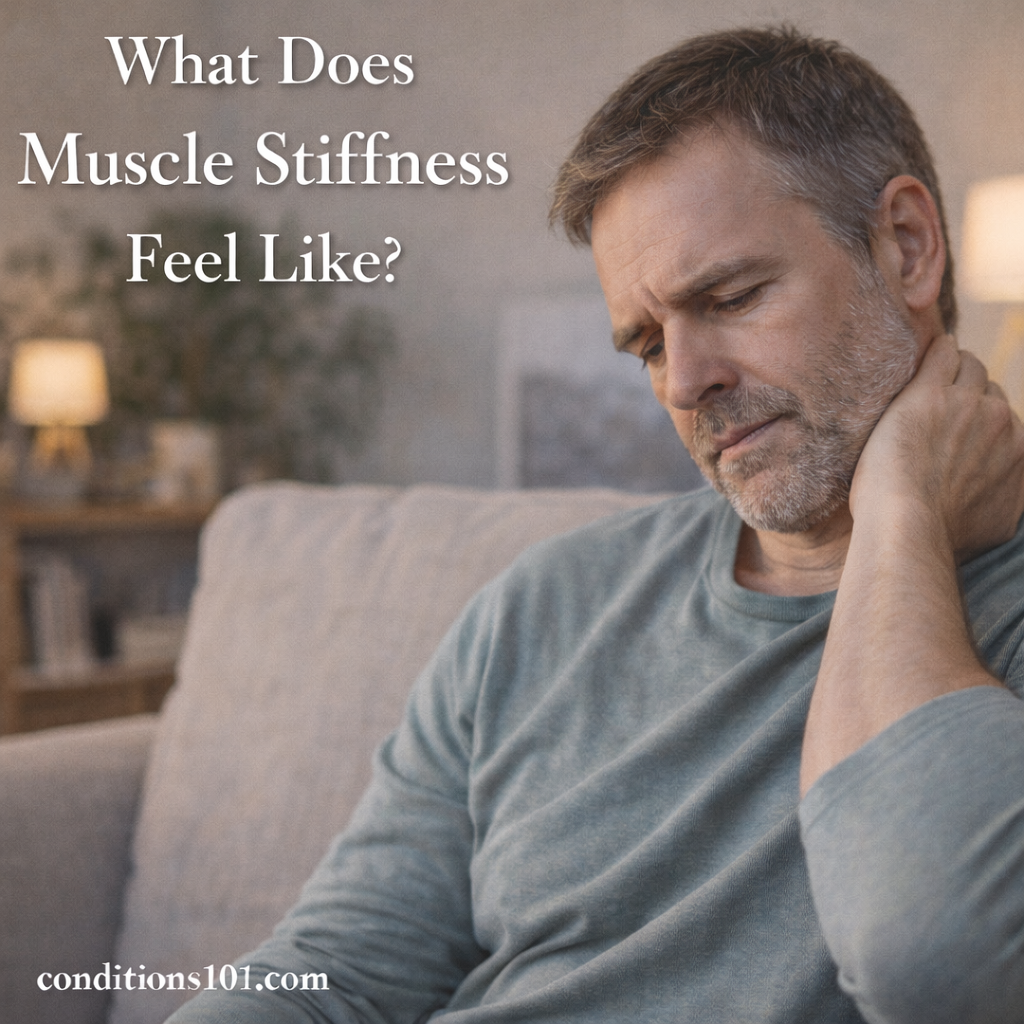
Muscle stiffness is a common physical sensation that involves tightness, reduced flexibility, or difficulty moving muscles smoothly. It often feels like resistance when trying to move a body part and may be accompanied by discomfort or soreness. Muscle stiffness can affect a single muscle, a group of muscles, or larger areas of the body.
This article provides a clear, educational overview of what muscle stiffness feels like. It is intended for general information only and does not offer medical advice, diagnosis, or treatment.
Understanding Muscle Stiffness
Muscles normally contract and relax to allow smooth, controlled movement. When muscles feel stiff, they may not relax as easily, making movement feel harder or more restricted than usual.
Muscle stiffness can develop suddenly or gradually and may be temporary or recurring. It is often noticed after periods of inactivity, physical exertion, or changes in routine.
Common Sensations Associated With Muscle Stiffness

People describe muscle stiffness in a variety of ways, depending on which muscles are affected and how intense the stiffness is.
Common descriptions include:
- Tight or tense muscles
- A feeling of resistance when moving
- Reduced range of motion
- Muscles that feel “locked,” “rigid,” or hard to stretch
- Discomfort when starting to move after rest
The sensation may improve with gentle movement or persist for longer periods.
How Muscle Stiffness Feels During Movement
Muscle stiffness is often most noticeable when beginning to move after being still, such as:
- Getting out of bed in the morning
- Standing up after sitting for a long time
- Starting physical activity after rest
During movement, muscles may feel slow to respond or require extra effort to loosen. For some people, stiffness eases as movement continues, while for others it may remain noticeable.
Areas Commonly Affected by Muscle Stiffness
Muscle stiffness can occur in many parts of the body, but certain areas are more commonly affected.
These include:
- Neck and shoulders
- Lower back
- Hips
- Thighs and calves
- Hands or fingers
Stiffness may affect one side of the body or both sides equally.
Muscle Stiffness vs. Muscle Soreness
Although muscle stiffness and muscle soreness often occur together, they are not the same sensation.
Muscle Stiffness
- Feels like tightness or resistance
- Limits flexibility or movement
- Often noticeable when starting to move
Muscle Soreness
- Feels like tenderness or aching
- May be sensitive to touch
- Often felt after physical exertion
A person may experience stiffness without soreness, soreness without stiffness, or both at the same time.
Situations Where Muscle Stiffness Is Commonly Noticed
Muscle stiffness is frequently reported in certain situations, such as:
- After sleeping or prolonged rest
- Following physical activity or exertion
- During cold weather
- After maintaining the same posture for long periods
- During times of stress or tension
The context in which stiffness appears can influence how it feels and how long it lasts.
How Muscle Stiffness Can Affect Daily Activities
When muscles feel stiff, everyday tasks may require more effort or feel less comfortable.
Possible effects include:
- Slower or more cautious movements
- Difficulty bending, reaching, or turning
- Reduced comfort during routine activities
- Increased focus on body positioning or posture
The impact on daily life varies depending on the severity and duration of the stiffness.
Does Muscle Stiffness Always Feel the Same?
No. Muscle stiffness can feel different from person to person and even from one episode to another. Factors such as activity level, hydration, temperature, and stress can influence how stiffness is experienced.
Some people describe mild stiffness as a temporary tight feeling, while others experience more pronounced restriction or discomfort.
Key Takeaways About Muscle Stiffness
- Muscle stiffness often feels like tightness or resistance to movement
- It may limit flexibility or range of motion
- Stiffness is commonly noticed after rest or inactivity
- It can affect different muscle groups and vary in intensity
- Experiences of muscle stiffness differ widely between individuals