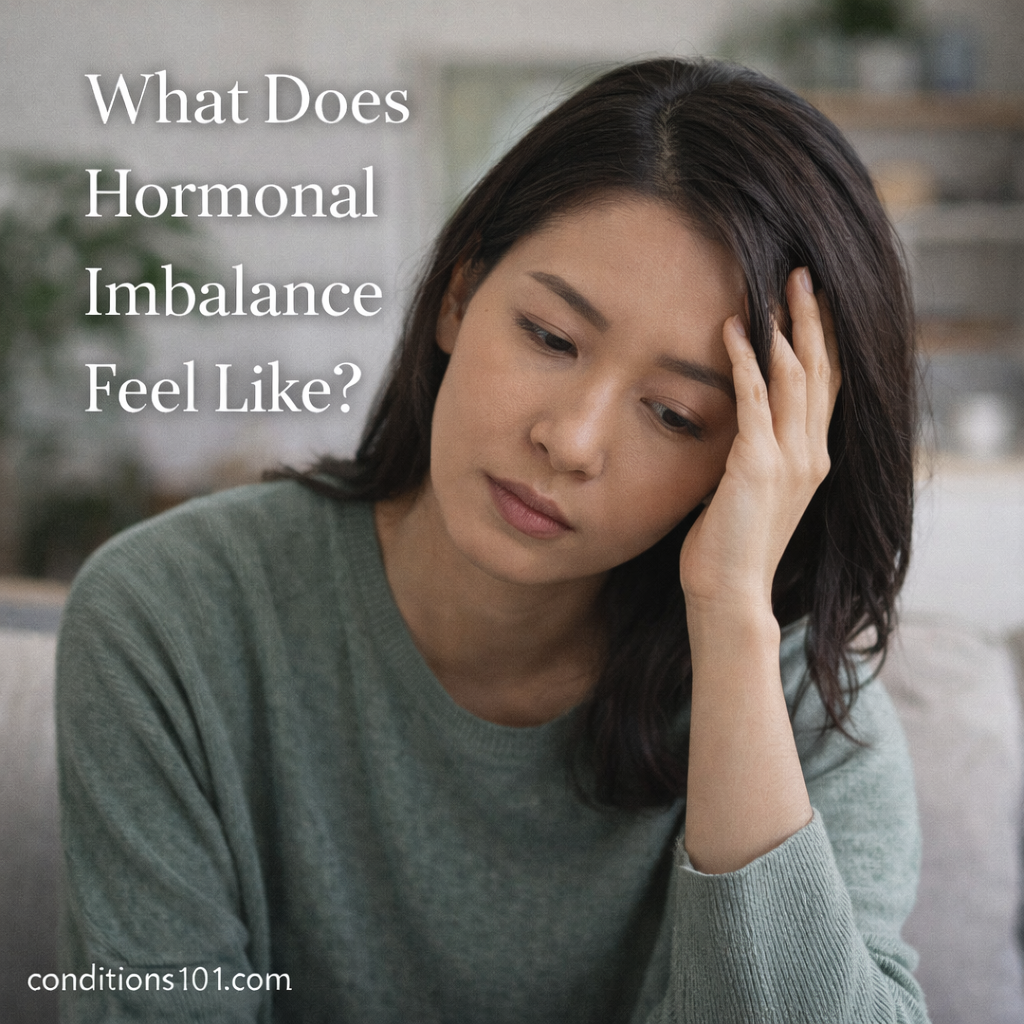
Hormonal imbalance is a broad, non-clinical term used to describe changes in how hormones fluctuate or signal within the body. Hormones act as chemical messengers that influence many systems, including mood, energy, sleep, appetite, metabolism, and reproduction. When hormone levels shift or signaling changes, people may notice a range of physical, emotional, or cognitive experiences.
This article provides education-only, evergreen information to explain what hormonal imbalance can feel like, how it is commonly described, and why experiences can vary widely. It does not provide medical advice, diagnosis, or treatment.
Understanding Hormones in Everyday Life
Hormones are released into the bloodstream and help regulate processes such as:
- Energy use and metabolism
- Sleep and wake cycles
- Stress response
- Mood and emotional regulation
- Growth and development
Hormone levels naturally change throughout the day and across life stages. Not every fluctuation is a problem, but noticeable or persistent changes may feel disruptive.
Common Physical Sensations People Describe
People who suspect hormonal imbalance often report bodily sensations that feel different from their usual baseline.
Commonly described physical experiences include:
- Ongoing fatigue or low energy
- Changes in sleep quality
- Increased sensitivity to temperature
- Unexplained weight changes
- Digestive changes or bloating
- Muscle or joint discomfort
These sensations may appear gradually and can fluctuate over time.
Emotional and Mood-Related Experiences

Hormones play a key role in emotional regulation, so changes may be noticed in mood or emotional response.
People often describe:
- Increased irritability or emotional sensitivity
- Mood swings that feel unpredictable
- Feeling anxious or on edge
- Low mood or reduced motivation
- Difficulty feeling emotionally balanced
These experiences may feel out of proportion to external circumstances.
Cognitive and Mental Changes
Some people notice changes in thinking or focus when hormones shift.
Commonly reported cognitive experiences include:
- Brain fog or mental sluggishness
- Difficulty concentrating
- Memory lapses
- Feeling mentally overwhelmed
- Reduced mental clarity
These changes can affect work, school, or daily decision-making.
Energy Levels and Motivation
Changes in hormonal signaling can influence how energized or motivated someone feels throughout the day.
People may notice:
- Energy crashes at unusual times
- Difficulty sustaining motivation
- Feeling tired despite adequate rest
- Reduced physical stamina
Energy patterns may feel inconsistent or unpredictable.
Sleep-Related Experiences
Hormones influence sleep timing, depth, and quality. When balance shifts, sleep may feel different.
Sleep-related experiences can include:
- Trouble falling asleep
- Waking during the night
- Early morning waking
- Feeling unrefreshed after sleep
Poor sleep can further amplify other sensations, creating a feedback loop.
Appetite and Body Awareness Changes
Hormones help regulate hunger, fullness, and how the body uses energy.
People may experience:
- Changes in appetite
- Cravings that feel stronger than usual
- Altered sense of fullness
- Increased awareness of bodily sensations
These experiences may come and go rather than remain constant.
Why Experiences Vary So Much
Hormonal imbalance does not feel the same for everyone. Several factors influence how changes are perceived.
These include:
- Which hormones are involved
- Individual sensitivity to hormonal shifts
- Life stage and age
- Stress levels and sleep patterns
- Overall health and daily habits
Because multiple systems are involved, experiences often overlap rather than follow a single pattern.
Hormonal Changes vs. Hormonal Imbalance
Not all changes indicate imbalance. Hormones naturally fluctuate during:
- Puberty
- Menstrual cycles
- Pregnancy and postpartum periods
- Perimenopause and menopause
- Aging
The term “hormonal imbalance” is often used descriptively to express how someone feels rather than to define a specific condition.
Common Misconceptions About Hormonal Imbalance
Several myths can create confusion around this topic.
- Hormonal imbalance is not always dramatic
- Symptoms are not the same for everyone
- Changes may be subtle rather than obvious
- Hormones do not act in isolation
Understanding these points helps reduce oversimplification.
Why Learning About Hormonal Experiences Matters
Education about hormonal experiences helps people better understand how internal changes can affect how they feel day to day. Recognizing patterns supports informed conversations without assuming a diagnosis or cause.
Key Takeaways
- Hormonal imbalance is a descriptive term for noticeable hormonal changes
- Experiences may include physical, emotional, and cognitive shifts
- Energy, mood, sleep, and focus are commonly affected
- Symptoms vary widely between individuals
- Education helps clarify normal variation versus noticeable change