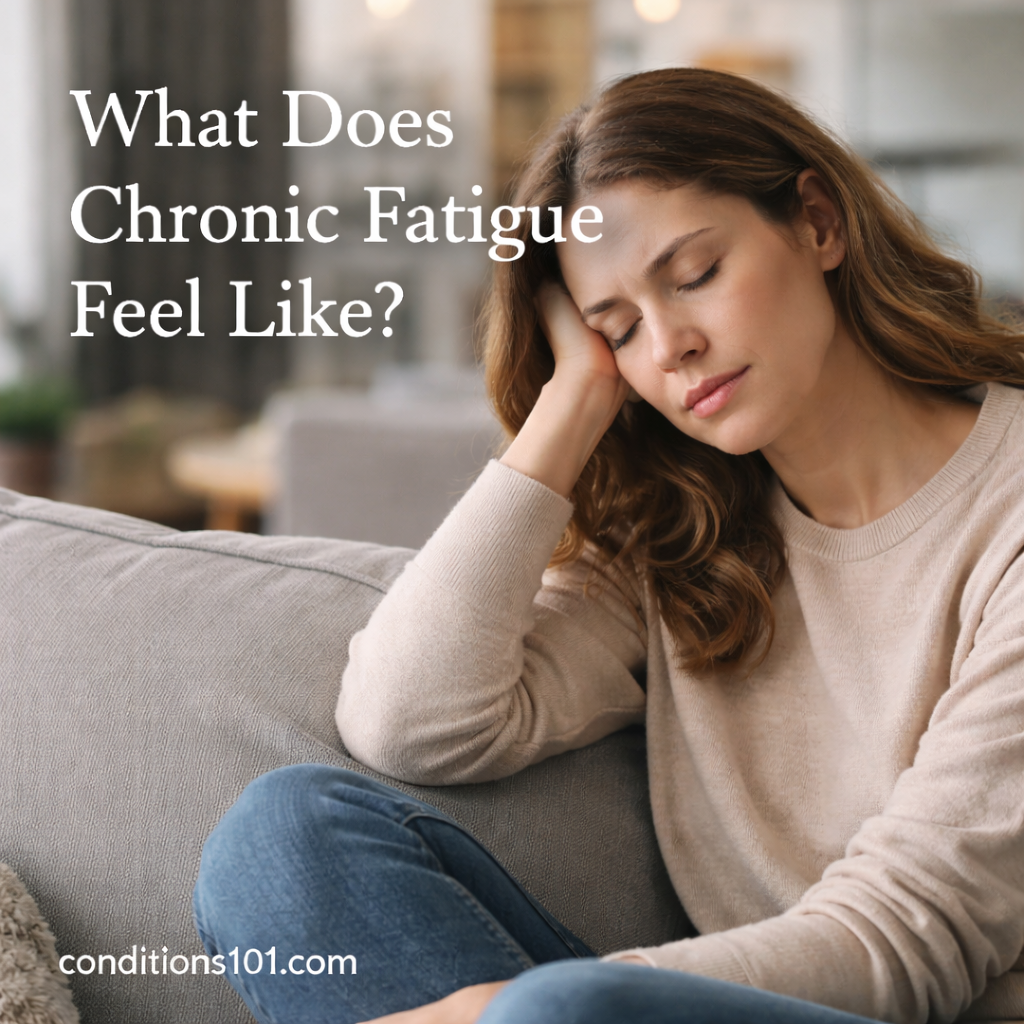
Chronic fatigue is often described as a deep, persistent sense of physical and mental exhaustion that does not fully improve with rest. Unlike ordinary tiredness after a long day or poor sleep, chronic fatigue can feel ongoing, overwhelming, and disproportionate to activity levels.
People experiencing chronic fatigue may feel drained even after minimal effort, and the sensation can affect both the body and the mind. This article provides an educational overview of how chronic fatigue is commonly described and experienced, for general informational purposes only.
How Chronic Fatigue Differs From Normal Tiredness
Normal tiredness usually has a clear cause, such as lack of sleep, physical exertion, or stress, and it typically improves after rest. Chronic fatigue feels different in both intensity and duration.
Chronic fatigue is often described as:
- Long-lasting rather than temporary
- Present even after adequate rest or sleep
- Disproportionate to recent activity
- More difficult to “push through”
This distinction is one of the reasons chronic fatigue can be challenging to explain to others.
Common Physical Sensations
Many people describe chronic fatigue as affecting the entire body, not just energy levels.
Common physical sensations include:
- A heavy or weighed-down feeling in the limbs
- Persistent low energy throughout the day
- Muscle weakness or reduced stamina
- Feeling physically drained after simple tasks
Even routine activities such as walking, standing, or household chores may feel unusually demanding.
Mental and Cognitive Experiences
Chronic fatigue often affects mental clarity and focus in addition to physical energy.
Frequently reported cognitive experiences include:
- Difficulty concentrating
- Slower thinking or processing
- Trouble finding words or staying organized
- Mental exhaustion after short periods of focus
These cognitive effects can make work, study, or conversations feel more effortful than usual.
How Chronic Fatigue Affects Daily Activities

The impact of chronic fatigue varies, but many people notice changes in how they manage daily life.
Possible effects include:
- Needing more frequent breaks
- Planning activities carefully to conserve energy
- Reduced ability to multitask
- Feeling overwhelmed by busy environments
Some individuals adjust routines gradually, while others experience more noticeable disruptions.
Emotional and Sensory Aspects
Chronic fatigue can influence emotional and sensory experiences, even though it is not simply an emotional condition.
People may notice:
- Increased irritability or frustration
- Reduced motivation
- Heightened sensitivity to noise or light
- Feeling emotionally drained
These experiences often stem from the ongoing strain of low energy rather than from mood alone.
Fluctuations and “Good Days” vs. “Bad Days”
Chronic fatigue does not always feel the same from day to day.
Many people describe:
- “Good days” with slightly more energy or clarity
- “Bad days” where fatigue feels heavier and more limiting
- Energy crashes after periods of activity
- Unpredictable changes in stamina
This variability can make planning ahead difficult.
How People Commonly Describe the Feeling
Because chronic fatigue is hard to measure, people often use comparisons or metaphors to explain it.
Common descriptions include:
- Feeling like the body’s battery never fully charges
- Waking up already exhausted
- Moving through the day in a fog
- Feeling as though energy is constantly being rationed
These descriptions help convey that chronic fatigue is more than ordinary tiredness.
Common Misunderstandings About Chronic Fatigue
There are several misconceptions about what chronic fatigue feels like.
It’s Just Being Lazy or Unmotivated
Chronic fatigue is not a lack of effort or motivation. It involves persistent exhaustion that limits capacity.
Rest Always Fixes It
While rest is important, chronic fatigue often persists even after rest or sleep.
Everyone Experiences It the Same Way
The experience of chronic fatigue varies widely between individuals.
Key Takeaways
- Chronic fatigue is a persistent, deep sense of exhaustion
- It affects both physical energy and mental focus
- Rest does not always fully relieve the fatigue
- Daily activities may require careful energy management
- Experiences with chronic fatigue vary widely