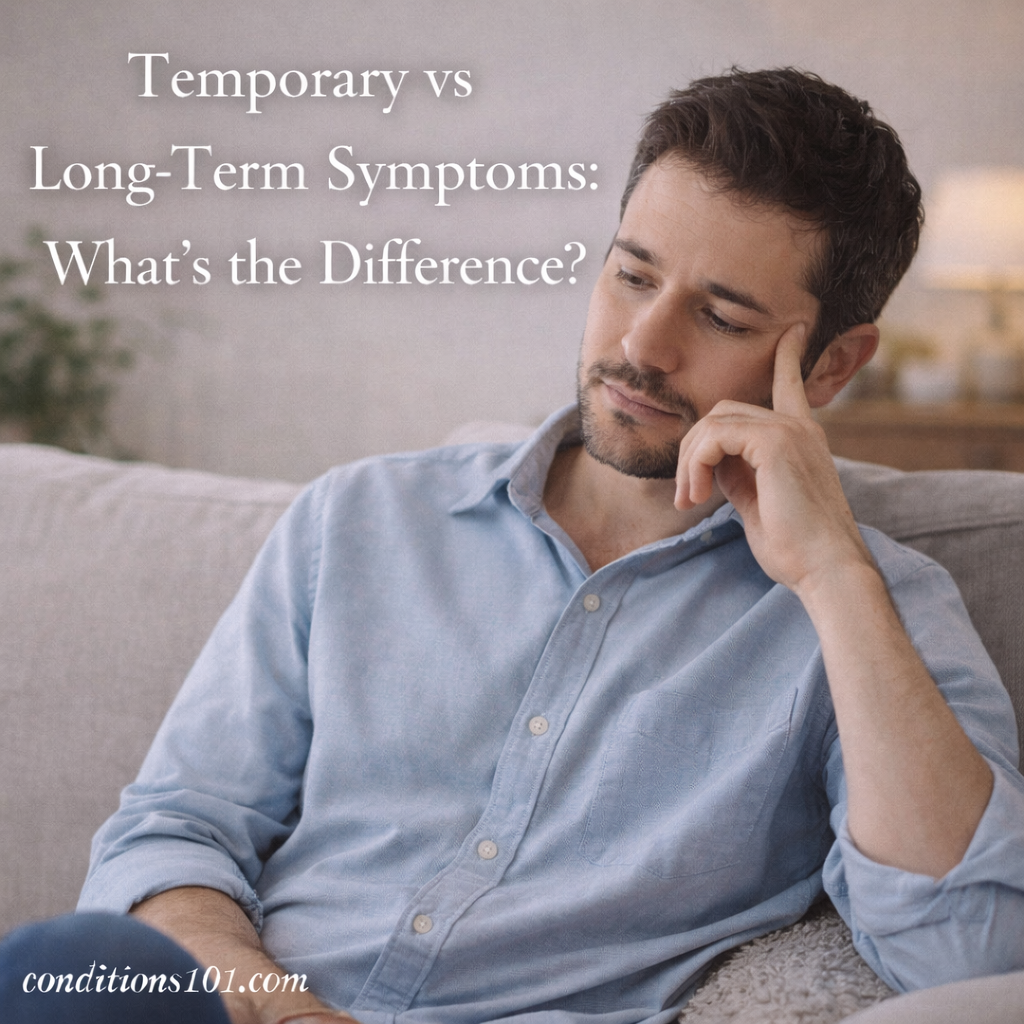
Temporary and long-term symptoms are terms used to describe how long symptoms last, not necessarily how severe or important they are. Understanding the difference can help clarify health experiences and reduce confusion when symptoms appear, change, or persist over time.
These terms are descriptive, not diagnostic. They are commonly used in educational and everyday health discussions to explain symptom patterns without identifying causes or treatments.
This article is for general informational purposes only and does not provide medical advice, diagnosis, or treatment.
Understanding Symptoms in Simple Terms
A symptom is any physical, mental, or sensory change that a person notices in their body. Symptoms can involve:
- Sensations (such as discomfort or fatigue)
- Changes in function (such as difficulty concentrating)
- Alterations in how the body feels or behaves
Symptoms are subjective experiences, meaning they are based on what a person notices rather than on test results alone.
What Are Temporary Symptoms?
Temporary symptoms are symptoms that last for a short period of time and then resolve or significantly improve.
Key Characteristics of Temporary Symptoms
Temporary symptoms often:
- Appear suddenly or after a specific trigger
- Last minutes, hours, or days
- Improve as the trigger passes or the body adapts
- Do not persist consistently over long periods
These symptoms are commonly linked to everyday factors such as routine changes, short-term stress, or brief physical strain.
Examples of Temporary Symptoms
Educational discussions often describe temporary symptoms as those that may occur after:
- A poor night of sleep
- A stressful day or event
- Physical exertion or unfamiliar activity
- Minor illnesses or short-lived discomfort
Temporary symptoms may feel uncomfortable, but their defining feature is limited duration.
What Are Long-Term Symptoms?
Long-term symptoms are symptoms that persist over extended periods, often weeks, months, or longer. They may be constant or come and go but continue to recur over time.
Key Characteristics of Long-Term Symptoms
Long-term symptoms often:
- Last for many weeks or months
- May fluctuate in intensity
- Can affect daily routines or quality of life
- Feel persistent or recurring rather than isolated
The term long-term refers to duration, not severity.
Examples of Long-Term Symptoms
Long-term symptoms may include experiences such as:
- Ongoing discomfort that does not fully resolve
- Recurrent fatigue or low energy
- Persistent sensory changes
- Symptoms that return repeatedly under similar circumstances
Educational discussions focus on recognizing patterns over time rather than pinpointing causes.
Temporary vs. Long-Term Symptoms: Key Differences

Duration
- Temporary symptoms are short-lived
- Long-term symptoms persist or recur over extended periods
Pattern
- Temporary symptoms are often isolated
- Long-term symptoms follow ongoing or repeating patterns
Impact
- Temporary symptoms may cause brief disruption
- Long-term symptoms may influence daily habits or routines
Situational vs. Pattern-Based Symptoms
Symptoms are often described based on whether they are tied to a specific situation or reflect an ongoing pattern.
Situational Symptoms
- Linked to a clear trigger
- Resolve when circumstances change
- Often temporary
Pattern-Based Symptoms
- Occur repeatedly or continuously
- May not have an obvious single trigger
- Often described as long-term
Understanding this distinction can help explain why some symptoms fade quickly while others persist.
Common Misconceptions About Symptom Duration
“Temporary symptoms don’t matter”
Temporary symptoms can still be uncomfortable or disruptive, even if they resolve quickly.
“Long-term symptoms are always severe”
Long-term symptoms can be mild but persistent.
“If symptoms come and go, they aren’t long-term”
Symptoms can fluctuate and still be considered long-term if they recur over time.
Why Symptom Duration Matters
Understanding whether symptoms are temporary or long-term helps:
- Clarify health experiences
- Reduce unnecessary worry or confusion
- Improve communication when describing symptoms
- Support awareness of changes over time
Duration provides context, not conclusions.
Symptoms Can Change Over Time
Symptoms are not fixed. A symptom that starts as temporary may become longer-lasting, while long-term symptoms may improve or resolve.
Changes can occur due to:
- Shifts in routines
- Environmental influences
- Stress levels
- Lifestyle patterns
Because of this, symptom duration is often reassessed over time.
Temporary and Long-Term Symptoms as Descriptive Tools
These terms are best understood as descriptive tools, not labels. They help explain how long symptoms last, not why they happen or what they mean medically.
Educational discussions emphasize observation and awareness rather than interpretation or diagnosis.
Key Takeaways
- Temporary symptoms are short-lived and resolve relatively quickly
- Long-term symptoms persist or recur over extended periods
- Duration refers to time, not severity
- Symptoms can fluctuate and change categories over time
- Understanding duration helps clarify symptom patterns
Learning the difference between temporary and long-term symptoms supports clearer, more informed health discussions without medical assumptions.