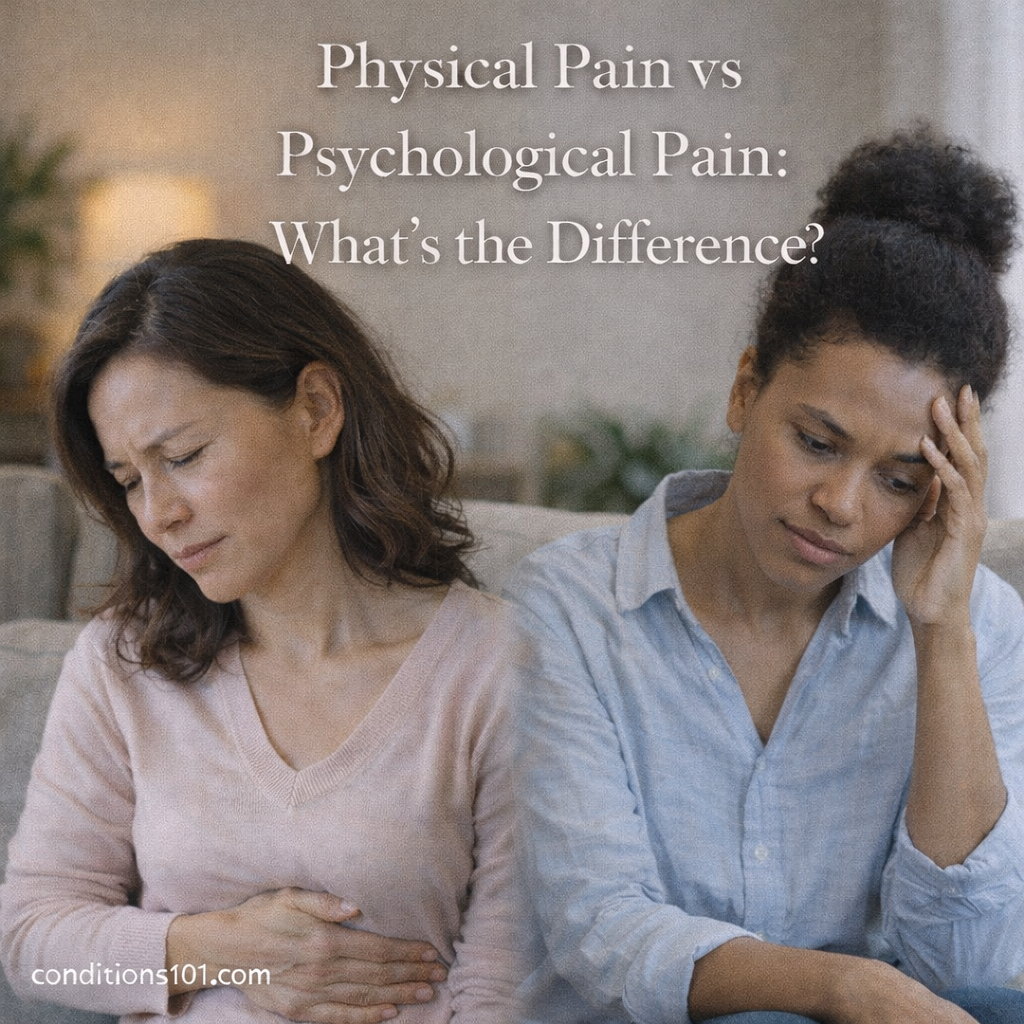
Physical pain and psychological pain are two distinct experiences that affect the body and mind in different ways. While they can feel equally distressing and may overlap at times, they involve different processes and are described differently in health education.
This article explains the differences between physical pain and psychological pain in a clear, non-clinical way. It does not provide medical advice, diagnosis, or treatment.
What Is Physical Pain?
Physical pain is a sensory experience linked to the body’s tissues, nerves, or musculoskeletal system. It is often associated with a specific location or physical sensation.
In educational contexts, physical pain is described as the body’s way of signaling discomfort, strain, or injury.
Common features of physical pain
- Localized to a specific area (such as the back, joints, or muscles)
- Often described as sharp, dull, aching, throbbing, or burning
- May change with movement, posture, or touch
- Can be temporary or persistent
- Usually has a noticeable bodily sensation
Physical pain is closely tied to how the body perceives physical stimuli.
What Is Psychological Pain?
Psychological pain refers to emotional or mental distress rather than bodily sensation. It is often linked to thoughts, emotions, or internal experiences rather than a specific physical location.
This type of pain is sometimes described using emotional language rather than sensory terms.
Common features of psychological pain
- Feelings of emotional distress or inner discomfort
- Sensations such as heaviness, emptiness, or mental strain
- Difficulty concentrating or feeling mentally overwhelmed
- Changes in mood or emotional resilience
- Less tied to a specific physical location
Psychological pain affects emotional well-being and mental processing rather than physical sensation.
Key Differences Between Physical and Psychological Pain
Although both are described as “pain,” they involve different experiences.
Source of the experience
- Physical pain: Arises from the body and sensory systems
- Psychological pain: Arises from emotional or mental processes
How it is described
- Physical pain: Sensory and location-based descriptions
- Psychological pain: Emotional or abstract descriptions
How it is perceived
- Physical pain: Often felt in a specific body part
- Psychological pain: Felt internally or emotionally
How Physical and Psychological Pain Can Overlap
Physical and psychological pain are not completely separate. They can influence each other in meaningful ways.
Examples of overlap include:
- Emotional distress increasing awareness of physical discomfort
- Ongoing physical pain affecting mood or mental focus
- Stress or emotional strain intensifying the perception of pain
- Fatigue contributing to both physical soreness and mental distress
Because of this interaction, people may experience both types at the same time.
Situations Where Physical Pain Is More Noticeable
Physical pain is often more apparent during activities that involve movement or bodily effort.
It may be more noticeable:
- During physical work or exercise
- With certain movements or positions
- After strain or prolonged activity
- When pressure is applied to a specific area
The defining feature is a clear bodily sensation.
Situations Where Psychological Pain Is More Noticeable

Psychological pain tends to be more noticeable during emotional or mentally demanding situations.
It may be more apparent:
- During periods of stress or emotional strain
- When processing difficult thoughts or experiences
- During prolonged mental fatigue
- In moments of emotional overwhelm
The defining feature is emotional or mental discomfort rather than physical sensation.
Why the Two Are Often Confused
Several factors contribute to confusion between physical and psychological pain:
- Both can feel intense or distressing
- Both can affect daily functioning
- Both can influence sleep, focus, and motivation
- Both may lack obvious external signs
Because the word “pain” is used for both, the differences are not always clearly understood.
Pain as a Broad Human Experience
In health education, pain is viewed as a broad experience that includes both physical and psychological dimensions. Neither type is considered more “real” than the other.
Understanding this distinction helps:
- Clarify how pain is experienced
- Improve communication about discomfort
- Reduce misunderstandings about different pain experiences
These distinctions are descriptive, not diagnostic.
Why Understanding the Difference Matters
Knowing the difference between physical and psychological pain supports clearer conversations and self-awareness.
Educational benefits include:
- More accurate descriptions of personal experiences
- Better understanding of how pain affects daily life
- Reduced oversimplification of complex pain experiences
This understanding is especially useful in symptom comparison discussions.
Key Takeaways
- Physical pain involves bodily sensations and sensory signals
- Psychological pain involves emotional or mental distress
- The two experiences are different but can overlap
- Both types of pain can significantly affect daily life
- Neither type of pain is a diagnosis on its own