Localized vs Widespread Pain: What’s the Difference?

Adult woman sitting on a couch gently holding her shoulder in a calm home setting, representing localized versus widespread pain in an educational context.
A quiet, everyday moment illustrating how pain may be felt in specific areas or across the body. conditions101.com

Pain can be experienced in many ways, but one of the most common distinctions used in health education is whether pain is localized or widespread. These terms describe where pain is felt in the body and how broadly it is distributed, rather than identifying a specific condition or cause.

Understanding the difference between localized and widespread pain can help people describe their experiences more clearly and better understand how pain patterns are discussed in general health contexts.

Continue reading “Localized vs Widespread Pain: What’s the Difference?”
What Is Temporomandibular Joint Disorder?

Adult man sitting indoors with his hand resting on his jaw in a calm home setting, representing temporomandibular joint disorder in an educational context.
A quiet, everyday moment reflecting how temporomandibular joint discomfort may be noticed during daily life. conditions101.com

Temporomandibular joint disorder (often abbreviated as TMJ disorder or TMD) is a term used to describe conditions that affect the temporomandibular joints, which connect the lower jaw to the skull. These joints are located on each side of the face, just in front of the ears, and play a key role in everyday movements such as talking, chewing, and yawning.

Temporomandibular joint disorder is not a single disease. Instead, it refers to a group of disorders involving the jaw joints, surrounding muscles, or related structures.

Continue reading “What Is Temporomandibular Joint Disorder?”

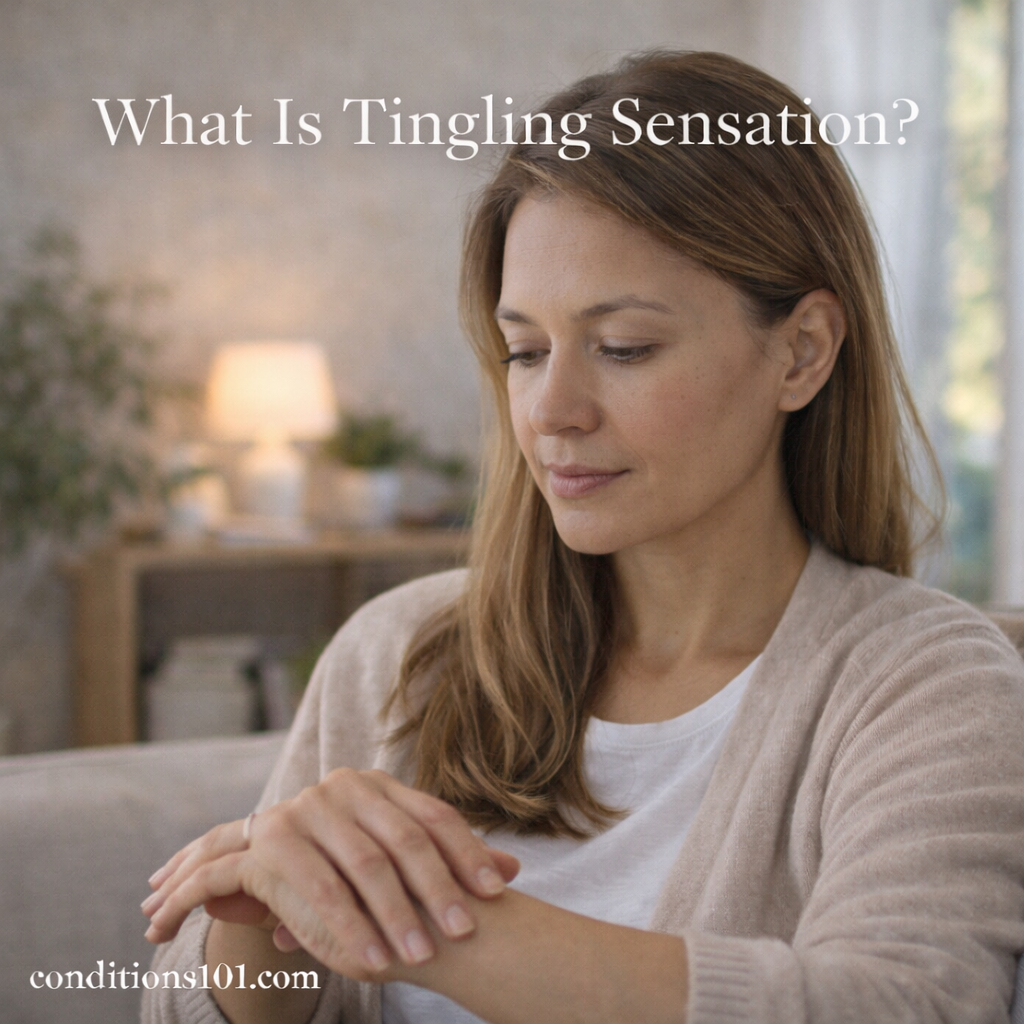
What Is Tingling Sensation?

Adult woman sitting in a calm home setting, looking at her hands thoughtfully, representing tingling sensation in an educational neurological context.
A calm, reflective moment illustrating how tingling sensations may be noticed during everyday life. conditions101.com

A tingling sensation is a temporary or persistent feeling often described as pins and needles, prickling, buzzing, or mild electrical sensations in the body. It most commonly affects the hands, feet, arms, or legs but can occur anywhere.

Tingling is a sensory experience, not a diagnosis. It reflects how nerves communicate signals to and from the brain and spinal cord.

Continue reading “What Is Tingling Sensation?”

What Is Hormone Regulation?

Adult woman sitting calmly in a living room, reflecting in a peaceful home setting that represents hormone regulation in an educational context.
A calm, everyday moment reflecting how hormone regulation supports balance within the body. conditions101.com

Hormone regulation refers to the body’s ability to produce, release, balance, and adjust hormones so they can effectively control many essential processes. Hormones are chemical messengers that travel through the bloodstream and signal organs and tissues to perform specific functions.

Rather than acting randomly, hormones are released in carefully controlled amounts. Hormone regulation ensures that these signals are sent at the right time, in the right quantity, and stopped when no longer needed.

Continue reading “What Is Hormone Regulation?”

What Is Sleep Efficiency?

Adult woman resting on a couch holding a mug in a calm home setting, representing sleep efficiency in an educational sleep health context.
A calm, reflective moment connected to everyday sleep habits and rest. conditions101.com

Sleep efficiency is a measurement of how much time spent in bed is actually spent sleeping. It is typically expressed as a percentage and is used to describe how effectively a person’s time in bed translates into real sleep.

Rather than focusing on how long someone stays in bed, sleep efficiency looks at sleep quality in terms of time usage, highlighting the balance between sleep and wakefulness during the night.

Continue reading “What Is Sleep Efficiency?”

What Is Repetitive Strain Injury?

Adult woman sitting at a home desk gently holding her wrist, representing repetitive strain injury in an educational, everyday context.
A calm, everyday moment illustrating how repetitive strain injury may appear during daily activities. conditions101.com

Repetitive strain injury (RSI) is a general term used to describe pain or discomfort in muscles, tendons, or nerves caused by repeated movements or sustained positions over time. It is commonly associated with activities that involve frequent, similar motions or prolonged physical strain without adequate variation or rest.

Repetitive strain injury is not a single diagnosis. Instead, it refers to a group of related physical conditions that develop gradually as tissues are repeatedly stressed.

Continue reading “What Is Repetitive Strain Injury?”

What Is Nausea?

Adult man sitting on a couch with a thoughtful expression in a calm home setting, representing nausea in an educational digestive health context.
A quiet, everyday moment reflecting how nausea may feel in daily life. conditions101.com

Nausea is a subjective sensation of feeling sick to the stomach and an urge to vomit. It is a common experience that can range from mild discomfort to intense uneasiness and may occur with or without actual vomiting.

Rather than being a condition on its own, nausea is considered a symptom or bodily response. It reflects how the brain and digestive system communicate when something disrupts normal balance in the body.

Continue reading “What Is Nausea?”

What Is Split Ends?

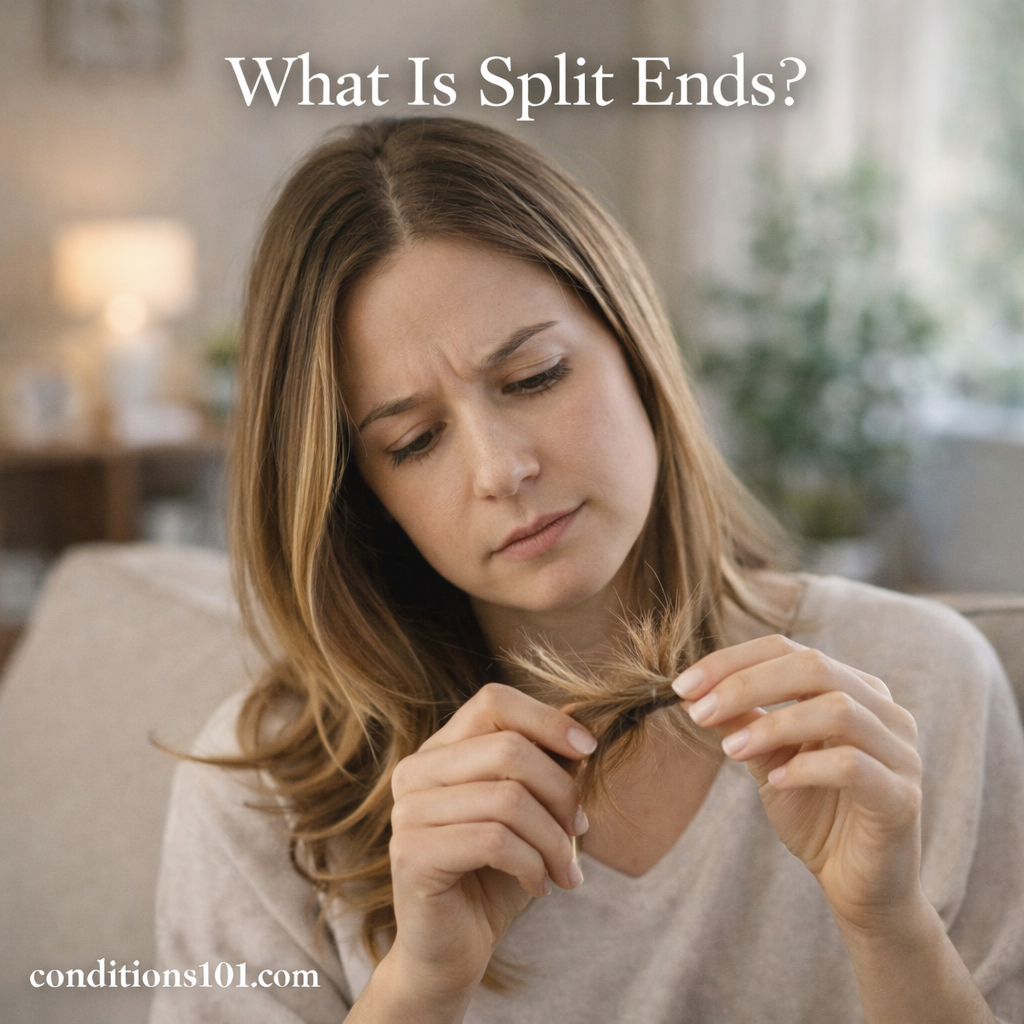
Adult woman examining the ends of her hair in a calm home setting, representing split ends in an educational hair care context.
A close-up, everyday moment showing how split ends appear on natural hair. conditions101.com

Split ends are a common hair condition where the tip of a hair strand frays or separates into multiple parts. This happens when the protective outer layer of the hair (the cuticle) becomes worn down, allowing the inner structure of the hair to split.

Split ends are also known by the technical term trichoptilosis. They are not a disease or medical condition, but rather a structural change in the hair fiber that affects appearance, texture, and manageability.

Continue reading “What Is Split Ends?”

What Is Anhedonia?

Adult woman sitting thoughtfully on a couch in a calm home setting, representing anhedonia in an educational mental health context.
A quiet, reflective moment illustrating how anhedonia may feel in everyday life. conditions101.com

Anhedonia is a term used to describe a reduced ability to feel pleasure or enjoyment from activities that are typically found rewarding. This can include hobbies, social interactions, food, achievements, or other everyday experiences that once felt satisfying or meaningful.

Rather than meaning a complete absence of emotion, anhedonia specifically relates to diminished pleasure, not necessarily sadness or distress. A person may still feel emotions such as concern, frustration, or neutrality while noticing that enjoyment feels muted or absent.

Anhedonia is considered a symptom or experience, not a standalone diagnosis.

Continue reading “What Is Anhedonia?”

What Is a Non-Communicable Disease?

Adult person sitting calmly in a living room, reflecting on the concept of non-communicable diseases in an educational health context.
An everyday moment representing thoughtful awareness of non-communicable diseases. conditions101.com

Non-communicable diseases (NCDs) are health conditions that are not spread from person to person. Unlike infectious diseases, they do not result from bacteria, viruses, or parasites and cannot be transmitted through contact, air, food, or water.

These conditions are typically long-lasting and often develop gradually over time. Because of this, they are sometimes referred to as chronic diseases, although not all chronic conditions fall into this category.

Understanding what non-communicable diseases are can help clarify how they differ from contagious illnesses and why they are such a major focus in global health discussions.

Continue reading “What Is a Non-Communicable Disease?”