What Is Sleep Inertia?

Adult woman sitting on a couch in a calm home setting, appearing groggy and reflective, representing an educational explanation of sleep inertia.
An adult experiencing morning grogginess in a quiet home environment, supporting an educational discussion about sleep inertia. conditions101.com.

Sleep inertia is a temporary state of grogginess, reduced alertness, and impaired performance that can occur immediately after waking up. During this period, a person may feel mentally foggy, physically sluggish, or disoriented, even though they are technically awake.

This article provides an educational, non-clinical overview of what sleep inertia is, how it is commonly described, and how it fits into general sleep and fatigue education. It does not provide medical advice, diagnosis, or treatment.

Continue reading “What Is Sleep Inertia?”
What Is Oversleeping?

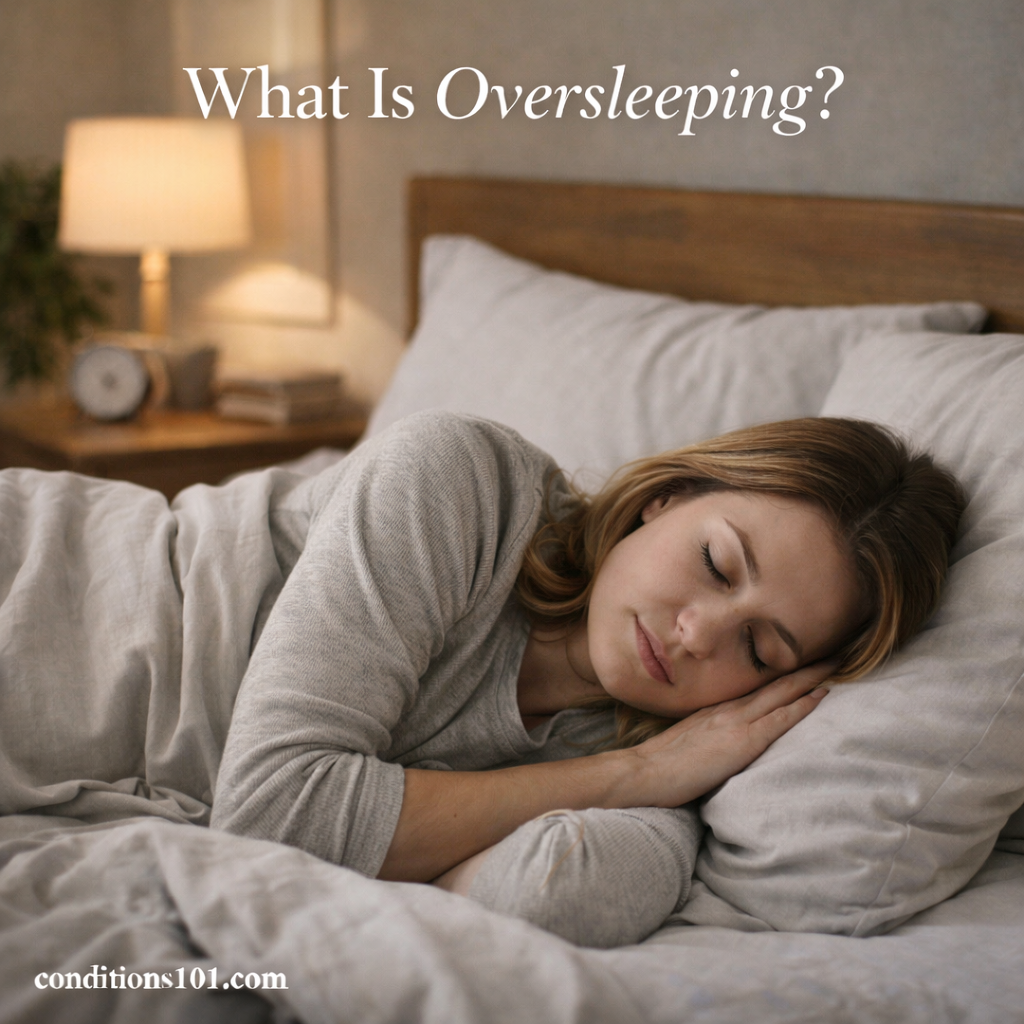
Adult woman resting peacefully in bed in a calm bedroom setting for an educational article explaining what oversleeping is.
A calm, everyday sleep scene representing general education about oversleeping and sleep duration. conditions101.com.

Oversleeping refers to sleeping longer than what is typically considered necessary for feeling rested and alert. It generally means spending excessive time asleep or in bed beyond personal or general sleep needs, often without feeling refreshed afterward. Oversleeping is a common experience and can happen occasionally or more frequently, depending on circumstances.

Oversleeping is a descriptive term, not a medical diagnosis. It focuses on sleep duration and patterns rather than identifying a specific underlying cause.

Continue reading “What Is Oversleeping?”

What Is Shift Work Sleep Disorder?

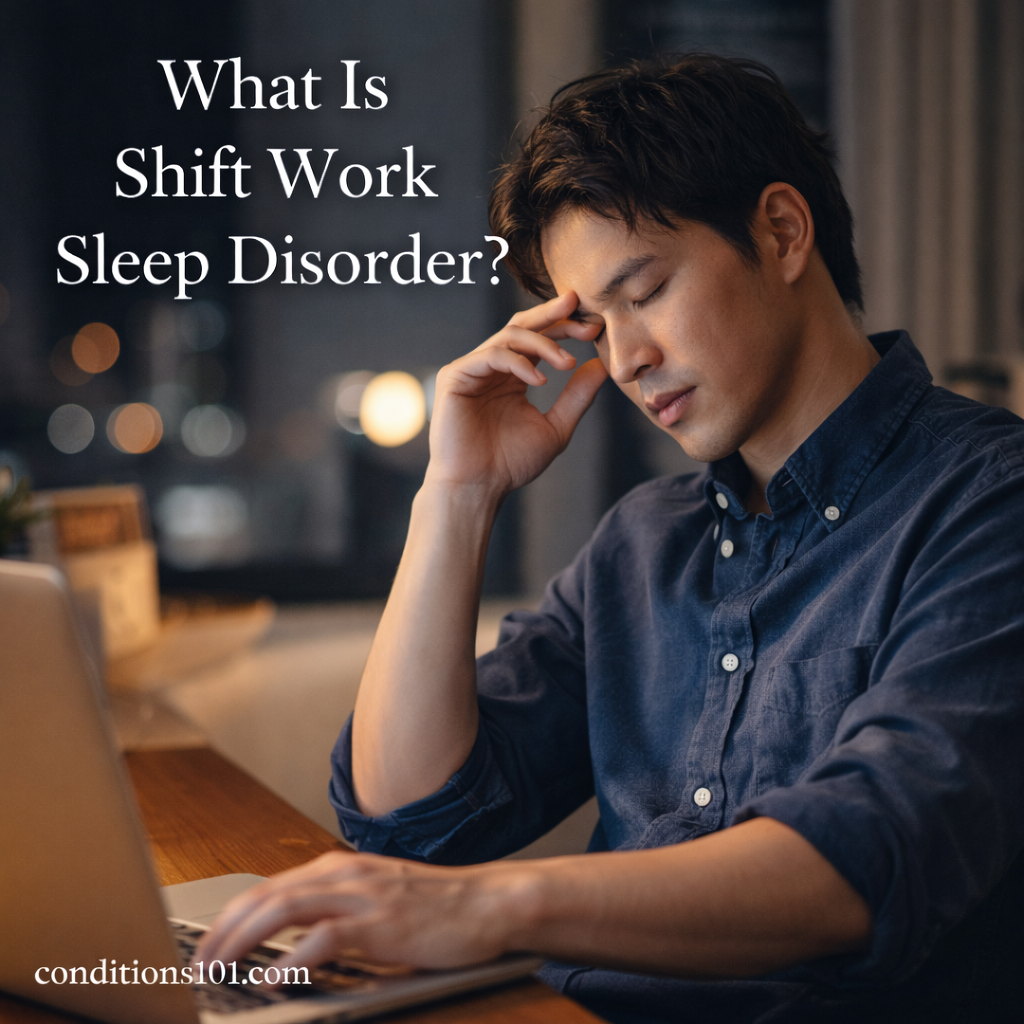
Adult man working at a desk at night in a calm indoor setting, appearing tired and thoughtfully focused.
An adult working during nighttime hours in a quiet home environment, illustrating shift work sleep disorder. conditions101.com

Shift Work Sleep Disorder (SWSD) is a term used to describe sleep difficulties that are linked to working nontraditional schedules. This can include night shifts, early morning shifts, rotating shifts, or other work hours that overlap with typical sleeping times. The condition is associated with ongoing challenges related to sleep timing, alertness, and fatigue.

This article provides an educational, non-clinical overview of what shift work sleep disorder means, how it differs from general sleep disruption, and how it may affect daily life. It does not provide medical advice, diagnosis, or treatment.

Continue reading “What Is Shift Work Sleep Disorder?”

What Is Circadian Rhythm?

Man sitting thoughtfully by a window in a calm living room, representing an educational overview of circadian rhythm and daily sleep–wake patterns.
A calm, reflective everyday moment illustrating how circadian rhythm influences alertness and rest across the day. conditions101.com.

Circadian rhythm refers to the body’s internal 24-hour clock that helps regulate patterns of sleep, wakefulness, energy levels, and other daily biological processes. This rhythm influences when people feel alert or tired and plays a central role in maintaining a regular sleep–wake cycle.

Circadian rhythm is a natural, built-in system present in humans and many other living organisms. This article explains the concept for educational purposes only and does not provide medical advice, diagnosis, or treatment.

Continue reading “What Is Circadian Rhythm?”

What Is Cognitive Fatigue?

Woman sitting thoughtfully at a home office desk, representing mental tiredness and cognitive fatigue in an everyday setting.
A calm, focused moment illustrating how cognitive fatigue can affect thinking and concentration during daily tasks. conditions101.com.

Cognitive fatigue is a non-clinical term used to describe a state of mental tiredness that affects thinking, concentration, memory, and overall mental efficiency. It often occurs after prolonged periods of mental effort, sustained focus, or information processing and can make everyday cognitive tasks feel more difficult than usual.

Cognitive fatigue is not a diagnosis or medical condition on its own. Instead, it is a descriptive concept commonly used in educational, occupational, and cognitive health discussions to explain temporary changes in mental performance.

This article is for educational purposes only and does not provide medical advice, diagnosis, or treatment.

Continue reading “What Is Cognitive Fatigue?”

What Is Sleep Debt?

Two adults sitting indoors with tired, thoughtful expressions in a calm everyday setting, representing an educational overview of sleep debt.
A calm, everyday scene illustrating fatigue and reduced alertness commonly discussed in relation to sleep debt. conditions101.com.

Sleep debt is a term used to describe the cumulative effect of not getting enough sleep over time. When a person regularly sleeps fewer hours than their body needs, the missed sleep adds up, creating what is commonly referred to as sleep debt. This concept is often discussed in sleep and fatigue education to explain ongoing tiredness and reduced alertness.

This article provides an educational overview of sleep debt, what the term means, how it accumulates, and why it is frequently discussed in sleep and fatigue–related health topics.

Continue reading “What Is Sleep Debt?”

What Is Non-Restorative Sleep?

Adult man sitting on a couch in a calm living room setting with a tired, reflective expression, representing non-restorative sleep.
A quiet everyday moment illustrating how non-restorative sleep can leave a person feeling unrefreshed. conditions101.com.

Non-restorative sleep is a sleep-related condition in which a person sleeps for an adequate amount of time but still wakes up feeling unrefreshed, tired, or mentally drained. Unlike short sleep duration or difficulty falling asleep, non-restorative sleep is defined by the lack of physical and mental recovery after sleep. This article provides a clear, educational overview of non-restorative sleep to explain what it is, how it differs from other sleep problems, and how it can affect daily life, without offering medical advice, diagnosis, or treatment.

Continue reading “What Is Non-Restorative Sleep?”

What Is Sleep Fragmentation?

Adult woman sitting on a couch with a thoughtful, tired expression in a calm home setting, representing an educational overview of sleep fragmentation.
An adult person reflecting quietly in a relaxed home environment, illustrating disrupted sleep experiences discussed in sleep fragmentation education. conditions101.com.

Sleep fragmentation refers to a pattern of disrupted sleep in which a person experiences frequent awakenings or brief arousals throughout the night. Even if total sleep time appears adequate, repeated interruptions can prevent the body and brain from moving smoothly through normal sleep stages. As a result, sleep may feel unrefreshing.

This article provides education-only, evergreen information to explain what sleep fragmentation is, how it is commonly described, and how it can affect rest and daily functioning. It does not provide medical advice, diagnosis, or treatment.

Continue reading “What Is Sleep Fragmentation?”

What Is Early Morning Waking?

Adult woman sitting by a window in the early morning with a thoughtful expression, representing an educational overview of early morning waking.
An adult person reflecting quietly in a calm home setting at dawn, illustrating early morning waking discussed in sleep education. conditions101.com.

Early morning waking refers to a pattern of waking up earlier than intended and being unable to return to sleep. This experience often occurs in the early hours of the morning, well before a planned wake-up time. While occasional early waking can happen to anyone, a recurring pattern may affect overall sleep quality and daytime functioning.

This article provides education-only, evergreen information to explain what early morning waking is, how it is commonly described, and how it may affect daily life. It does not provide medical advice, diagnosis, or treatment.

Continue reading “What Is Early Morning Waking?”

What Is Difficulty Staying Asleep?

Middle-aged woman sitting awake on a bed at night in a calm bedroom, appearing thoughtful and tired, representing difficulty staying asleep.
A middle-aged woman awake at night in a quiet bedroom, reflecting common experiences associated with difficulty staying asleep. conditions101.com.

Difficulty staying asleep refers to trouble remaining asleep throughout the night after initially falling asleep. People with this experience may wake up frequently, wake up too early, or have difficulty returning to sleep once awakened. As a result, sleep may feel fragmented or unrefreshing, even if total time in bed seems adequate.

This article provides a clear, educational overview of what difficulty staying asleep is. It is intended for general information only and does not offer medical advice, diagnosis, or treatment.

Continue reading “What Is Difficulty Staying Asleep?”