What Is Fatigue Accumulation?

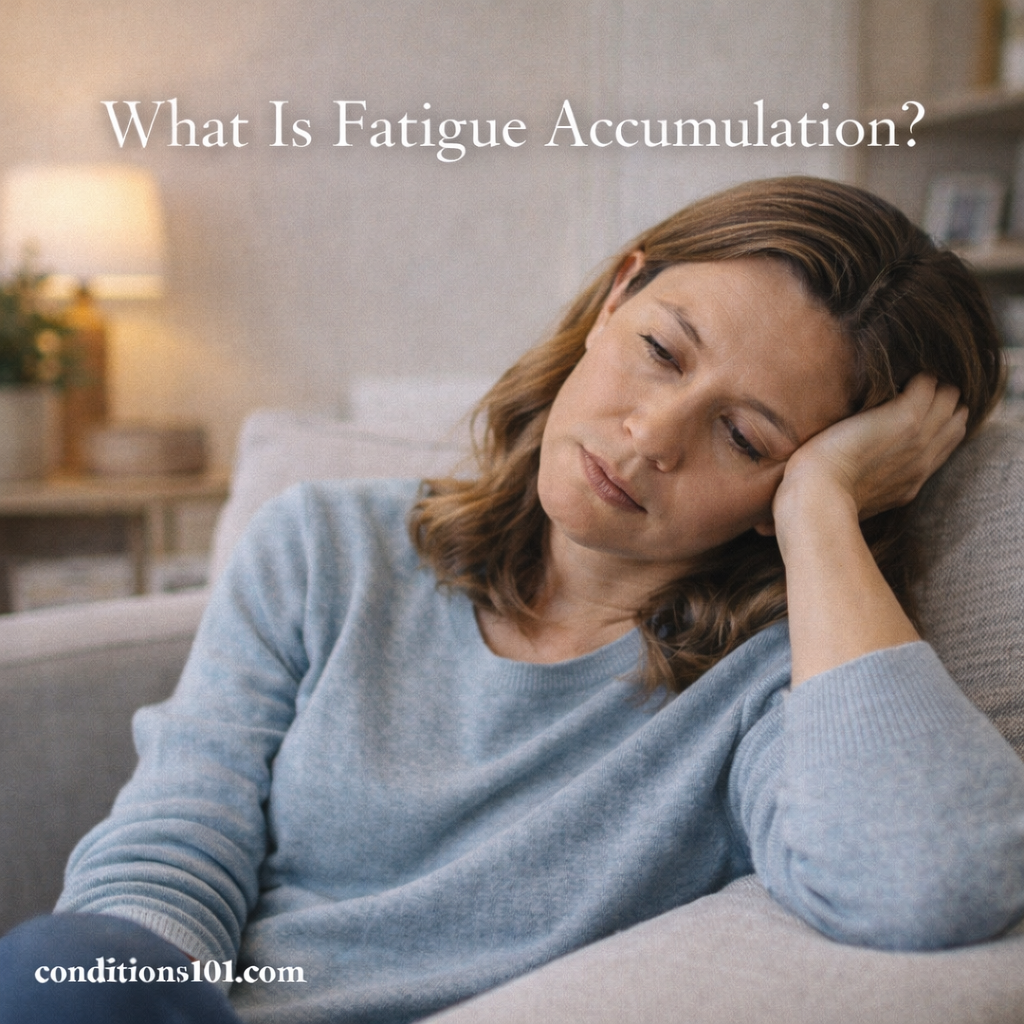
Adult woman resting on a couch with a tired but calm expression in a home setting, representing fatigue accumulation in an educational, non-clinical context.
A woman pausing during a quiet moment at home, illustrating how fatigue accumulation can build gradually through everyday life. conditions101.com.

Fatigue accumulation refers to the gradual build-up of physical or mental tiredness over time when rest and recovery are insufficient. Instead of feeling tired after a single activity or long day, fatigue accumulation develops slowly as tiredness compounds across multiple days or periods without adequate recovery.

This article explains what fatigue accumulation means, how it is commonly described, what contributes to it, and why the concept is discussed in sleep and fatigue education. It is for informational purposes only and does not provide medical advice, diagnosis, or treatment.

Continue reading “What Is Fatigue Accumulation?”

What Is Sleep Quality vs Quantity?

Adult woman sitting on a couch with a thoughtful expression in a calm living room setting, representing an educational article about sleep quality versus sleep quantity.
A calm, reflective moment illustrating everyday awareness of sleep quality and sleep duration. conditions101.com.

Sleep quality and sleep quantity are two related but distinct aspects of sleep. While they are often discussed together, they describe different features of how sleep works and how it affects daily functioning. Understanding the difference between sleep quality and quantity can help clarify why simply spending more time in bed does not always lead to feeling rested.

This article provides an education-only overview of sleep quality versus sleep quantity, explaining what each term means, how they differ, and how both influence everyday life. It does not provide medical advice, diagnosis, or treatment.

Continue reading “What Is Sleep Quality vs Quantity?”

What Is Sleep Rhythm Disruption?

Adult woman resting on a couch in a calm home setting, appearing quietly fatigued and reflective, representing sleep rhythm disruption.
An adult woman sitting quietly in a relaxed home environment, illustrating sleep rhythm disruption in everyday life. conditions101.com.

Sleep rhythm disruption refers to a disturbance in the body’s natural sleep–wake cycle, also known as the circadian rhythm. This cycle helps regulate when a person feels alert and when they feel sleepy over a 24-hour period. When the rhythm is disrupted, sleep timing, duration, or quality may become inconsistent or misaligned with daily routines.

Sleep rhythm disruption is not a diagnosis. It is a descriptive term used to explain patterns of irregular or shifted sleep that differ from what feels typical for an individual.

Continue reading “What Is Sleep Rhythm Disruption?”

What Is Sleep Balance?

An adult man sitting calmly on a couch in a softly lit living room, representing awareness of sleep balance and daily rest.
A calm everyday moment illustrating how balanced sleep supports daily energy and well-being. conditions101.com.

Sleep balance refers to maintaining a consistent, healthy relationship between sleep duration, sleep quality, and daily wakefulness. It is a general, non-clinical concept used in health education to describe how well sleep supports daily functioning, energy levels, and overall well-being.

Rather than focusing on a specific number of hours, sleep balance emphasizes how sleep fits into a person’s routine and supports physical and mental recovery.

Continue reading “What Is Sleep Balance?”

What Is Sleep Stress?

Adult woman sitting calmly in a living room, appearing thoughtful and relaxed, representing the concept of sleep stress in everyday life.
A calm, everyday moment illustrating how mental stress can influence rest and sleep patterns. conditions101.com.

Sleep stress is a term used to describe the mental and physical strain that interferes with the body’s ability to rest and recover during sleep. It refers to the cycle in which stress affects sleep quality, and poor sleep then increases stress levels, creating an ongoing loop that can be difficult to break.

While sleep stress is not a medical diagnosis, it is a commonly discussed concept in sleep education, wellness research, and fatigue-related topics. Understanding how sleep stress works can help people recognize patterns that affect rest and daily energy levels.

Continue reading “What Is Sleep Stress?”

What Is Sleep Sensitivity?

Adult person sitting thoughtfully in a calm home environment, representing an educational article about sleep sensitivity.
A quiet, reflective moment illustrating how sleep sensitivity can influence everyday rest and awareness. conditions101.com.

Sleep sensitivity refers to how easily a person’s sleep is affected by internal or external factors. Someone with higher sleep sensitivity may notice that small changes—such as noise, light, stress, schedule shifts, or minor discomfort—have a noticeable impact on how easily they fall asleep, stay asleep, or feel rested afterward.

Sleep sensitivity is a descriptive concept rather than a diagnosis. It helps explain differences in how individuals respond to everyday sleep influences and why some people experience more disrupted or variable sleep than others under similar conditions.

Understanding sleep sensitivity can support clearer conversations about sleep patterns and expectations without implying a medical condition.

Continue reading “What Is Sleep Sensitivity?”

What Is Sleep Resilience?

Adult woman sitting calmly in a living room, representing an educational article explaining the concept of sleep resilience.
A reflective moment in a calm home setting, illustrating adaptability and balance in everyday sleep patterns. conditions101.com.

Sleep resilience refers to the body’s and mind’s ability to maintain, recover, or adapt healthy sleep patterns despite disruptions such as stress, schedule changes, poor sleep nights, or environmental challenges. Rather than meaning “perfect sleep,” sleep resilience describes how well someone can bounce back after sleep disturbances.

People with strong sleep resilience may still experience occasional poor sleep, but their overall sleep quality tends to stabilize over time without prolonged disruption.

Continue reading “What Is Sleep Resilience?”

What Is Sleep Adaptation?

Adult woman sitting on a couch in a calm living room with a thoughtful expression, representing sleep adaptation in an educational, non-clinical context.
A quiet, everyday moment illustrating reflection and adjustment in an educational article about sleep adaptation. conditions101.com.

Sleep adaptation refers to the way the body and brain gradually adjust sleep patterns in response to changes in routine, environment, or timing. Rather than being a disorder or disease, sleep adaptation describes a natural adjustment process that occurs when usual sleep habits are disrupted.

This adaptation can happen when someone changes schedules, travels across time zones, alters bedtime routines, or experiences shifts in daily demands.

Continue reading “What Is Sleep Adaptation?”

What Is Sleep Timing?

Man sitting on a couch holding an alarm clock, thoughtfully reflecting on bedtime and wake time schedules related to sleep timing.
A calm, everyday moment illustrating how sleep timing is shaped by daily routines and wake schedules. conditions101.com.

Sleep timing refers to when a person falls asleep and wakes up within a 24-hour day. Rather than focusing on how long someone sleeps or how restful that sleep feels, sleep timing looks at the placement of sleep in relation to the body’s internal clock and daily schedule.

Sleep timing is a key concept in sleep and fatigue education because it helps explain why people can feel tired or alert at different times of day, even when total sleep duration is similar.

Continue reading “What Is Sleep Timing?”

What Is Sleep Duration?

Adult woman sitting on a couch holding a mug in a calm home setting, representing sleep duration and everyday rest patterns.
An adult relaxing in a quiet home environment, illustrating sleep duration as part of daily routines. conditions101.com.

Sleep duration refers to the total amount of time a person spends sleeping within a 24-hour period. It includes nighttime sleep as well as naps, depending on how sleep is measured or discussed. Sleep duration is one of the core ways people describe their sleep patterns, alongside sleep quality and sleep timing.

Sleep duration is not a diagnosis. It is a descriptive measure used in everyday conversation, research, and educational discussions to understand how long someone sleeps on a regular basis.

Continue reading “What Is Sleep Duration?”