What Is Sensitive Skin?

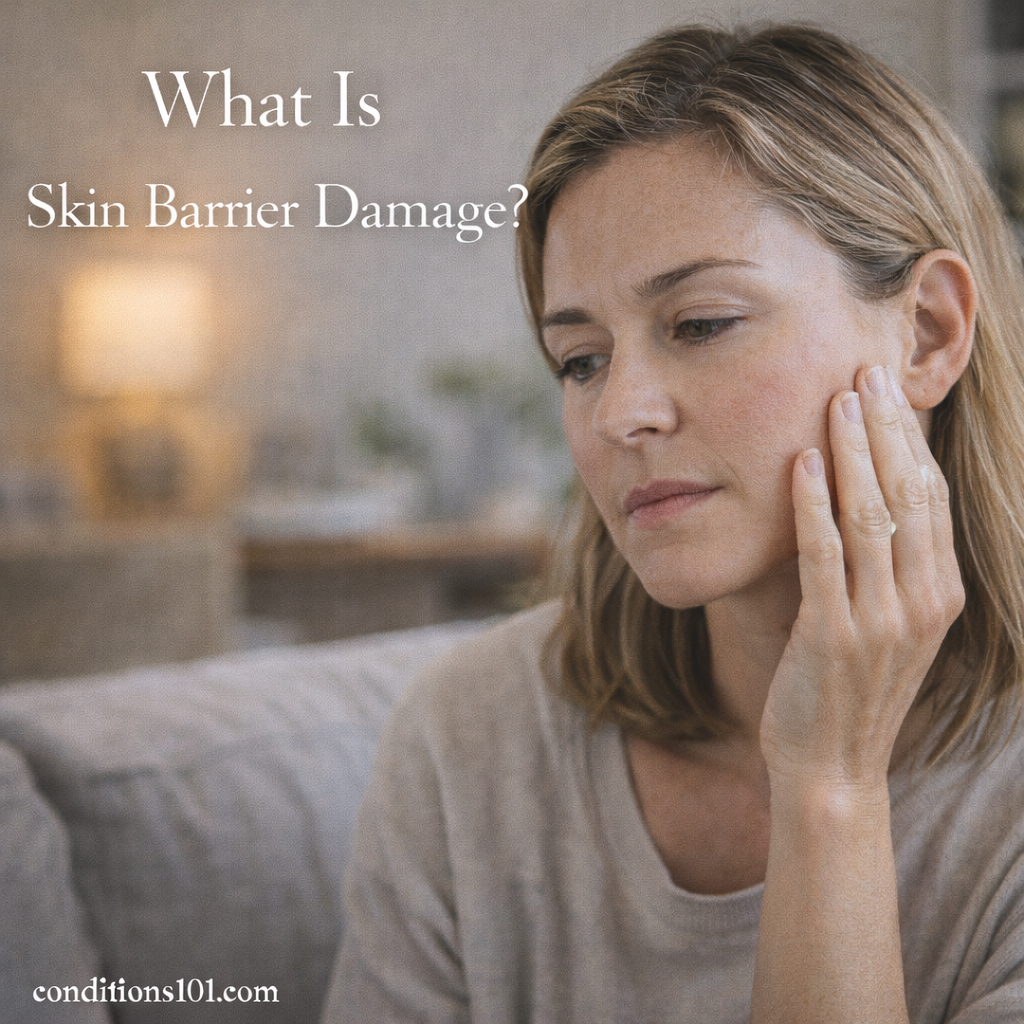
An adult woman gently touching her cheek in a calm indoor setting, representing sensitive skin in an everyday, non-clinical context.
A natural, everyday moment reflecting how sensitive skin may feel during daily life. conditions101.com.

Sensitive skin is a commonly used term to describe skin that reacts more easily to certain products, environmental factors, or physical contact. People with sensitive skin may notice discomfort, irritation, or visible changes more quickly than others, even when exposed to everyday conditions.

Sensitive skin is not a medical diagnosis. It is a descriptive term often used to explain how skin behaves rather than a specific condition on its own.

Continue reading “What Is Sensitive Skin?”

What Is Oily Skin?

Adult woman with naturally shiny skin sitting in a calm living room, appearing thoughtful in an educational article about oily skin.
A natural, everyday moment illustrating what oily skin can look like in general skin and appearance education. conditions101.com.

Oily skin is a skin type characterized by excess production of sebum, the natural oil produced by the skin’s sebaceous glands. Sebum plays an important role in keeping skin moisturized and protected, but when it is produced in higher-than-needed amounts, the skin may appear shiny or greasy, particularly in certain areas of the face.

This article provides an educational overview of oily skin, what causes it, how it commonly presents, and how it differs from other skin types. It does not provide medical advice, diagnosis, or treatment.

Continue reading “What Is Oily Skin?”

What Is Dry Skin?

Adult woman examining her hands in a calm home setting, representing an educational explanation of what dry skin is.
An adult observing dry skin on her hands in a quiet home environment, supporting an educational discussion about skin moisture and dryness. conditions101.com.

Dry skin is a common condition characterized by a lack of sufficient moisture in the outer layers of the skin. It often results in skin that feels tight, rough, flaky, or uncomfortable. Dry skin can affect people of all ages and may appear on specific areas of the body or more broadly.

This article provides an educational, non-clinical overview of what dry skin is, how it is commonly described, and why it occurs. It does not provide medical advice, diagnosis, or treatment.

Continue reading “What Is Dry Skin?”

What Is Body Odor?

Adult man sitting calmly in an outdoor public space, representing a neutral everyday setting for an educational article explaining what body odor is.
A calm, everyday outdoor moment representing general education about body odor and natural body processes. conditions101.com.

Body odor is the smell that can develop when sweat produced by the body interacts with naturally occurring bacteria on the skin. On its own, sweat is mostly odorless. Body odor forms when skin bacteria break down certain components of sweat, producing compounds that create noticeable scents.

Body odor is a normal part of human biology and varies widely from person to person. Factors such as genetics, hygiene habits, environment, diet, and activity level all influence how body odor develops and how strong it may be.

Continue reading “What Is Body Odor?”

What Is Excessive Sweating?

Adult man outdoors in a calm public setting, wiping sweat from his forehead during an everyday moment.
An adult managing perspiration in a natural outdoor environment, illustrating excessive sweating in daily life. conditions101.com

Excessive sweating refers to perspiration that goes beyond what is typically needed to regulate body temperature. While sweating is a normal and essential bodily function, excessive sweating may occur more frequently, more intensely, or in situations where cooling the body is not the primary need.

This article provides an educational overview of excessive sweating, how it differs from typical perspiration, and how it may affect daily life. It does not provide medical advice, diagnosis, or treatment.

Continue reading “What Is Excessive Sweating?”

What Is Keratosis Pilaris?

Woman looking at the skin on her upper arm in a calm home setting, representing an educational overview of keratosis pilaris.
A close, everyday look at skin texture commonly associated with keratosis pilaris in a non-clinical setting. conditions101.com.

Keratosis pilaris is a common, non-contagious skin condition that causes small, rough bumps to form on the surface of the skin. These bumps are often described as feeling like sandpaper or “chicken skin” and most commonly appear on the upper arms, thighs, cheeks, or buttocks.

Keratosis pilaris is harmless and not a sign of poor hygiene or infection. It is considered a cosmetic skin condition rather than a medical problem. This article explains keratosis pilaris for educational purposes only and does not provide medical advice, diagnosis, or treatment.

Continue reading “What Is Keratosis Pilaris?”

What Is Hypopigmentation?

An adult woman sitting indoors and thoughtfully looking at a lighter patch of skin on her forearm, illustrating hypopigmentation in an everyday setting.
A calm, everyday moment illustrating lighter skin areas commonly described as hypopigmentation. conditions101.com.

Hypopigmentation is a general term used to describe areas of skin that appear lighter than the surrounding skin. This lighter appearance happens when the skin produces less melanin, the natural pigment responsible for skin, hair, and eye color. Hypopigmentation is not a single condition, but rather a visible change that can occur for many different reasons.

This article provides an educational overview of hypopigmentation, how it is commonly described, and why it is discussed in skin and appearance-related health topics.

Continue reading “What Is Hypopigmentation?”

What Is Hyperpigmentation?

Adult woman sitting outdoors with visible facial hyperpigmentation, representing an educational overview of skin tone changes.
A calm outdoor setting illustrating how hyperpigmentation can appear in everyday life. conditions101.com.

Hyperpigmentation is a common skin condition in which certain areas of the skin become darker than the surrounding skin. This darkening occurs when excess pigment, known as melanin, is produced or deposited in the skin. Hyperpigmentation can affect people of all skin tones and may appear anywhere on the body, most commonly on the face, hands, neck, and other areas exposed to the sun. This article provides a clear, educational overview of hyperpigmentation to explain what it is, why it occurs, and how it can affect appearance, without offering medical advice, diagnosis, or treatment.

Continue reading “What Is Hyperpigmentation?”

What Is Vitiligo?

Adult woman with visible vitiligo sitting outdoors in a calm public setting, representing an educational overview of vitiligo.
An adult person in a relaxed outdoor environment, illustrating visible skin pigmentation differences discussed in vitiligo education. conditions101.com.

Vitiligo is a long-term skin condition characterized by the loss of natural skin color in certain areas of the body. This happens when pigment-producing cells, known as melanocytes, stop functioning or are reduced in specific regions of the skin. The result is lighter or white patches that contrast with the surrounding skin tone.

This article provides education-only, evergreen information to explain what vitiligo is, how it appears, and how it may affect appearance and daily life. It does not provide medical advice, diagnosis, or treatment.

Continue reading “What Is Vitiligo?”

What Is Melasma?

Adult woman sitting outdoors with natural facial pigmentation, representing an educational overview of melasma.
An adult person in a calm outdoor setting, illustrating common facial pigmentation patterns discussed in melasma education. conditions101.com.

Melasma is a common skin condition that causes patches of darker pigmentation to appear on the skin, most often on the face. These patches typically develop gradually and are not harmful, but they can be noticeable and long-lasting. Melasma is considered a pigmentation condition rather than a disease and is primarily related to changes in skin color rather than skin texture.

This article provides education-only, evergreen information to help explain what melasma is, how it appears, and what factors are commonly associated with it. It does not provide medical advice, diagnosis, or treatment.

Continue reading “What Is Melasma?”