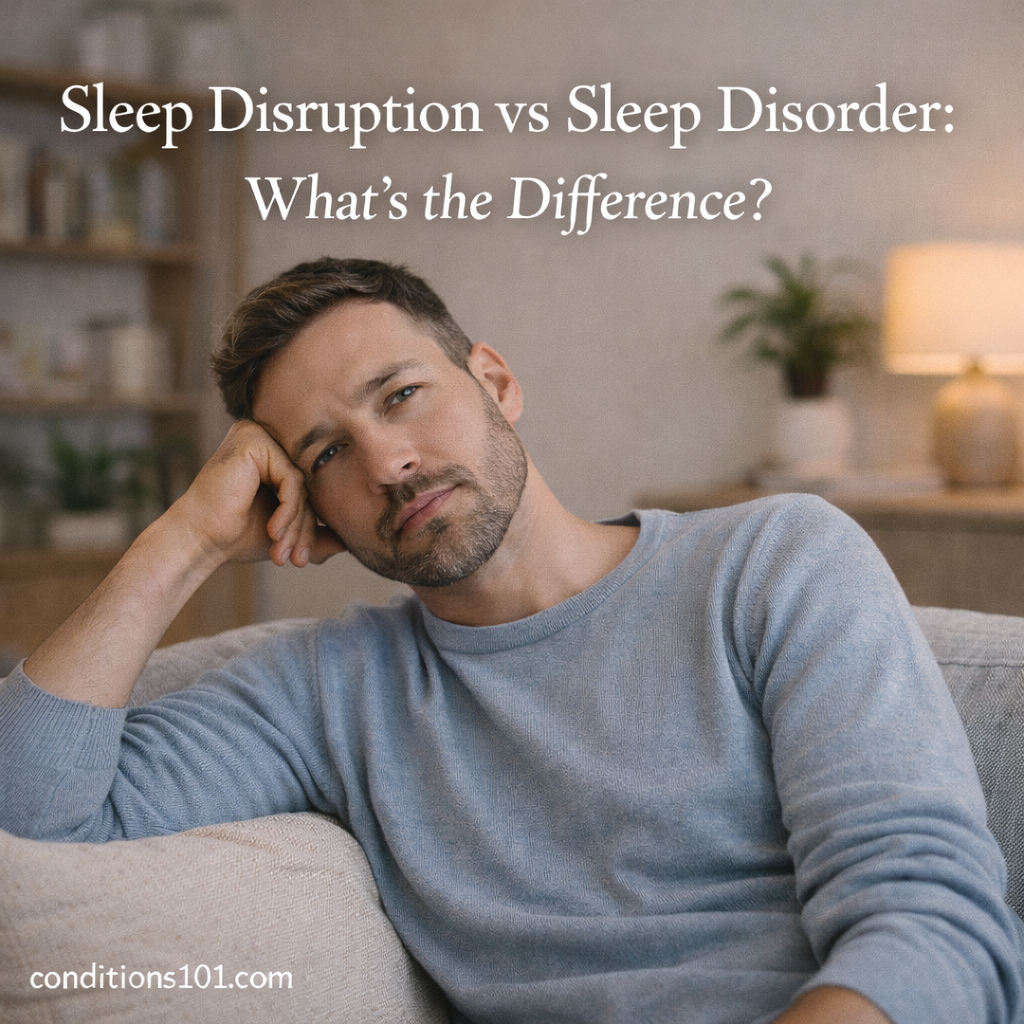
Sleep disruption and sleep disorder are terms that are often used interchangeably, but they describe different concepts. Both relate to difficulties with sleep, yet they differ in cause, duration, and how they are typically discussed in educational and clinical contexts.
Understanding the distinction can help clarify why occasional sleep problems are common, while ongoing sleep difficulties may be described differently. This article provides an educational overview and does not offer medical advice, diagnosis, or treatment.
Continue reading “Sleep Disruption vs Sleep Disorder: What’s the Difference?”