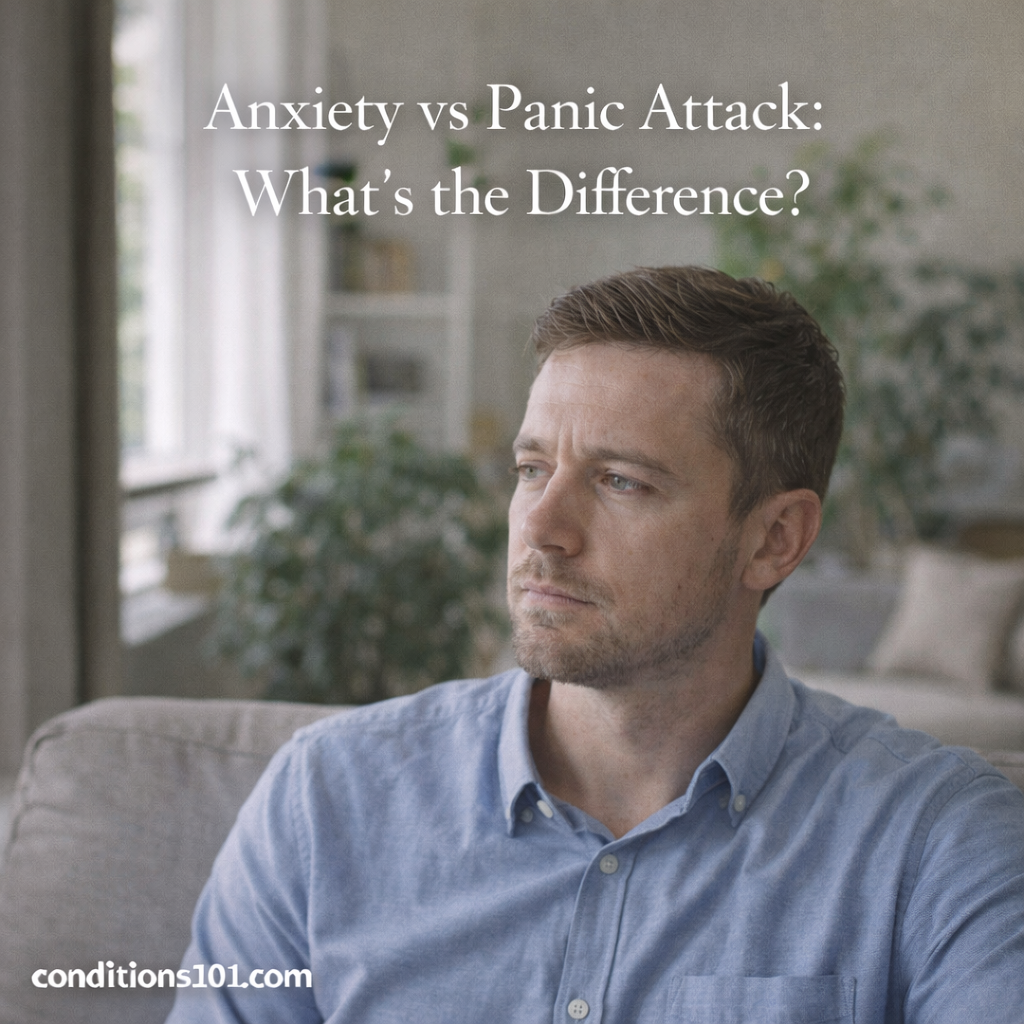
Anxiety and panic attacks are often mentioned together, but they describe different experiences related to emotional and physical responses to stress or perceived threat. While they can share similar sensations, they differ in how they begin, how intense they feel, and how long they typically last.
This article provides an educational comparison of anxiety and panic attacks, explaining their key differences in a clear, non-clinical way. It does not provide medical advice, diagnosis, or treatment.
Understanding Anxiety
Anxiety is a state of ongoing worry, tension, or unease that can range from mild to intense. It is often connected to thoughts about future events, responsibilities, or uncertain situations.
Anxiety is commonly described as:
- Persistent worry or apprehension
- Feeling tense, restless, or on edge
- Difficulty relaxing
- Heightened alertness or concern
Anxiety often builds gradually and may linger for extended periods, such as days, weeks, or longer.
Understanding Panic Attacks
A panic attack is a sudden surge of intense fear or discomfort that reaches a peak quickly. Panic attacks can feel overwhelming and may appear to come on without warning.
Panic attacks are commonly described as:
- A sudden sense of intense fear or dread
- Rapid heartbeat or strong physical sensations
- Feeling out of control or alarmed
- A strong urge to escape the situation
Unlike anxiety, panic attacks are usually short-lived, often peaking within minutes before gradually easing.
Key Differences Between Anxiety and Panic Attacks

Although anxiety and panic attacks share some overlapping sensations, several features help distinguish them.
Onset
- Anxiety tends to develop gradually over time
- Panic attacks begin suddenly and abruptly
Intensity
- Anxiety is often moderate but persistent
- Panic attacks are typically intense and overwhelming
Duration
- Anxiety can last for long periods
- Panic attacks are usually brief, though the experience may feel very intense
Trigger Awareness
- Anxiety is often linked to identifiable worries or stressors
- Panic attacks may occur with or without an obvious trigger
Physical and Emotional Experiences
Both anxiety and panic attacks can involve physical and emotional sensations, though the pattern may differ.
Anxiety-Related Experiences
People may notice:
- Muscle tension
- Restlessness
- Difficulty concentrating
- Ongoing nervousness
Panic Attack Experiences
People may notice:
- Sudden rush of fear
- Strong physical sensations
- A feeling of imminent danger
- Intense discomfort that peaks quickly
The same person may experience both at different times.
Can Anxiety and Panic Attacks Occur Together?
Yes. Anxiety and panic attacks can overlap. For example:
- Ongoing anxiety may increase vulnerability to panic attacks
- A panic attack may be followed by lingering anxiety
However, experiencing one does not automatically mean a person will experience the other.
Why the Distinction Matters
Understanding the difference between anxiety and panic attacks helps:
- Clarify conversations about emotional experiences
- Reduce confusion caused by using the terms interchangeably
- Improve awareness of how stress responses can vary
Using accurate language allows for clearer communication and better understanding.
How People Commonly Describe the Difference
People often explain the difference this way:
- Anxiety feels like a constant background worry
- A panic attack feels like a sudden wave of fear
Both experiences are real and valid, but they reflect different patterns of response.
Key Takeaways
- Anxiety is ongoing and often gradual
- Panic attacks are sudden and intense
- Anxiety can last much longer than a panic attack
- Panic attacks usually peak quickly and then subside
- The two experiences can overlap but are not the same
Understanding the differences between anxiety and panic attacks supports clearer, more informed discussions about emotional and mental health experiences.