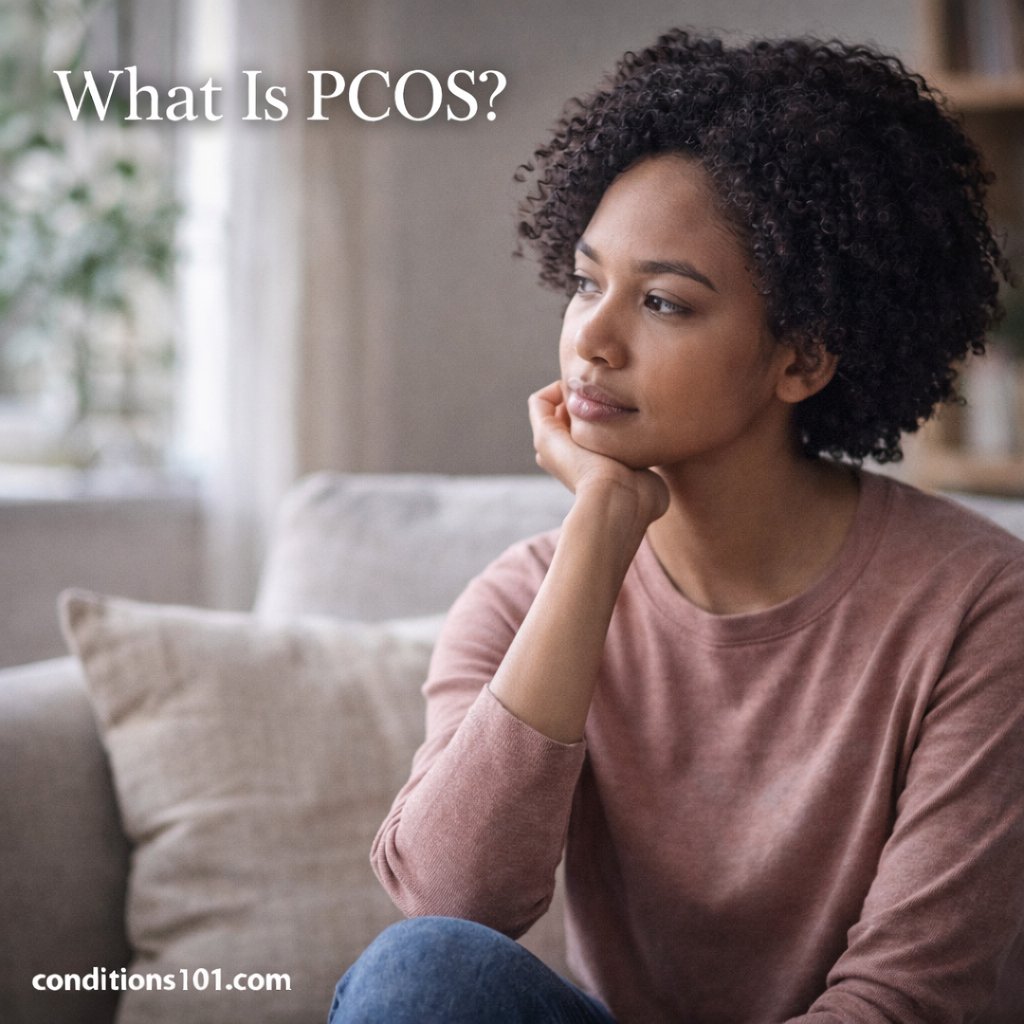
PCOS stands for polycystic ovary syndrome. It is a common hormonal condition that affects how the ovaries function and how hormones are regulated in the body. PCOS is considered a long-term condition, but its features, intensity, and impact can vary widely from person to person.
PCOS is not a single symptom or uniform experience. Instead, it is a broad syndrome, meaning it involves a collection of related features rather than one defining sign. This article explains PCOS for educational purposes only and does not provide medical advice, diagnosis, or treatment.
Understanding PCOS
PCOS is primarily linked to differences in hormone balance and ovarian function. Hormones act as chemical messengers in the body, and when their levels or interactions change, multiple body systems can be affected.
The term polycystic ovary syndrome can be misleading. Not everyone with PCOS has ovarian cysts, and not everyone with ovarian cysts has PCOS. The name reflects one possible feature, not a requirement.
Why PCOS Is Called a Syndrome
PCOS is called a syndrome because it includes a pattern of related characteristics rather than a single defining condition.
These characteristics may involve:
- Hormone regulation
- Menstrual cycle patterns
- Ovarian function
- Metabolic processes
Different people may experience different combinations of these features.
Common Features Associated With PCOS
PCOS can present in many ways. Some individuals experience noticeable changes, while others have mild or subtle features.
Commonly discussed features include:
- Irregular or unpredictable menstrual cycles
- Differences in ovulation patterns
- Elevated levels of certain hormones
- Changes in hair growth patterns
- Acne or skin changes
Not everyone with PCOS experiences all of these features.
PCOS and Hormones
Hormonal differences are central to PCOS. These differences may involve how the body produces, uses, or responds to certain hormones.
Hormones commonly discussed in relation to PCOS include:
- Reproductive hormones
- Metabolic hormones
- Hormones involved in ovulation and cycle regulation
These hormonal patterns can influence multiple systems, including reproductive and metabolic processes.
PCOS and Ovarian Function
The ovaries play a key role in PCOS, but their involvement varies.
In some cases, the ovaries may:
- Release eggs irregularly
- Show multiple small follicles on imaging
- Produce different hormone levels than expected
These patterns relate to ovulation timing rather than ovarian damage.
PCOS and Metabolic Processes
PCOS is often discussed alongside metabolic health because hormones influence how the body uses energy.
Metabolic-related features commonly discussed include:
- Differences in how the body processes energy
- Changes in weight regulation
- Variations in appetite or energy levels
These features are not universal and vary greatly among individuals.
How PCOS Can Affect Daily Life

The impact of PCOS depends on which features are present and how noticeable they are.
Daily-life effects may include:
- Managing unpredictable cycles
- Navigating skin or hair changes
- Adjusting routines around energy levels
- Emotional responses to body changes
Some people experience minimal disruption, while others notice more consistent effects.
PCOS and Reproductive Health
PCOS is often discussed in the context of reproductive health because it can affect ovulation patterns. However, experiences vary widely, and PCOS does not have a single outcome.
It is important to understand that:
- PCOS does not look the same for everyone
- Reproductive experiences differ between individuals
- Hormonal patterns can change over time
PCOS is a condition with many possible pathways, not a fixed course.
Why PCOS Is Commonly Misunderstood
PCOS is often misunderstood because:
- Symptoms vary widely
- Not all features are visible
- The name can be misleading
- Experiences change over time
This variability can make PCOS difficult to define with a single description.
PCOS Across Different Life Stages
PCOS does not remain static throughout life. Features may change with age, lifestyle shifts, or hormonal transitions.
Some people notice:
- Different patterns during adolescence
- Changes in adulthood
- Shifts later in life
These changes reflect the body’s natural hormonal evolution.
A Neutral Perspective on PCOS
PCOS is best understood as a spectrum rather than a single experience. It represents one of many ways hormonal systems can function.
Key points include:
- PCOS is common
- It varies widely between individuals
- Features may change over time
- It is not defined by one symptom
Understanding PCOS as a broad hormonal pattern helps place it in a clearer, less alarming context.
Key Takeaways
- PCOS stands for polycystic ovary syndrome
- It is a hormonal condition with varied features
- Not everyone with PCOS has ovarian cysts
- Hormonal and metabolic systems may be involved
- Experiences differ widely from person to person
PCOS is a complex but common hormonal condition that reflects diversity in how bodies regulate hormones and reproductive function.