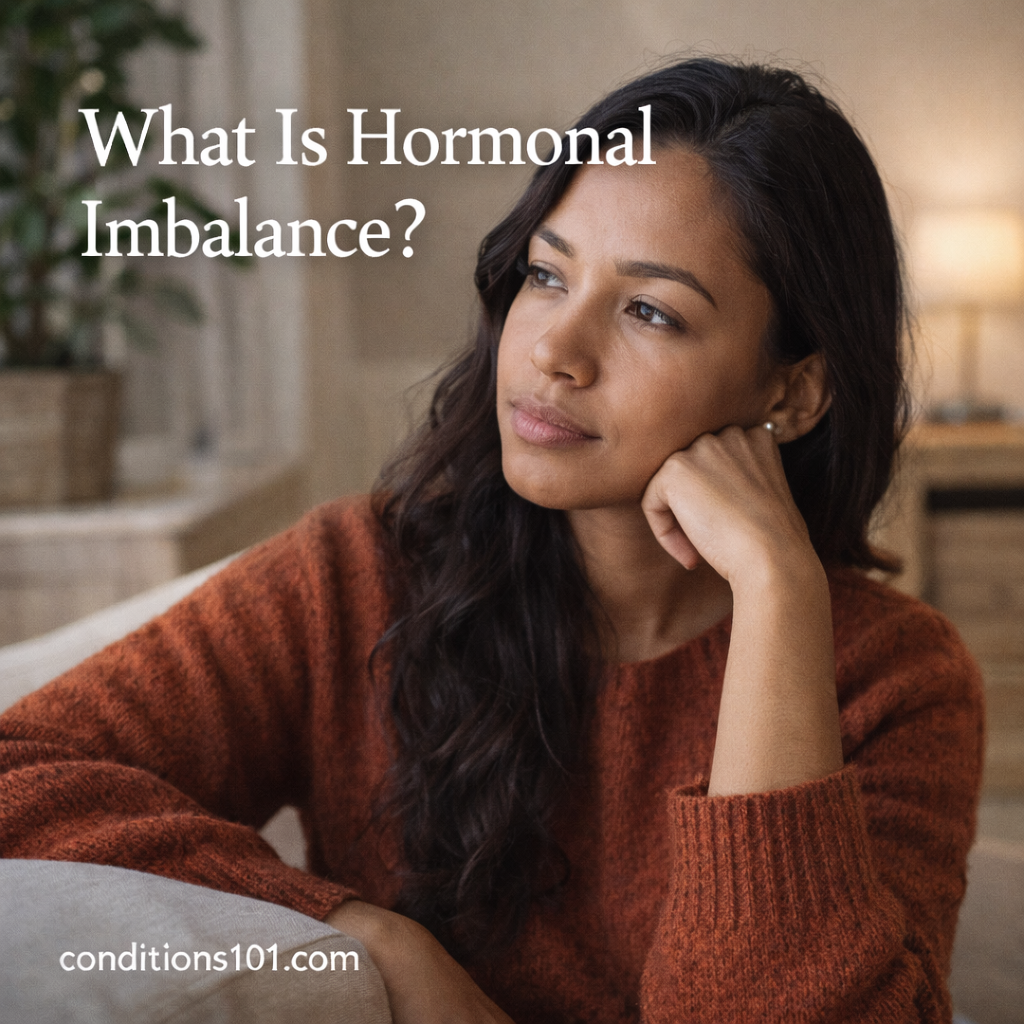
Hormonal imbalance refers to a situation where the body has too much or too little of one or more hormones. Hormones are chemical messengers that travel through the bloodstream and help regulate many essential processes, including growth, metabolism, mood, sleep, and reproduction.
Because hormones influence so many systems in the body, even small changes in hormone levels can affect how the body feels and functions. Hormonal imbalances can be temporary or ongoing, and experiences vary widely from person to person.
This article provides an educational overview of hormonal imbalance for general informational purposes only.
Understanding Hormones and Their Role
Hormones are produced by glands in the endocrine system. Once released, they signal tissues and organs to carry out specific tasks.
Key functions hormones help regulate include:
- Energy use and metabolism
- Growth and development
- Sleep and wake cycles
- Mood and emotional responses
- Appetite and digestion
- Reproductive processes
The body relies on balanced hormone levels to keep these systems working smoothly.
What Happens During a Hormonal Imbalance?
A hormonal imbalance occurs when hormone levels shift outside their typical range. This can happen when hormone production changes, hormone signaling is disrupted, or the body does not respond to hormones as expected.
Possible contributing factors include:
- Changes in hormone production
- Disruptions in feedback signals between glands
- Natural life-stage transitions
- Environmental or lifestyle influences
Hormonal imbalances may affect one hormone or involve several hormones at the same time.
Common Signs and Experiences Associated With Hormonal Imbalance
Hormonal imbalance can influence both physical and emotional experiences. Symptoms vary depending on which hormones are affected and how significant the changes are.
Commonly reported experiences include:
- Changes in energy levels
- Shifts in weight or appetite
- Sleep disruptions
- Mood changes or emotional sensitivity
- Changes in skin, hair, or body temperature
Not everyone experiences the same combination of symptoms, and their intensity may fluctuate over time.
Hormones Commonly Discussed in Imbalance
Several hormones are often mentioned when discussing hormonal imbalance.
Thyroid Hormones
These hormones help regulate metabolism and energy use throughout the body.
Insulin
Insulin plays a role in how the body manages blood sugar and energy storage.
Cortisol
Cortisol is involved in the body’s stress response and daily energy rhythms.
Reproductive Hormones
Hormones such as estrogen, progesterone, and testosterone influence reproductive processes and many other bodily functions.
Who Can Experience Hormonal Imbalance?
Hormonal imbalance can affect people of all ages and backgrounds. It is often discussed in relation to certain life stages or transitions.
Commonly associated situations include:
- Puberty
- Pregnancy and postpartum periods
- Menstrual cycle changes
- Perimenopause and menopause
- Aging-related hormonal shifts
Lifestyle factors, stress levels, and overall health can also influence hormone balance.
How Hormonal Imbalance Can Affect Daily Life

Hormonal changes may influence how a person feels physically and emotionally throughout the day. The impact can range from mild to more noticeable, depending on the individual.
Possible effects include:
- Fluctuating energy or motivation
- Difficulty concentrating
- Changes in sleep patterns
- Increased awareness of physical sensations
Some people notice temporary disruptions, while others experience longer-term changes.
Hormonal Imbalance Over Time
Hormonal imbalances may resolve on their own or follow recurring patterns. For some individuals, symptoms appear during specific life phases and improve later.
Changes over time may be influenced by:
- Natural hormonal cycles
- Lifestyle habits
- Stress and daily routines
- Age-related changes in hormone production
Because hormone levels naturally fluctuate, experiences with hormonal imbalance are highly individual.
Common Misconceptions About Hormonal Imbalance
There are several misunderstandings surrounding hormonal imbalance.
Hormonal Imbalance Only Affects Women
Hormonal imbalances can affect people of all genders.
Hormonal Changes Are Always Severe
Some hormonal shifts cause subtle or temporary effects.
Hormones Only Affect Reproductive Health
Hormones influence many systems beyond reproduction, including metabolism, mood, and sleep.
Key Takeaways
- Hormonal imbalance involves changes in hormone levels
- Hormones regulate many essential body functions
- Symptoms and experiences vary widely
- People of all ages can experience hormonal imbalance
- Hormonal changes may be temporary or ongoing