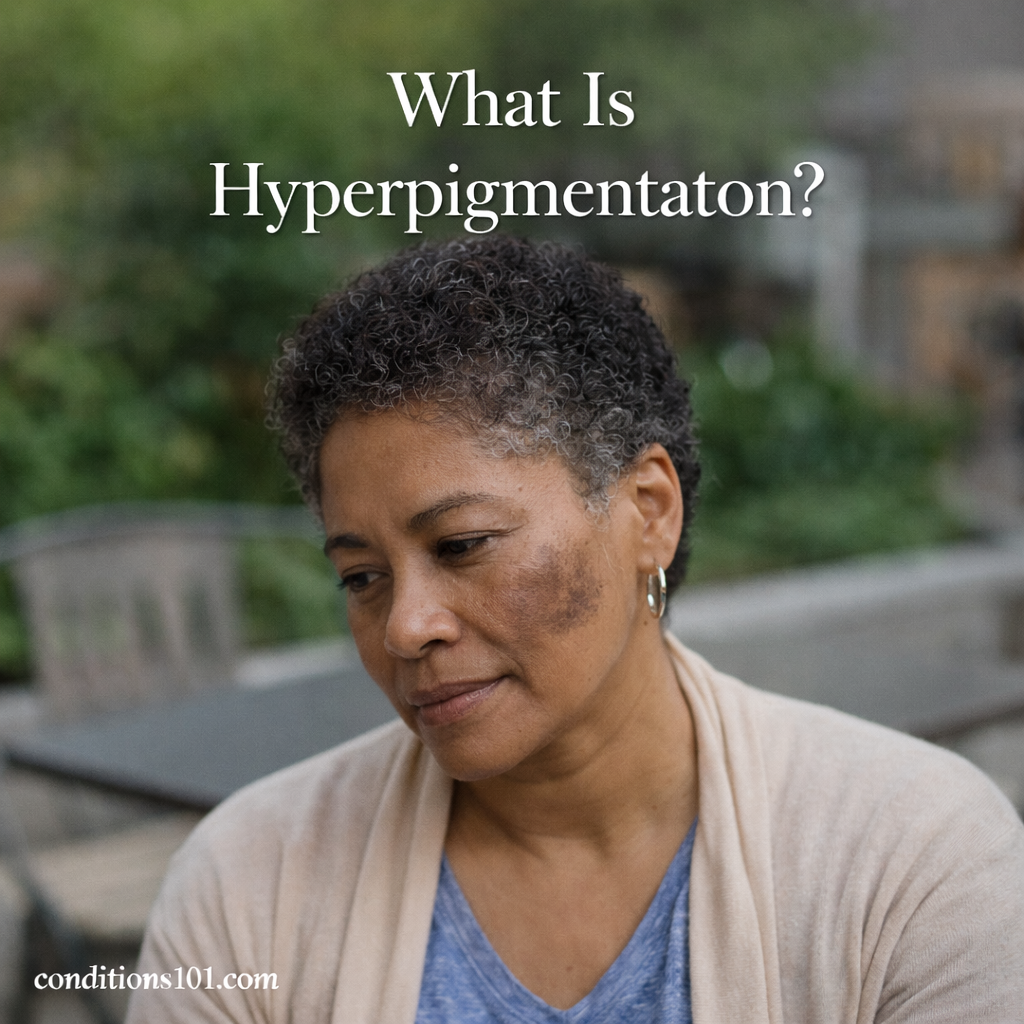
Hyperpigmentation is a common skin condition in which certain areas of the skin become darker than the surrounding skin. This darkening occurs when excess pigment, known as melanin, is produced or deposited in the skin. Hyperpigmentation can affect people of all skin tones and may appear anywhere on the body, most commonly on the face, hands, neck, and other areas exposed to the sun. This article provides a clear, educational overview of hyperpigmentation to explain what it is, why it occurs, and how it can affect appearance, without offering medical advice, diagnosis, or treatment.
How Skin Pigmentation Works
Skin color is primarily determined by melanin, a natural pigment produced by specialized skin cells called melanocytes. Melanin helps protect the skin from ultraviolet (UV) radiation and contributes to variations in skin tone among individuals.
When melanocytes produce melanin evenly, skin tone appears consistent. Hyperpigmentation occurs when melanin production becomes uneven or excessive in certain areas, leading to darker patches or spots.
Common Types of Hyperpigmentation
Hyperpigmentation is an umbrella term that includes several distinct patterns and causes.
Sun-Induced Hyperpigmentation
Prolonged or repeated sun exposure can stimulate melanin production, leading to darkened areas such as:
- Sunspots
- Age spots
- Liver spots
These typically appear on areas frequently exposed to sunlight, including the face and hands.
Post-Inflammatory Hyperpigmentation
Post-inflammatory hyperpigmentation occurs after the skin experiences irritation or injury. Common triggers include:
- Acne
- Cuts or scrapes
- Insect bites
- Skin inflammation
As the skin heals, excess melanin may be left behind, creating dark marks that can persist for months or longer.
Melasma
Melasma is characterized by larger, symmetrical patches of discoloration, often on the face. It is commonly associated with:
- Hormonal changes
- Sun exposure
- Genetic predisposition
Melasma is more frequently discussed in relation to hormonal shifts and environmental factors.
Factors That Contribute to Hyperpigmentation
Hyperpigmentation usually develops due to a combination of internal and external influences rather than a single cause.
Sun Exposure
UV radiation is one of the most significant contributors to excess melanin production. Repeated exposure can deepen existing dark areas and encourage new ones to form.
Hormonal Influences
Hormonal changes may affect melanin production, particularly during life stages or situations that alter hormone levels.
Skin Injury or Inflammation
Any condition that irritates or inflames the skin can potentially lead to hyperpigmentation during the healing process.
Genetic Factors
Some individuals are more prone to developing hyperpigmentation due to inherited traits that influence how their skin responds to sun exposure and inflammation.
How Hyperpigmentation Can Affect Appearance

Hyperpigmentation primarily affects the appearance of the skin rather than overall physical health. The visibility and impact can vary depending on:
- Skin tone
- Size and location of darkened areas
- Contrast between affected and unaffected skin
For some people, hyperpigmentation may be subtle, while for others it may be more noticeable and influence how they feel about their appearance.
Hyperpigmentation and Different Skin Tones
Hyperpigmentation can appear differently across skin tones. In deeper skin tones, excess melanin may result in darker brown, gray, or bluish patches. In lighter skin tones, hyperpigmentation may appear tan, brown, or reddish-brown.
Because melanin activity differs among individuals, the duration and visibility of hyperpigmentation can vary widely.
Common Misunderstandings About Hyperpigmentation
There are several misconceptions surrounding hyperpigmentation that can lead to confusion.
It Is Not a Single Condition
Hyperpigmentation describes a range of pigmentation changes rather than one specific disorder.
It Is Not Always Permanent
Some forms of hyperpigmentation may gradually fade over time, while others can persist longer depending on the cause.
It Is Not Limited to the Face
Although facial hyperpigmentation is common, darkened areas can appear anywhere on the body.
Why Understanding Hyperpigmentation Matters
Understanding hyperpigmentation helps support informed and realistic expectations about skin changes. Clear information can:
- Reduce unnecessary concern about normal pigmentation variations
- Encourage respectful conversations about appearance-related conditions
- Help people better understand how skin responds to environmental and internal factors
Educational awareness is especially important because hyperpigmentation is widespread and affects people across all ages and backgrounds.
Key Takeaways
- Hyperpigmentation is the darkening of certain areas of skin due to excess melanin.
- It can result from sun exposure, inflammation, hormonal influences, or genetics.
- There are multiple types, including sun-induced hyperpigmentation, post-inflammatory hyperpigmentation, and melasma.
- The appearance of hyperpigmentation varies across skin tones and individuals.
- It primarily affects appearance rather than overall physical health.