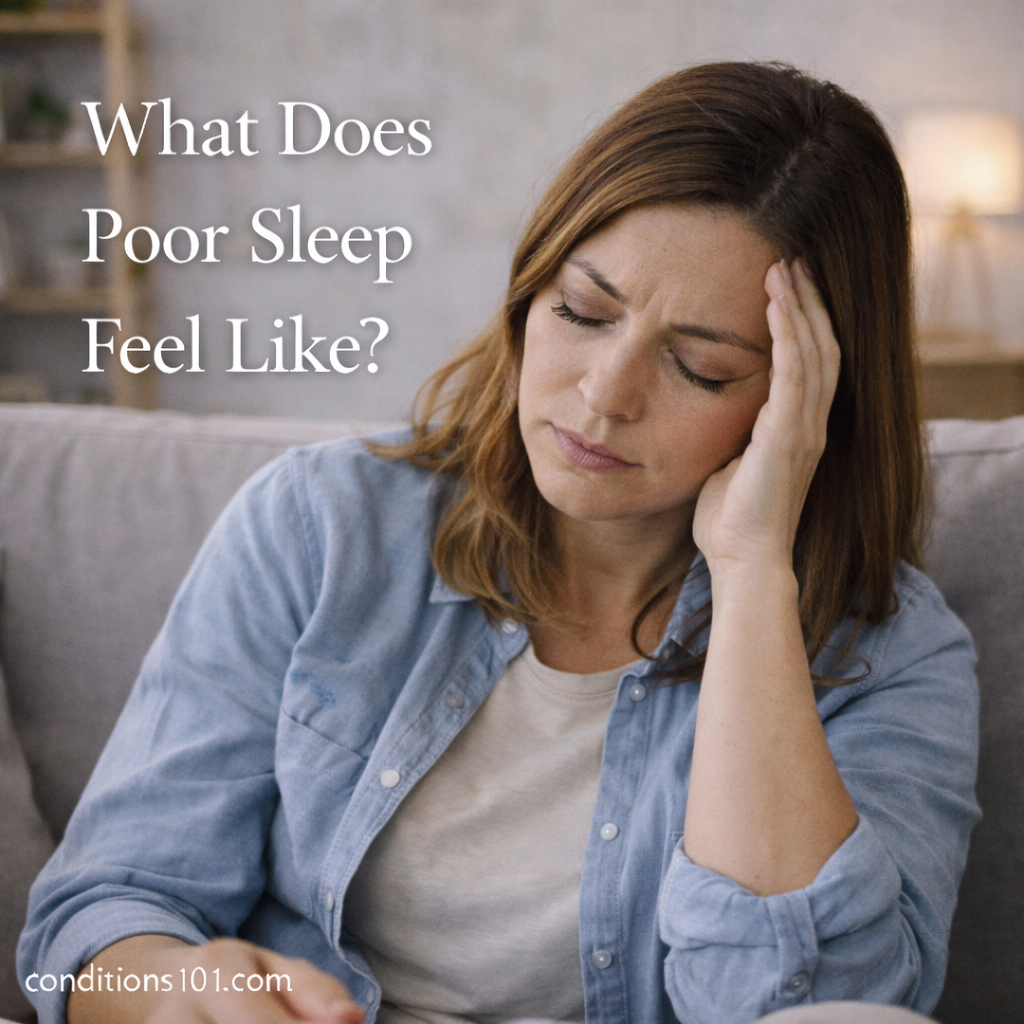
Poor sleep refers to sleep that is insufficient, disrupted, or not restorative, even if time spent in bed seems adequate. Rather than a single condition, poor sleep describes a range of experiences related to sleep quality, timing, and continuity. Many people recognize poor sleep by how they feel during the day rather than by what happens at night.
This article provides education-only, evergreen information to explain what poor sleep can feel like, how it is commonly described, and how it may affect daily functioning. It does not provide medical advice, diagnosis, or treatment.
Understanding Sleep Quality vs. Sleep Quantity
Sleep quality refers to how restorative sleep feels, while sleep quantity refers to how long someone sleeps. Poor sleep can occur even when total sleep time appears sufficient.
Poor sleep quality may involve:
- Frequent awakenings
- Light or restless sleep
- Difficulty reaching deeper sleep stages
- Feeling unrefreshed after waking
Because of this, poor sleep is often identified by daytime effects rather than nighttime duration alone.
Common Physical Sensations of Poor Sleep
People experiencing poor sleep often notice physical changes that affect comfort and energy.
Commonly described physical sensations include:
- Persistent fatigue or low energy
- Heavy or sluggish feeling in the body
- Headaches or muscle tension
- Increased sensitivity to pain or discomfort
- Feeling physically drained despite rest
These sensations may worsen as the day progresses.
Mental and Cognitive Experiences
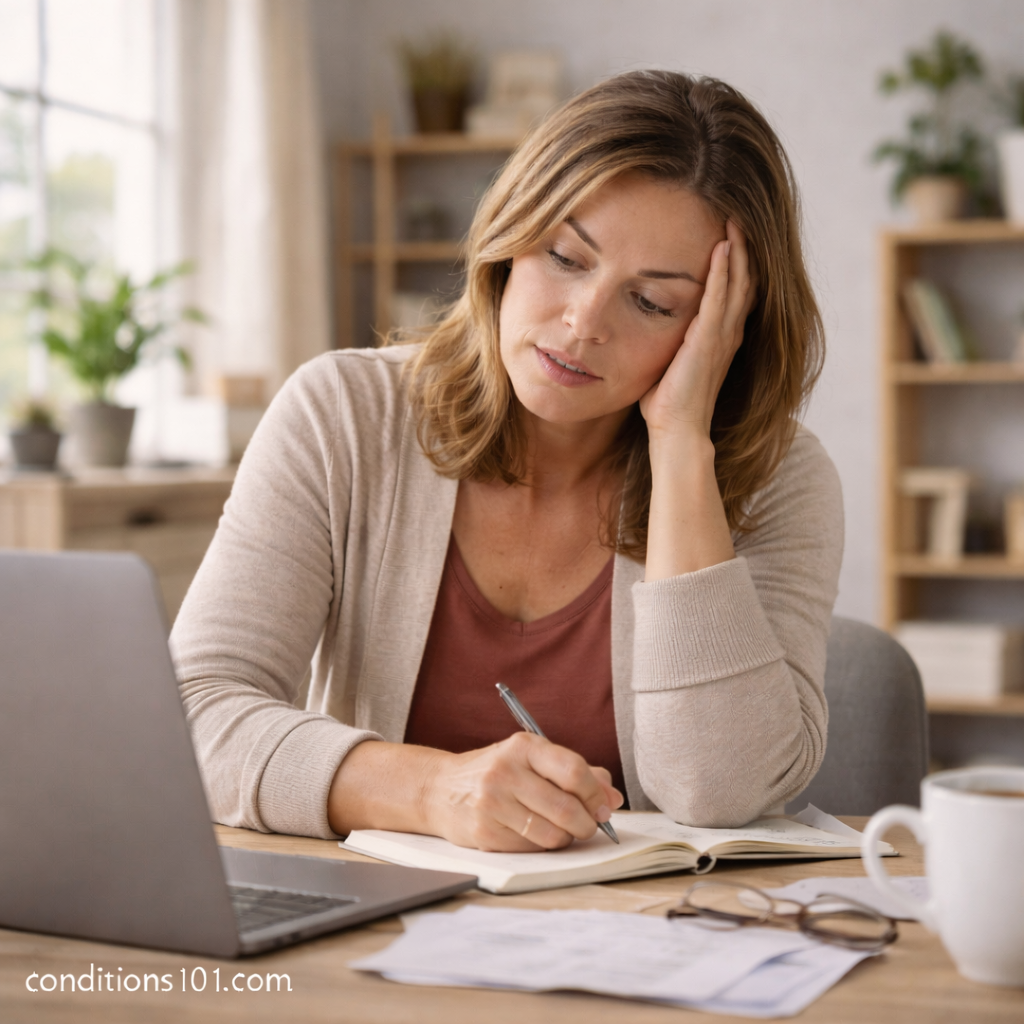
Poor sleep frequently affects thinking, focus, and mental clarity.
Common cognitive experiences include:
- Difficulty concentrating
- Slower thinking or reaction time
- Brain fog or mental haze
- Forgetfulness
- Trouble making decisions
Mental tasks may feel more effortful than usual.
Emotional and Mood-Related Effects
Sleep plays a key role in emotional regulation. When sleep quality is poor, emotional balance may feel harder to maintain.
People may notice:
- Irritability or impatience
- Increased emotional sensitivity
- Low mood or reduced motivation
- Feeling overwhelmed more easily
- Reduced resilience to stress
These emotional shifts may feel out of proportion to daily events.
Energy Levels Throughout the Day
Poor sleep often leads to uneven or unpredictable energy patterns.
Common experiences include:
- Morning grogginess that lasts for hours
- Midday energy crashes
- Reliance on caffeine to stay alert
- Feeling tired but wired
Energy may fluctuate rather than remain steady.
Effects on Daily Functioning
When sleep is not restorative, everyday tasks may feel more challenging.
Possible effects include:
- Reduced productivity at work or school
- Slower physical performance
- Increased mistakes or forgetfulness
- Difficulty maintaining routines
These effects can accumulate over time if poor sleep continues.
How Poor Sleep Affects Social Interaction
Sleep quality can influence how people relate to others.
Some may experience:
- Reduced patience in conversations
- Lower interest in social activities
- Difficulty engaging or staying present
- Increased withdrawal
Social effort may feel more draining than usual.
Poor Sleep vs. Occasional Tiredness
Occasional tiredness is common and often resolves after rest. Poor sleep differs in that the effects persist.
Poor sleep is often characterized by:
- Ongoing tiredness despite sleep
- Repeated nights of unrefreshing rest
- Accumulated daytime effects
This distinction helps explain why poor sleep feels different from a single late night.
Why Poor Sleep Feels Different for Everyone
Experiences of poor sleep vary widely between individuals.
Factors that influence how poor sleep feels include:
- Individual sensitivity to sleep loss
- Sleep environment and routine
- Stress levels
- Daily activity demands
- Overall health and lifestyle
Because sleep affects many systems, symptoms often overlap.
Common Misconceptions About Poor Sleep
Several misunderstandings can affect how poor sleep is interpreted.
- Poor sleep is not always about short sleep duration
- Feeling tired does not always mean lack of sleep
- Sleep quality matters as much as quantity
- Poor sleep can occur even with “normal” bedtimes
Understanding these points helps clarify sleep experiences.
Why Learning About Poor Sleep Matters
Education about poor sleep helps explain why people may feel drained, unfocused, or emotionally sensitive even when they believe they are sleeping enough. Understanding sleep experiences supports awareness of rest, recovery, and daily functioning without assuming a specific diagnosis.
Key Takeaways
- Poor sleep refers to unrefreshing or disrupted sleep
- Physical, mental, and emotional effects are common
- Energy and focus often fluctuate during the day
- Poor sleep differs from occasional tiredness
- Experiences vary widely between individuals