
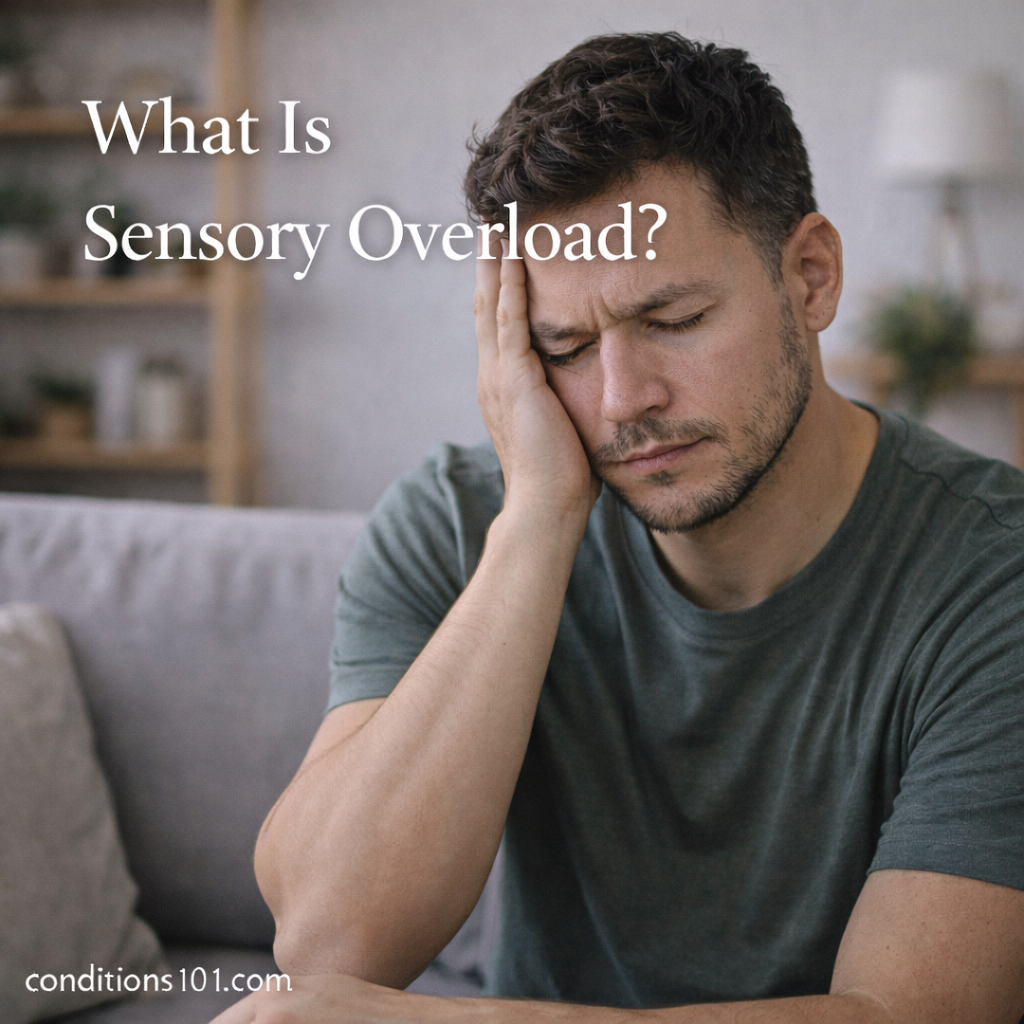
Sensory overload refers to a state in which the brain receives more sensory input than it can comfortably process at one time. This can happen when sights, sounds, smells, textures, or movement signals become overwhelming, making it difficult to focus, think clearly, or remain comfortable. Sensory overload is an experience, not a diagnosis, and it can affect people in many different situations.
This article provides education-only, evergreen information to explain what sensory overload is, how it is commonly experienced, and why it can occur. It does not provide medical advice, diagnosis, or treatment.
Understanding Sensory Input
The nervous system constantly receives information from the environment and the body. This sensory input helps people navigate daily life.
Common types of sensory input include:
- Visual input such as light, color, and movement
- Auditory input such as noise and speech
- Tactile input such as touch, pressure, and texture
- Olfactory input such as smells
- Proprioceptive and vestibular input related to body position and movement
Normally, the brain filters and prioritizes this information automatically.
What Happens During Sensory Overload
During sensory overload, the brain’s ability to filter input becomes strained. Too many signals arrive at once, or certain sensations feel too intense.
This may result in:
- Difficulty concentrating
- Feeling mentally overwhelmed
- Heightened awareness of sensory details
- Reduced ability to process information calmly
Sensory overload can develop suddenly or build gradually, depending on the situation.
How Sensory Overload Is Commonly Described
People describe sensory overload in different ways, depending on which senses are most affected.
Common descriptions include:
- Feeling overwhelmed by noise or light
- Irritation from clothing, textures, or touch
- Difficulty tolerating crowded environments
- A sense of mental “flooding” or overload
- Needing to withdraw or take a break
These experiences can vary in intensity and duration.
Situations Where Sensory Overload May Occur
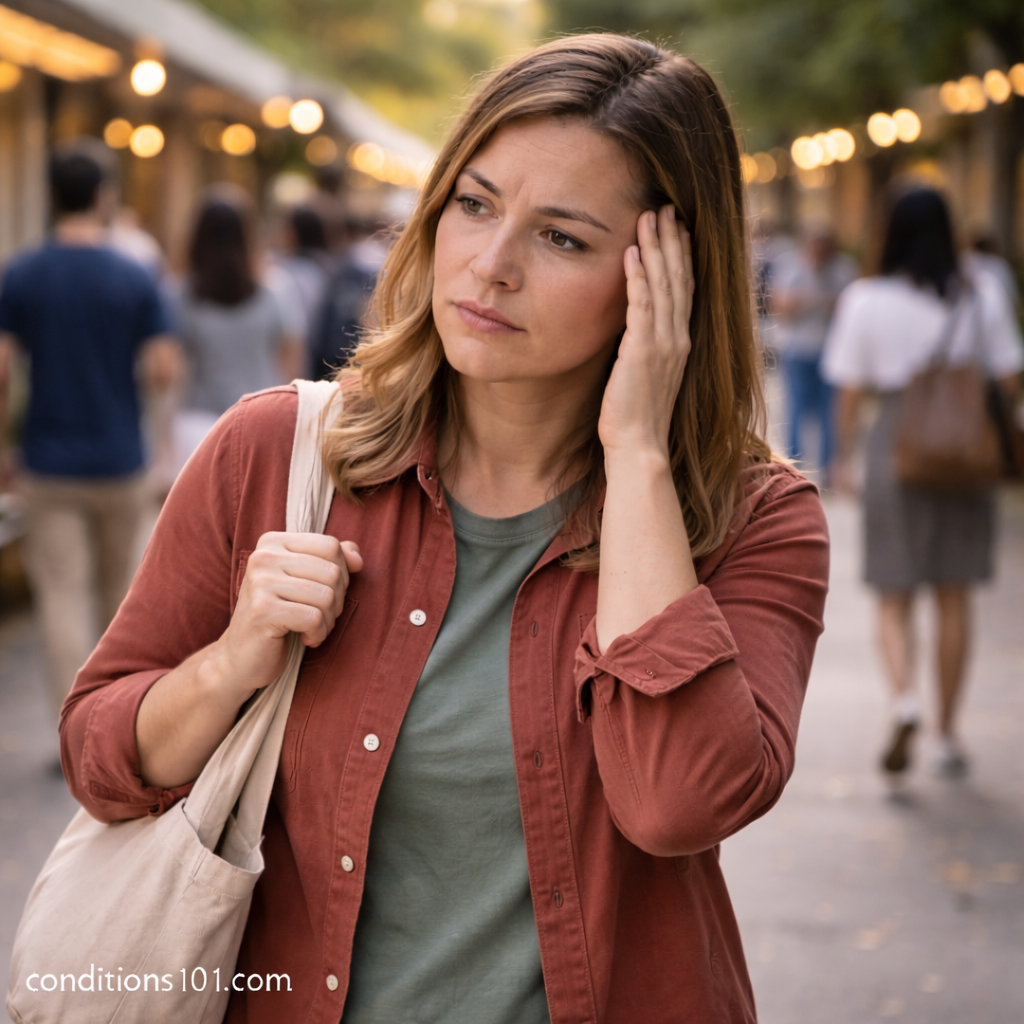
Sensory overload can happen in many everyday environments.
Common situations include:
- Busy public spaces
- Loud or brightly lit environments
- Crowded social settings
- Multitasking with competing demands
- Prolonged exposure to stimulation without breaks
The same environment may feel manageable one day and overwhelming another.
Sensory Overload and Stress
Stress can increase sensitivity to sensory input. When the nervous system is already under strain, it may have less capacity to filter sensations effectively.
This interaction may lead to:
- Lower tolerance for noise or interruptions
- Faster onset of overwhelm
- Stronger reactions to minor stimuli
Stress does not cause sensory overload by itself, but it can make it more likely.
Temporary vs. Repeated Sensory Overload
Sensory overload can be described based on how often it occurs.
Temporary sensory overload
- Occurs in specific situations
- Resolves once stimulation decreases
- Common during busy or unfamiliar experiences
Repeated sensory overload
- Happens frequently in daily life
- May affect routines and comfort
- Can influence how environments are chosen or avoided
Frequency often depends on individual sensitivity and context.
How Sensory Overload Can Affect Daily Life
When sensory input feels overwhelming, it can influence behavior and routines.
Possible effects include:
- Avoiding certain environments
- Needing quiet or low-stimulation breaks
- Feeling mentally exhausted after stimulation
- Difficulty focusing or making decisions
These responses are often adaptive ways of managing sensory input.
Sensory Overload vs. Sensory Sensitivity
Sensory overload and sensory sensitivity are related but not identical concepts.
- Sensory sensitivity refers to how strongly someone responds to sensory input
- Sensory overload refers to the state of being overwhelmed by that input
Someone may be sensitive without feeling overloaded, or overloaded only in certain situations.
Common Misconceptions About Sensory Overload
Several misunderstandings can affect how sensory overload is viewed.
- Sensory overload is not a lack of effort or resilience
- It is not always visible to others
- It can affect people of all ages
- It is not limited to one type of sensory input
Understanding these points helps promote accurate awareness.
Why Learning About Sensory Overload Matters
Education about sensory overload helps explain why certain environments or situations feel overwhelming. Understanding how sensory processing works supports empathy, self-awareness, and more informed conversations about comfort and daily functioning.
Key Takeaways
- Sensory overload occurs when sensory input becomes overwhelming
- It can involve sound, light, touch, movement, or multiple senses
- Stress and environment can influence how it is experienced
- Sensory overload may be temporary or recurring
- Education helps clarify why sensory experiences differ between people