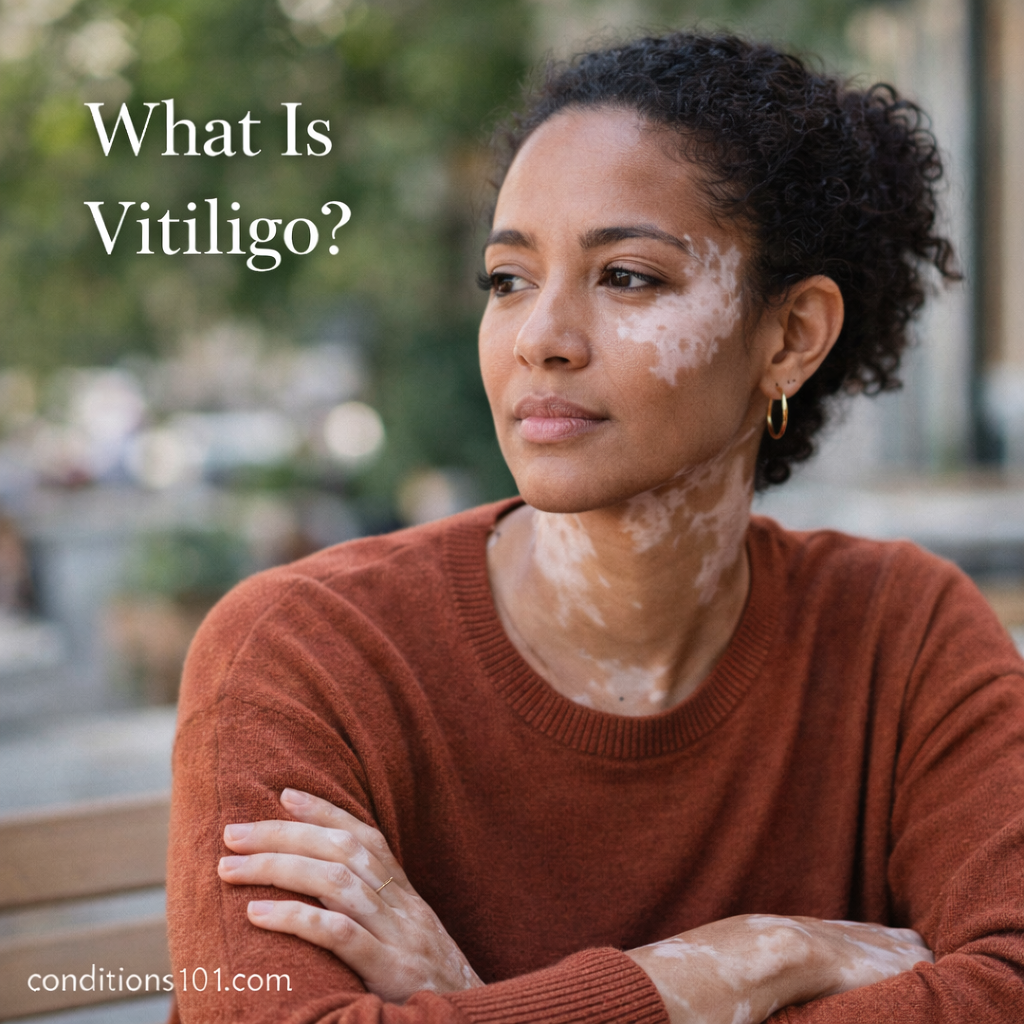
Vitiligo is a long-term skin condition characterized by the loss of natural skin color in certain areas of the body. This happens when pigment-producing cells, known as melanocytes, stop functioning or are reduced in specific regions of the skin. The result is lighter or white patches that contrast with the surrounding skin tone.
This article provides education-only, evergreen information to explain what vitiligo is, how it appears, and how it may affect appearance and daily life. It does not provide medical advice, diagnosis, or treatment.
Understanding Skin Pigmentation
Skin color is determined by melanin, a pigment produced by melanocytes. Melanin helps protect the skin from ultraviolet (UV) radiation and contributes to individual differences in skin tone.
When melanocytes are reduced or stop producing melanin in certain areas, pigmentation decreases. In vitiligo, this process leads to visible patches of depigmented skin.
How Vitiligo Commonly Appears
Vitiligo typically appears as flat, lighter-colored patches on the skin. These patches may start small and gradually expand over time.
Common characteristics include:
- White or lightened patches with clear borders
- Symmetrical patterns on both sides of the body
- Gradual progression rather than sudden change
- No change in skin texture or sensation
The patches themselves are not painful, itchy, or physically uncomfortable.
Areas Most Commonly Affected
Vitiligo can appear on any part of the body, but some areas are more commonly involved.
Frequently affected areas include:
- Hands and fingers
- Face, especially around the eyes and mouth
- Arms and legs
- Feet
- Areas around body openings
Vitiligo may also affect hair in the affected areas, leading to premature whitening or graying.
Vitiligo and Hair Color Changes
Because melanocytes also contribute to hair color, vitiligo can influence hair pigmentation.
People may notice:
- White or gray hair within vitiligo patches
- Changes to eyebrow, eyelash, or scalp hair color
- Patchy hair color differences
These changes are related to pigment loss rather than aging.
Who Can Develop Vitiligo?
Vitiligo can affect people of all skin tones, ages, and backgrounds. It often becomes noticeable before middle adulthood, but it can appear at any stage of life.
Vitiligo is commonly associated with:
- A family history of pigmentation conditions
- Gradual onset over time
- Equal occurrence across genders
It is not contagious and cannot be spread through contact.
Possible Factors Associated With Vitiligo
There is no single known cause of vitiligo. It is generally discussed as the result of multiple interacting factors.
Commonly discussed influences include:
- Immune system activity affecting melanocytes
- Genetic predisposition
- Environmental or physical stressors
- Oxidative stress within skin cells
These factors may vary between individuals, contributing to different patterns and progression.
Vitiligo and Changes Over Time
Vitiligo is often described as unpredictable. In some people, pigment loss remains limited to a few areas, while in others it may progress more broadly.
Possible patterns include:
- Slow, gradual expansion of patches
- Periods of stability without change
- New patches appearing over time
The course of vitiligo can differ significantly from person to person.
How Vitiligo Can Affect Appearance and Daily Life
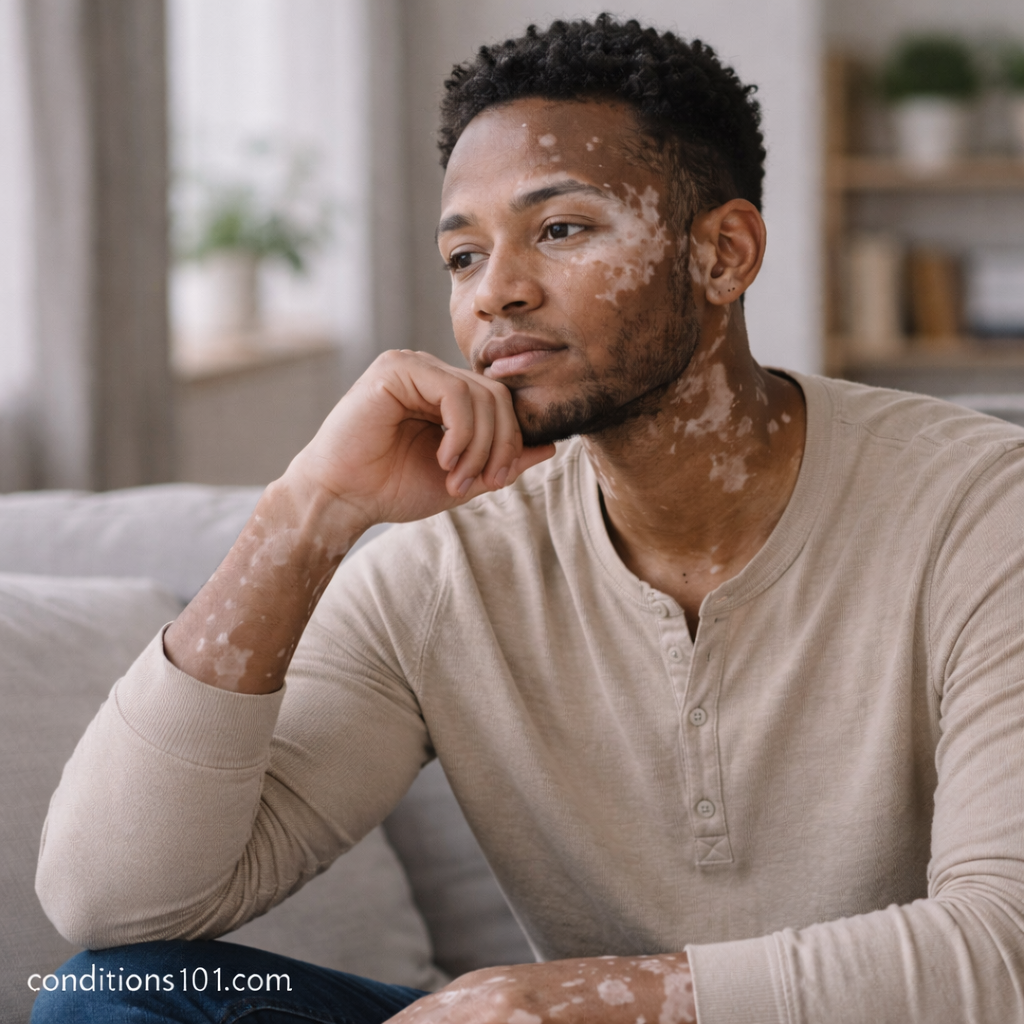
Although vitiligo does not affect physical health in most cases, it can influence how individuals feel about their appearance.
Potential effects include:
- Increased self-awareness of skin differences
- Concerns about visibility in social settings
- Changes in clothing or cosmetic choices
Education and understanding can help reduce stigma and misconceptions around visible skin conditions.
Common Misconceptions About Vitiligo
Several myths can create confusion about vitiligo.
- Vitiligo is not contagious
- It is not caused by poor hygiene
- It does not damage the skin
- It is not the result of sun exposure alone
Clarifying these misconceptions supports respectful and accurate understanding.
Vitiligo and Sun Sensitivity
Areas affected by vitiligo lack melanin, which normally helps protect the skin from UV exposure. As a result, depigmented skin may respond differently to sunlight.
This difference relates to pigment loss rather than skin weakness or disease.
Why Learning About Vitiligo Matters
Education about vitiligo helps normalize visible skin differences and promotes awareness of how pigmentation conditions affect appearance rather than overall health. Clear information can reduce misunderstanding and support inclusive perspectives.
Key Takeaways
- Vitiligo is a skin condition involving loss of pigmentation
- It appears as white or light patches without texture changes
- Skin and hair color may both be affected
- Vitiligo is not contagious or harmful to others
- Experiences and progression vary between individuals