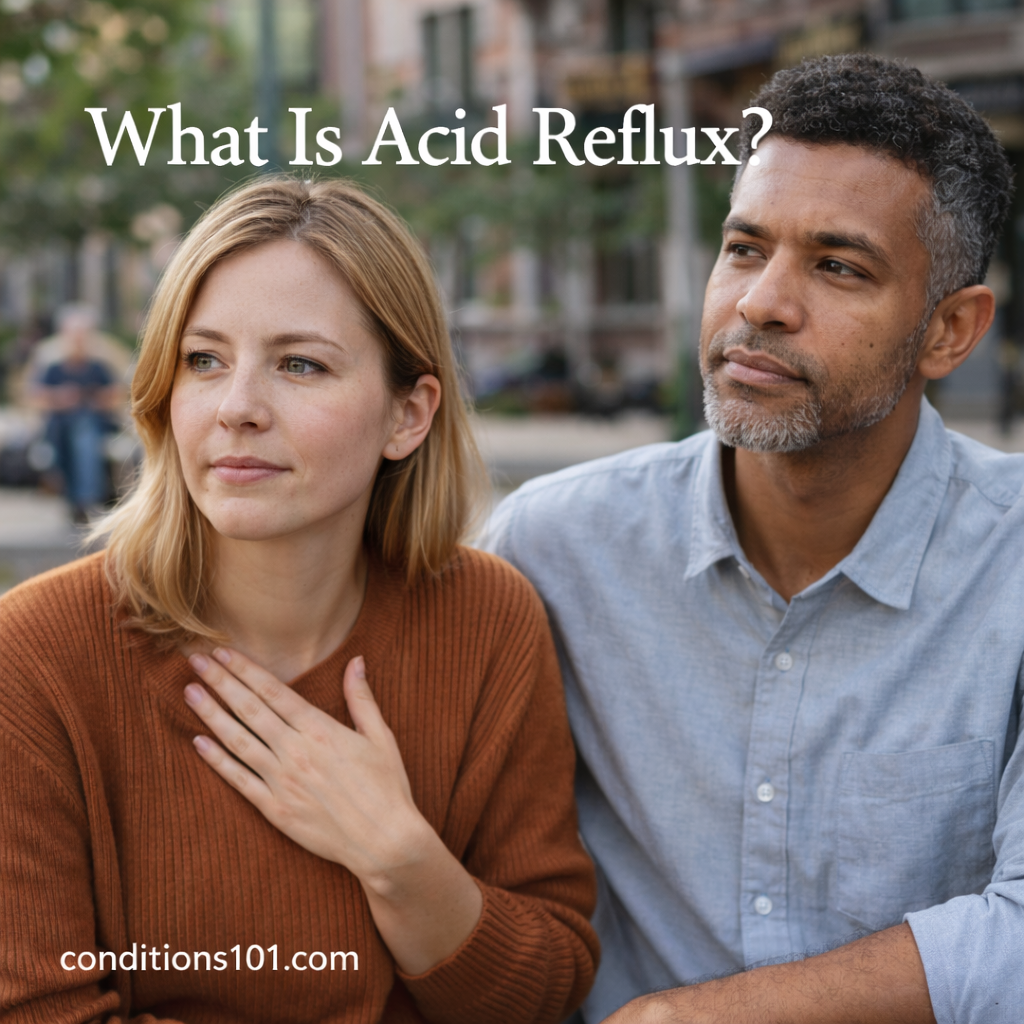
Acid reflux is a digestive condition that occurs when stomach contents flow backward into the esophagus. The esophagus is the tube that carries food and liquids from the mouth to the stomach. When this backward flow happens, it can cause uncomfortable sensations in the chest or throat.
Acid reflux is relatively common and can happen occasionally or more frequently, depending on individual factors. It is often discussed in relation to digestion, eating habits, and how the digestive system functions.
This article provides an educational overview of acid reflux for general informational purposes only.
Understanding the Digestive Process
To understand acid reflux, it helps to know how digestion normally works.
After swallowing, food travels down the esophagus and enters the stomach. A ring-like muscle at the lower end of the esophagus, often called the lower esophageal sphincter, helps keep stomach contents from moving backward.
Under typical conditions:
- Food moves downward into the stomach
- The sphincter closes after swallowing
- Stomach acids remain in the stomach to aid digestion
Acid reflux can occur when this system does not function as smoothly as expected.
What Happens During Acid Reflux?
During acid reflux, stomach contents move upward into the esophagus. The lining of the esophagus is more sensitive than the stomach lining, so this backward flow can lead to noticeable sensations.
Factors that may contribute to this backward movement include:
- Relaxation or weakening of the lower esophageal sphincter
- Increased pressure within the stomach
- Delayed stomach emptying
The frequency and intensity of reflux episodes can vary from person to person.
Common Signs and Symptoms of Acid Reflux
Acid reflux can produce a range of symptoms, which may differ in intensity and timing.
Commonly reported symptoms include:
- A burning sensation in the chest or throat
- Sour or bitter taste in the mouth
- Sensation of food or liquid moving upward
- Discomfort after eating or when lying down
Some individuals experience symptoms occasionally, while others notice them more regularly.
Acid Reflux vs. Occasional Heartburn
Acid reflux and heartburn are closely related but not identical terms.
- Acid reflux refers to the movement of stomach contents into the esophagus
- Heartburn describes the burning sensation that may result from this movement
Not everyone who experiences acid reflux feels heartburn, and not all chest discomfort is related to acid reflux.
Who Experiences Acid Reflux?
Acid reflux can affect people of many ages and backgrounds.
Factors often associated with acid reflux include:
- Eating large or heavy meals
- Lying down soon after eating
- Certain dietary patterns
- Natural differences in digestive function
Having these factors does not mean someone will always experience acid reflux, but they may influence how digestion feels over time.
How Acid Reflux Can Affect Daily Life

For some individuals, acid reflux is a minor inconvenience. For others, it may influence daily routines or comfort.
Possible effects include:
- Adjusting meal timing or portion sizes
- Being mindful of posture after eating
- Disrupted sleep if symptoms occur at night
- Increased awareness of digestive sensations
The impact of acid reflux can vary widely depending on how often symptoms occur.
Acid Reflux Over Time
Acid reflux may occur occasionally or more frequently. Some people notice symptoms only in specific situations, while others experience recurring episodes.
Changes over time may be influenced by:
- Eating habits
- Body position during rest or sleep
- Lifestyle patterns
- Natural changes in digestion
Because of this variability, acid reflux experiences are not the same for everyone.
Common Misconceptions About Acid Reflux
There are several misunderstandings surrounding acid reflux.
Acid Reflux Is Always Severe
Many people experience mild or occasional reflux that does not significantly interfere with daily life.
Acid Reflux Only Happens After Certain Foods
While food choices can play a role, reflux is influenced by multiple factors related to digestion.
Chest Discomfort Always Means Acid Reflux
Chest discomfort can have many causes and is not always related to digestion.
Key Takeaways
- Acid reflux occurs when stomach contents flow back into the esophagus
- It can cause sensations such as burning or discomfort
- Symptoms and frequency vary widely between individuals
- Acid reflux can affect daily comfort and routines
- Experiences with acid reflux differ based on digestion and lifestyle factors