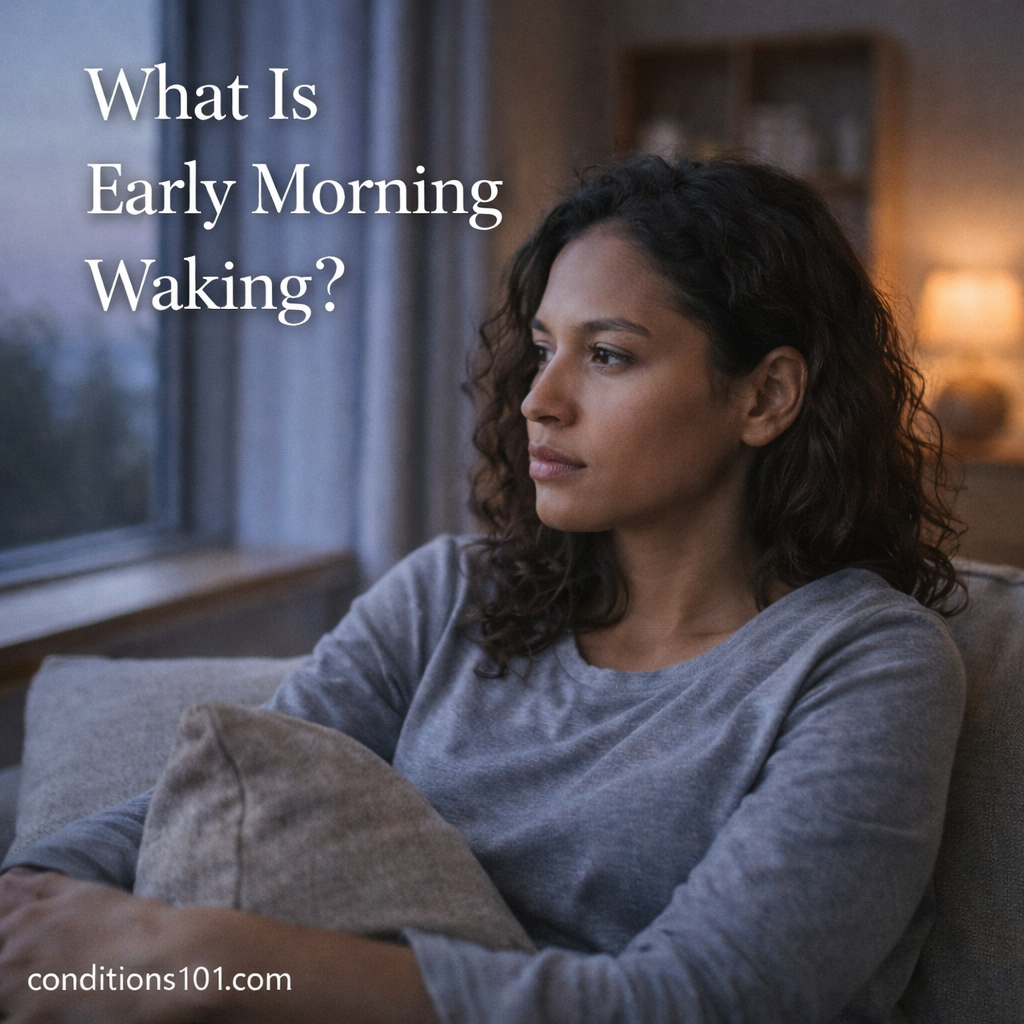
Early morning waking refers to a pattern of waking up earlier than intended and being unable to return to sleep. This experience often occurs in the early hours of the morning, well before a planned wake-up time. While occasional early waking can happen to anyone, a recurring pattern may affect overall sleep quality and daytime functioning.
This article provides education-only, evergreen information to explain what early morning waking is, how it is commonly described, and how it may affect daily life. It does not provide medical advice, diagnosis, or treatment.
Understanding Normal Sleep Timing
Sleep follows a natural rhythm influenced by internal biological clocks and external cues such as light, routine, and daily activity. These rhythms help regulate when a person feels sleepy and when they naturally wake.
Normal sleep timing can vary between individuals. Some people naturally wake earlier, while others feel most rested when waking later. Early morning waking becomes notable when it occurs unintentionally and repeatedly, especially when it leads to insufficient rest.
How Early Morning Waking Is Commonly Described
People experiencing early morning waking often describe a specific pattern rather than general difficulty sleeping.
Common descriptions include:
- Waking one to three hours earlier than planned
- Feeling alert upon waking but still tired later in the day
- Being unable to fall back asleep despite feeling the need for more rest
- Noticing the pattern occurs most mornings
Unlike difficulty falling asleep at bedtime, early morning waking centers on sleep ending too soon.
Early Morning Waking vs. Being a “Morning Person”
Some individuals naturally wake early and feel well-rested. This preference is often related to chronotype, or natural sleep-wake tendency.
Early morning waking differs because:
- The wake-up time is unintended
- Total sleep duration may be shortened
- Daytime fatigue may increase
- The pattern may feel disruptive rather than refreshing
Understanding this distinction helps clarify when early waking may be a concern rather than a natural preference.
Common Factors Associated With Early Morning Waking
Early morning waking does not have a single cause. It is often associated with a combination of internal and external influences.
Commonly discussed factors include:
- Stress or ongoing mental alertness
- Changes in routine or schedule
- Light exposure in early morning hours
- Sleep environment disruptions
- Shifts in sleep timing over time
These factors may interact differently for each person.
The Role of Sleep Cycles
Sleep occurs in repeating cycles that include lighter and deeper stages. As morning approaches, sleep naturally becomes lighter, making waking more likely.
Early morning waking may happen when:
- Sleep pressure has decreased
- The body begins preparing for wakefulness
- Environmental cues signal morning
When waking occurs during these lighter stages, returning to sleep can feel especially difficult.
How Early Morning Waking Can Affect Daily Life

Waking earlier than intended can influence how a person feels throughout the day.
Potential effects include:
- Daytime tiredness or low energy
- Difficulty concentrating
- Irritability or low motivation
- Reduced sense of restfulness
Over time, repeated early waking may lead to accumulated sleep loss.
Early Morning Waking and Stress
Stress and mental activity are frequently discussed in relation to early morning waking. Thoughts about responsibilities, plans, or concerns may become more noticeable during quiet early hours.
People may notice:
- Racing thoughts upon waking
- Increased alertness despite physical fatigue
- Difficulty relaxing back into sleep
These experiences can reinforce the pattern over time.
Environmental Influences on Early Waking
The sleep environment plays a role in how easily someone stays asleep in the early morning.
Environmental factors may include:
- Morning light entering the room
- Noise from traffic or household activity
- Temperature changes
- Electronic notifications or alarms
Even subtle changes can contribute to repeated awakenings.
How Early Morning Waking Differs From Other Sleep Issues
Early morning waking is one of several sleep-related experiences and is distinct from other patterns.
It differs from:
- Difficulty falling asleep at bedtime
- Frequent awakenings throughout the night
- Sleeping long hours but still feeling unrefreshed
Recognizing these differences helps clarify how early waking fits within broader sleep experiences.
Common Misconceptions About Early Morning Waking
Several misunderstandings can affect how early morning waking is perceived.
- It is not always caused by going to bed too early
- It is not the same as intentionally waking early
- It does not always indicate a sleep disorder
- It can occur even with otherwise healthy sleep habits
Clear information helps reduce unnecessary worry.
Why Learning About Early Morning Waking Matters
Understanding early morning waking helps people recognize patterns in their sleep and how timing, environment, and daily routines can influence rest. Education supports informed awareness without assuming a specific cause.
Key Takeaways
- Early morning waking involves waking earlier than planned and being unable to return to sleep
- It differs from naturally waking early by preference
- Sleep cycles, stress, and environment can influence early waking
- Repeated early waking may affect daytime energy and focus
- Education helps clarify common sleep patterns and experiences