
Knee pain is a common physical condition involving discomfort, soreness, or stiffness in or around the knee joint. The knee plays a major role in movement, weight-bearing, and stability, making it especially vulnerable to strain, overuse, and everyday stress. Knee pain can range from mild and temporary to more persistent and limiting.
This article provides a clear, educational overview of what knee pain is. It is intended for general information only and does not offer medical advice, diagnosis, or treatment.
Understanding Knee Pain
The knee is a complex joint made up of bones, cartilage, ligaments, tendons, and muscles that work together to support walking, standing, bending, and other movements. Pain can occur when any of these structures are stressed, irritated, or not functioning smoothly.
Knee pain may affect one or both knees and can develop suddenly or gradually over time. It may be noticeable during movement, after activity, or even while resting.
Common Causes of Knee Pain
Knee pain does not have a single cause. It can result from a variety of physical and lifestyle-related factors.
Muscle or Tendon Strain
Overuse, repetitive movements, or sudden changes in activity can strain muscles or tendons around the knee, leading to discomfort or tightness.
Joint Stress or Wear
Daily activities such as walking, climbing stairs, or standing for long periods place repeated stress on the knee joint. Over time, this can contribute to soreness or stiffness.
Injury or Impact
Falls, twists, or direct impact to the knee may cause pain, even if the injury seems minor at first.
Alignment or Movement Patterns
How a person walks, stands, or moves can influence knee comfort. Imbalances or altered movement patterns may increase strain on certain parts of the knee.
Types of Knee Pain
Knee pain can be described in different ways depending on how it presents.
Acute Knee Pain
Acute knee pain begins suddenly and is often linked to a specific movement, activity, or incident.
Chronic Knee Pain
Chronic knee pain lasts for weeks or longer and may fluctuate in intensity. It is often associated with ongoing stress or repetitive use.
Pain With Movement
Some people notice knee pain mainly during activities such as walking, bending, kneeling, or climbing stairs.
Common Signs and Symptoms
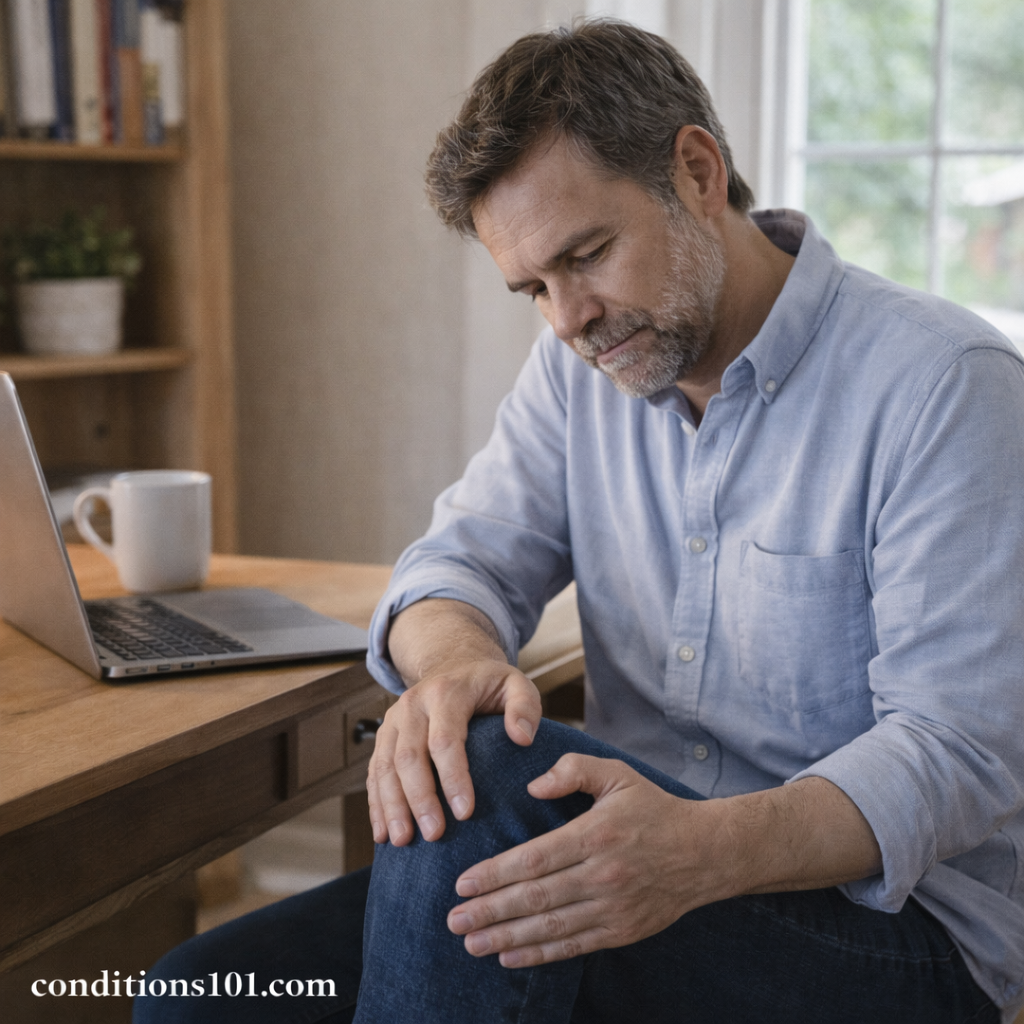
The experience of knee pain varies, but several symptoms are commonly reported.
These may include:
- Aching or soreness in or around the knee
- Stiffness or reduced range of motion
- Discomfort when bending or straightening the leg
- Pain during weight-bearing activities
- A feeling of weakness or instability
Symptoms may be constant or appear only during certain activities.
Areas Around the Knee That May Be Affected
Knee pain is not always felt in the exact same spot.
Pain may be noticed:
- At the front of the knee
- On the sides of the knee
- Behind the knee
- Above or below the kneecap
The location of pain can influence how it feels and when it is most noticeable.
How Knee Pain Can Affect Daily Life
Because the knee is essential for movement, pain in this area can impact many everyday activities.
Possible effects include:
- Difficulty walking or standing for long periods
- Avoiding stairs or uneven surfaces
- Slower movement or reduced activity
- Discomfort during exercise or work tasks
The level of impact depends on the severity and persistence of the pain.
Who Commonly Experiences Knee Pain?
Knee pain can affect people of all ages and activity levels. It is commonly reported among:
- Individuals with physically demanding jobs
- People who engage in sports or regular exercise
- Those who spend long periods standing or walking
- Older adults experiencing natural joint changes
Knee pain is not limited to a single group and can occur across many lifestyles.
Can Knee Pain Come and Go?
Yes. Knee pain may improve, worsen, or fluctuate over time. Some people experience temporary discomfort that resolves, while others notice recurring pain influenced by activity, rest, or daily routines.
Key Takeaways About Knee Pain
- Knee pain involves discomfort in or around the knee joint
- It can result from strain, activity, or joint stress
- Pain may be acute or long-lasting
- Symptoms and impact vary widely between individuals
- Knee pain can affect movement and daily activities