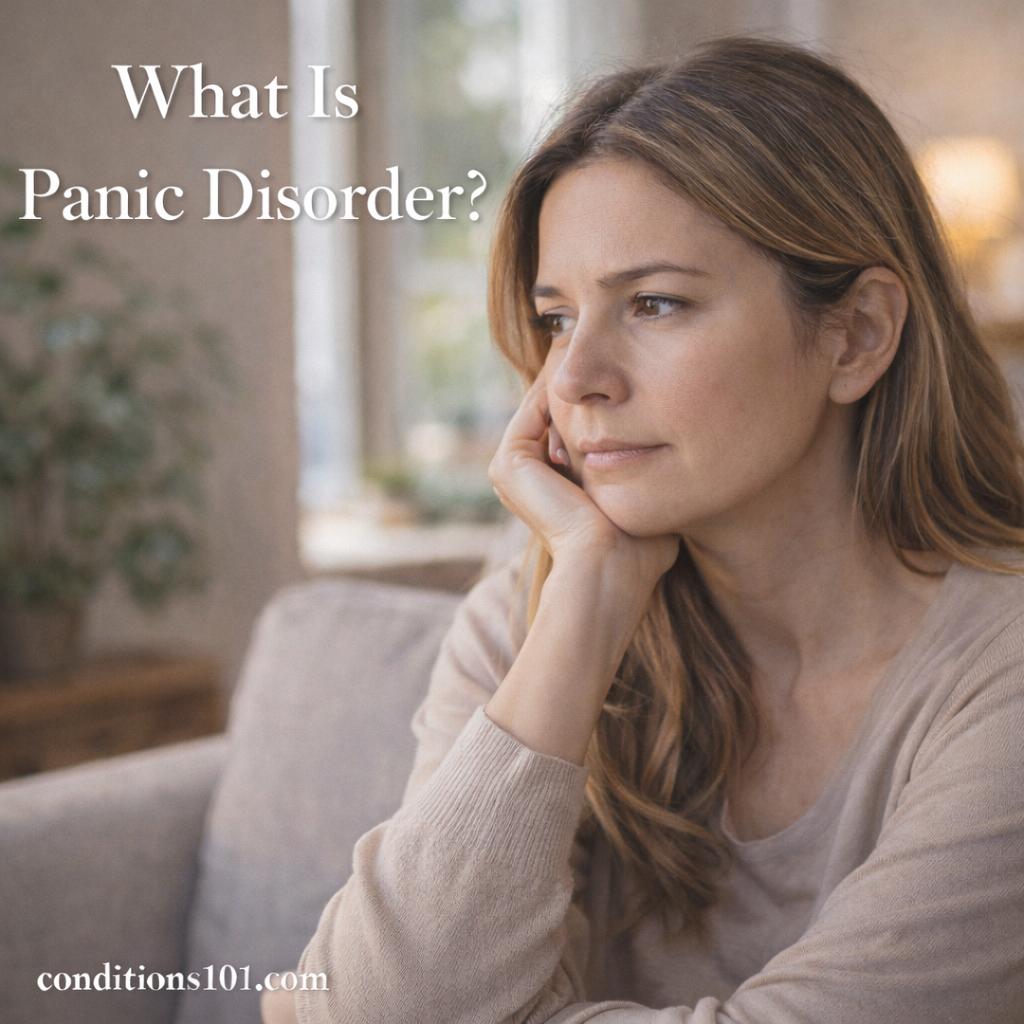
Panic disorder is a mental health condition characterized by recurring, unexpected panic attacks and ongoing concern about having additional attacks. A panic attack is a sudden surge of intense fear or discomfort that peaks within minutes and is often accompanied by strong physical and emotional sensations. People with panic disorder may spend significant time worrying about when the next attack might occur or altering their behavior to try to prevent future episodes.
This article provides a clear, educational overview of what panic disorder is. It is intended for general information only and does not offer medical advice, diagnosis, or treatment.
Understanding Panic Disorder
Panic disorder is classified as an anxiety-related condition. While many people experience a panic attack at some point in their lives, panic disorder involves repeated attacks along with persistent concern or behavioral changes related to those experiences.
Panic attacks associated with panic disorder often occur unexpectedly, meaning they are not always tied to a specific situation or trigger. This unpredictability can make the condition especially distressing.
What Is a Panic Attack?
A panic attack is a brief episode of intense fear or discomfort that develops rapidly and reaches a peak within minutes. During an attack, the body’s stress response is activated, even when there is no immediate danger.
Panic attacks can feel overwhelming and may be mistaken for medical emergencies due to their intensity.
Common Sensations During Panic Attacks
Panic attacks often involve a combination of physical, emotional, and cognitive sensations.
Commonly reported experiences include:
- Rapid or pounding heartbeat
- Shortness of breath or a feeling of choking
- Chest discomfort
- Sweating or chills
- Trembling or shaking
- Dizziness or lightheadedness
- Nausea or stomach discomfort
- Feelings of unreality or detachment
- Fear of losing control or something terrible happening
Not everyone experiences the same symptoms, and the intensity can vary from attack to attack.
How Panic Disorder Differs From Occasional Panic Attacks
Experiencing a panic attack does not automatically mean someone has panic disorder. The distinction lies in the pattern and ongoing impact.
Key differences include:
- Panic disorder involves recurrent, unexpected attacks
- Ongoing worry about future attacks is common
- Behavioral changes may occur to avoid perceived risk
- Fear of the attacks themselves becomes a central concern
Occasional panic attacks may happen during periods of stress or anxiety without developing into a longer-term condition.
Anticipatory Anxiety and Avoidance

Many people with panic disorder experience anticipatory anxiety, which is ongoing worry about having another panic attack. This fear can exist even when a person feels calm at the moment.
Over time, some individuals may begin avoiding places, activities, or situations where they fear an attack might occur. This avoidance can gradually limit daily routines and independence.
Common Triggers and Patterns
Panic attacks in panic disorder can feel unpredictable, but some patterns may still be noticed.
Possible influences include:
- Heightened stress
- Major life changes
- Physical sensations that resemble panic symptoms
- Certain environments associated with past attacks
Triggers are not always identifiable, and attacks may occur without warning.
How Panic Disorder Can Affect Daily Life
Panic disorder can influence many aspects of daily functioning.
Potential effects include:
- Difficulty concentrating due to ongoing worry
- Disruption of work, school, or social activities
- Changes in routines to feel safer
- Increased focus on bodily sensations
The degree of impact varies depending on symptom frequency and severity.
Who Commonly Experiences Panic Disorder?
Panic disorder can affect people of different ages and backgrounds. It often begins in adolescence or early adulthood, though it can develop at other stages of life.
The condition is not a sign of personal weakness and is not caused by a lack of willpower.
Can Panic Disorder Change Over Time?
Yes. Symptoms of panic disorder may fluctuate. Some people experience periods of increased panic activity, while others notice times when symptoms feel less intense. Stress, lifestyle factors, and environmental changes can influence how the condition is experienced.
Key Takeaways About Panic Disorder
- Panic disorder involves recurring, unexpected panic attacks
- Panic attacks cause intense physical and emotional sensations
- Ongoing worry about future attacks is a core feature
- Avoidance behaviors may develop over time
- Experiences vary widely between individuals