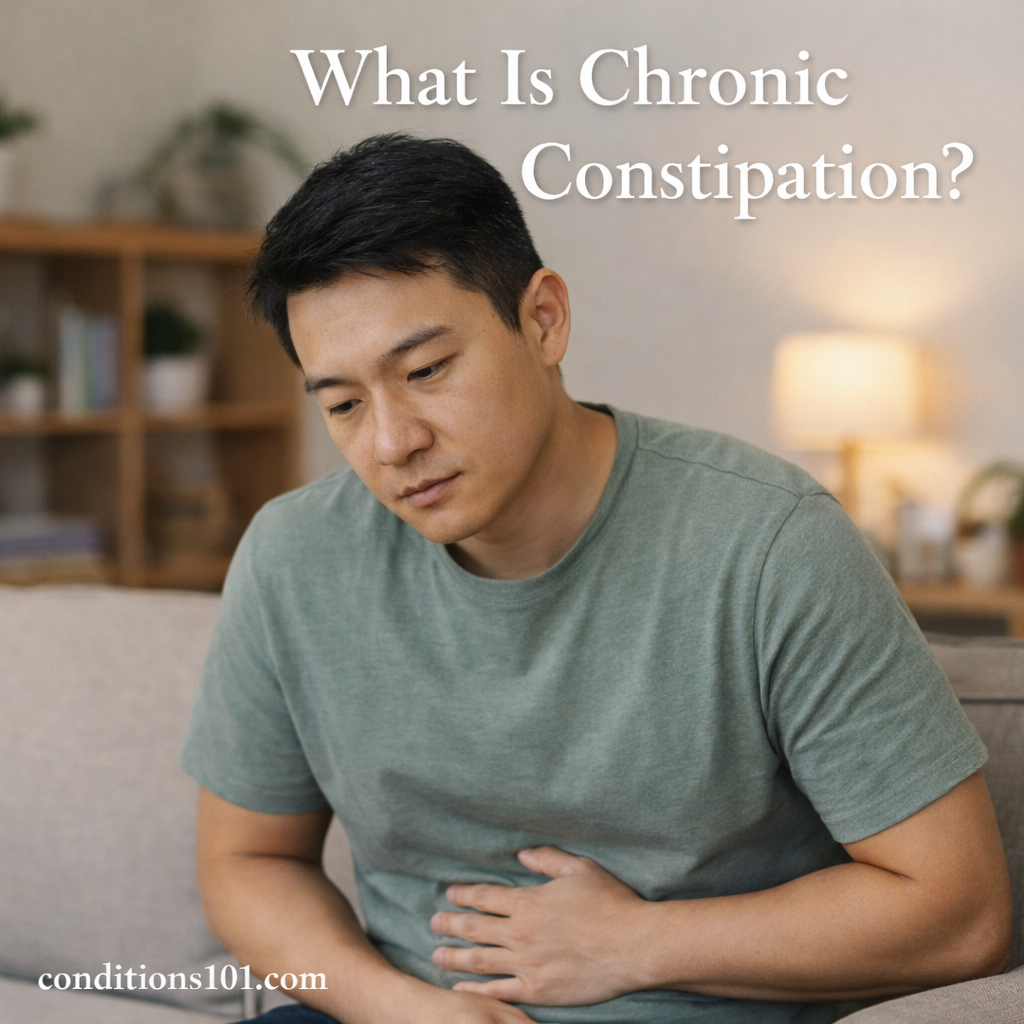
Chronic constipation is a digestive condition marked by ongoing difficulty with bowel movements over an extended period. It typically involves infrequent stools, hard or dry stool consistency, or a persistent feeling that bowel movements are incomplete. Unlike occasional constipation, chronic constipation lasts for weeks or longer and may recur regularly.
This article provides a clear, educational overview of what chronic constipation is. It is intended for general information only and does not offer medical advice, diagnosis, or treatment.
Understanding Chronic Constipation
Constipation refers to bowel movements that are less frequent or more difficult than what is typical for an individual. What is considered “normal” can vary, but chronic constipation generally involves symptoms that persist over time rather than resolving within a few days.
Chronic constipation is often defined by the presence of symptoms for several weeks or longer and may affect daily comfort, routines, and quality of life.
How Chronic Constipation Is Defined
Healthcare and research sources commonly describe chronic constipation using a combination of frequency, stool consistency, and effort involved in bowel movements.
Common features include:
- Fewer than three bowel movements per week
- Hard, dry, or lumpy stools
- Straining during bowel movements
- A sensation that stool is difficult to pass
- A feeling that bowel movements are incomplete
Not everyone with chronic constipation experiences all of these features, and symptom patterns may vary.
Common Causes and Contributing Factors
Chronic constipation does not have a single cause. It is often associated with a combination of lifestyle, dietary, and bodily factors.
Digestive Movement Changes
The digestive system relies on coordinated muscle contractions to move stool through the intestines. Slower movement in the colon can allow more water to be absorbed from stool, making it harder and more difficult to pass.
Diet and Fluid Intake
Low intake of dietary fiber or fluids may contribute to chronic constipation in some individuals. Fiber helps add bulk to stool, while fluids help keep stool soft.
Daily Routines and Habits
Changes in routine or bowel habits may influence bowel regularity, such as:
- Ignoring the urge to have a bowel movement
- Irregular eating schedules
- Limited physical activity
Medications and Supplements
Certain medications and supplements are commonly associated with constipation as a side effect. This may contribute to symptoms that persist over time.
Underlying Digestive Conditions
Some digestive or functional conditions may be associated with long-term constipation patterns, though chronic constipation can also occur without a clearly identifiable cause.
Types of Chronic Constipation
Chronic constipation is sometimes described in categories based on how it affects the digestive system.
Normal-Transit Constipation
Stool moves through the colon at a typical pace, but bowel movements may still feel difficult or incomplete.
Slow-Transit Constipation
Movement of stool through the colon is slower than usual, which may lead to infrequent bowel movements.
Outlet or Pelvic Floor–Related Constipation
Difficulty occurs during the final stage of passing stool, often related to coordination of muscles involved in bowel movements.
These categories are descriptive and may overlap in some individuals.
Common Signs and Symptoms

Symptoms of chronic constipation can range from mild to more disruptive and may fluctuate over time.
Common symptoms include:
- Infrequent bowel movements
- Hard or dry stools
- Straining or discomfort during bowel movements
- Abdominal bloating or fullness
- A sensation of blockage or incomplete emptying
Symptoms may be ongoing or occur in cycles.
How Chronic Constipation Differs From Occasional Constipation
Occasional constipation is common and often linked to temporary factors such as travel, dietary changes, or short-term routine disruptions. Chronic constipation is distinguished by its persistence and recurring nature.
Key differences include:
- Duration of symptoms
- Frequency of recurrence
- Impact on daily comfort or routines
Who Commonly Experiences Chronic Constipation?
Chronic constipation can affect people of all ages, though certain groups report it more frequently.
It is more commonly observed in:
- Older adults
- Individuals with sedentary lifestyles
- People with low dietary fiber intake
- Those experiencing ongoing stress or routine changes
Chronic constipation is not a reflection of personal hygiene or cleanliness.
Can Chronic Constipation Change Over Time?
Yes. Symptoms of chronic constipation may improve, worsen, or fluctuate depending on lifestyle factors, routines, and individual digestive patterns. Some people experience long periods of minimal symptoms followed by flare-ups.
Key Takeaways About Chronic Constipation
- Chronic constipation involves ongoing difficulty with bowel movements
- It differs from occasional constipation by duration and recurrence
- Multiple factors can contribute to its development
- Symptoms and severity vary between individuals
- It is a common digestive concern across many age groups