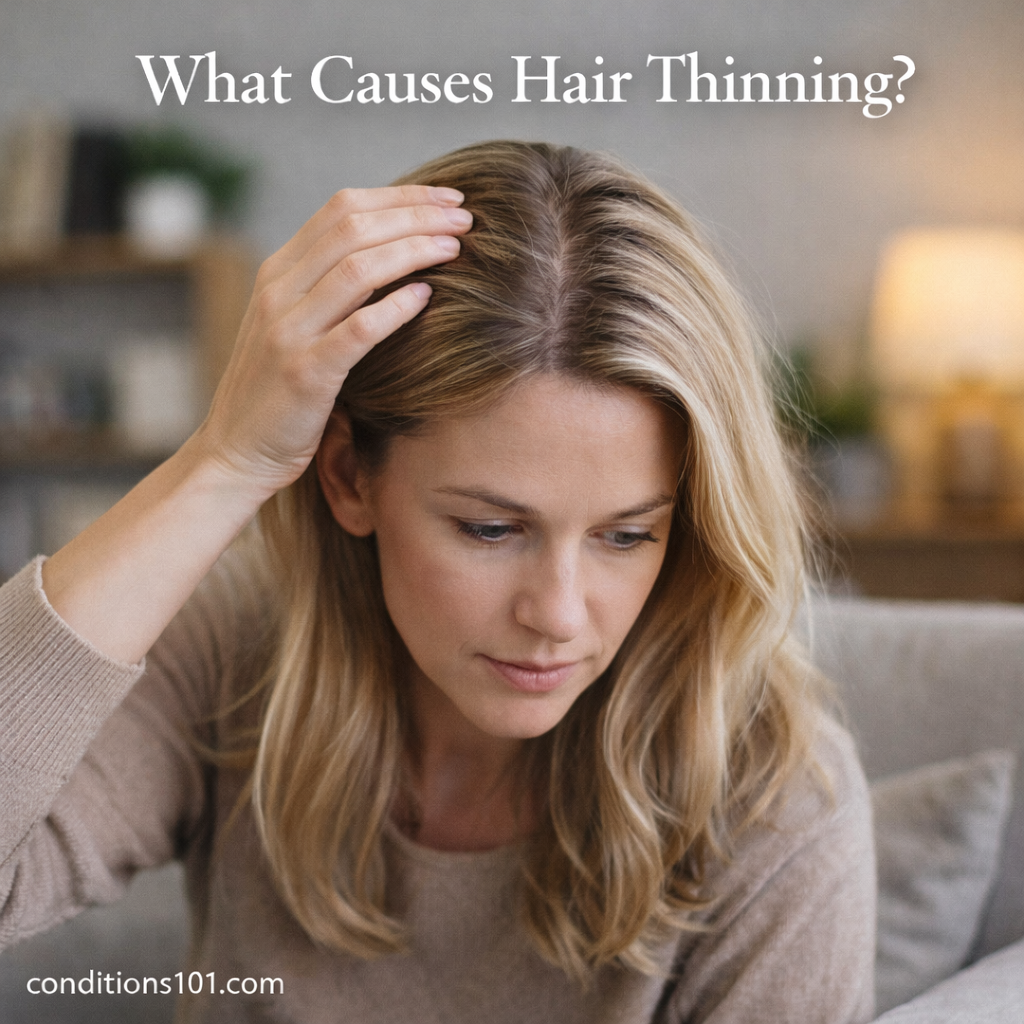
Hair thinning refers to a gradual reduction in hair density or volume over time. It can affect the scalp, hairline, or overall appearance of hair and may occur at any age. Hair thinning is common and can result from a wide range of biological, lifestyle, and environmental factors.
This article explains the most common causes of hair thinning in a clear, educational way, without providing medical advice, diagnosis, or treatment.
Understanding Hair Growth Basics
To understand why hair thinning happens, it helps to know how hair normally grows.
Hair grows in cycles, which include:
- Growth phase (anagen): Hair actively grows
- Transition phase (catagen): Growth slows
- Resting phase (telogen): Hair sheds and the cycle restarts
At any given time, different hairs are in different phases. Hair thinning can occur when this cycle is disrupted or when fewer hairs enter the growth phase.
Common Causes of Hair Thinning

Hair thinning rarely has a single cause. It often develops due to a combination of factors.
Genetics and Family History
Genetics is one of the most common contributors to hair thinning. Hereditary patterns can influence:
- Hair follicle size
- Hair growth cycle length
- Sensitivity to natural hormones
Genetic hair thinning often develops gradually and follows recognizable patterns over time.
Hormonal Changes
Hormonal fluctuations can affect hair growth and shedding patterns.
Common life stages associated with hormonal shifts include:
- Puberty
- Pregnancy and postpartum changes
- Menopause
- Aging-related hormone changes
Hormones help regulate the hair growth cycle, so changes in hormone levels can temporarily or gradually affect hair thickness.
Age-Related Hair Changes
As people age, hair naturally changes in texture, density, and growth rate.
Age-related hair thinning may involve:
- Slower hair growth
- Finer individual hair strands
- Reduced overall hair volume
- Longer resting phases in the hair cycle
These changes are often gradual and vary widely between individuals.
Physical and Emotional Stress
Stress can influence many systems in the body, including hair growth.
Stress-related hair thinning may occur after:
- Major life changes
- Illness or injury
- Surgery
- Extended periods of emotional strain
In some cases, hair shedding increases several months after a stressful event due to shifts in the hair growth cycle.
Nutritional Factors
Hair growth depends on the body having sufficient nutrients to support cell growth and repair.
Nutritional factors that may influence hair thickness include:
- Overall calorie intake
- Protein availability
- Micronutrients involved in hair structure
Changes in eating patterns or prolonged nutritional imbalance may affect hair growth over time.
Scalp and Hair Care Practices
How hair and scalp are treated can play a role in hair thinning.
Factors related to hair care include:
- Frequent tight hairstyles
- Excessive tension on hair roots
- Repeated chemical processing
- Excessive heat styling
Over time, repeated stress on hair strands or follicles may contribute to thinning or breakage.
Medical Conditions and Health Factors
Some underlying health factors can influence hair growth patterns.
Examples of health-related influences include:
- Autoimmune activity
- Chronic inflammation
- Metabolic or systemic conditions
- Long-term physiological stress on the body
Hair thinning can sometimes be one visible sign of broader changes within the body.
Environmental Influences
Environmental exposures can also affect hair quality and appearance.
Potential environmental contributors include:
- Pollution
- Sun exposure
- Harsh weather conditions
- Repeated exposure to irritants
These factors may weaken hair strands or affect scalp health over time.
Hair Thinning vs. Normal Shedding
It is normal to shed hair daily as part of the natural growth cycle. Hair thinning differs from typical shedding in a few key ways.
Hair thinning may involve:
- Noticeable reduction in volume over time
- Wider part lines or more visible scalp
- Thinner ponytail or overall density changes
- Hair not regrowing at the same rate it sheds
Understanding this distinction helps clarify when changes are part of normal hair cycles versus longer-term thinning patterns.
Why Hair Thinning Varies Between Individuals
Hair thinning does not look the same for everyone. Differences can be influenced by:
- Genetics
- Age
- Hair type and texture
- Lifestyle factors
- Overall health patterns
Some people experience mild changes, while others notice more significant thinning.
Key Takeaways
- Hair thinning is a common experience with many possible causes
- Genetics, hormones, aging, stress, and nutrition all play roles
- Hair growth occurs in cycles that can be influenced by internal and external factors
- Hair thinning differs from normal daily hair shedding
- Individual experiences with hair thinning vary widely