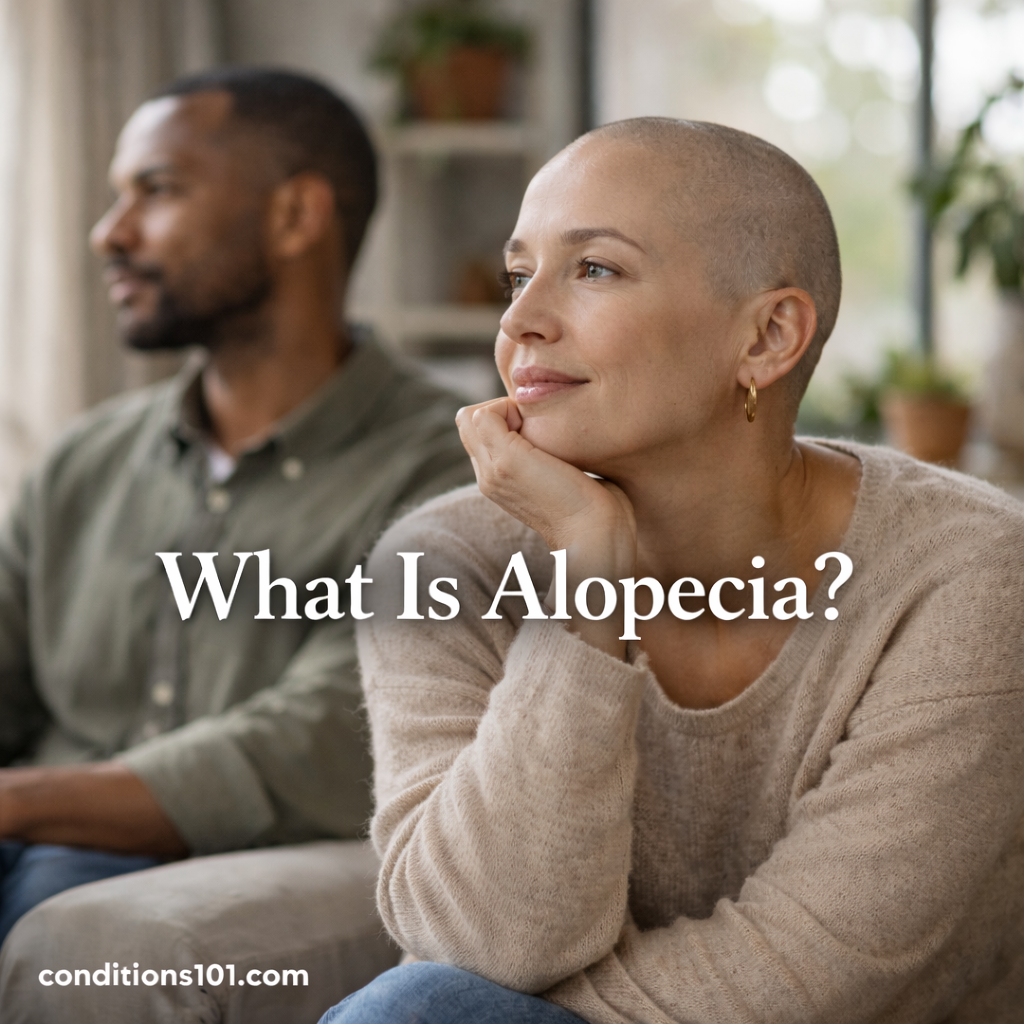
Alopecia is a general term used to describe hair loss from the scalp or other parts of the body. Hair loss can vary in pattern, severity, and duration, and it may affect people of any age, gender, or background.
This article provides an educational overview of what alopecia is, common forms of hair loss, potential causes, and how it can affect appearance and daily life. The information below is for general education only and does not provide medical advice, diagnosis, or treatment.
Understanding Hair Growth and Hair Loss
Hair grows in cycles that include growth, rest, and shedding phases. It is normal to lose some hair each day as part of this cycle.
Alopecia occurs when this cycle is disrupted or when hair follicles are damaged, leading to noticeable thinning or hair loss. In some cases, hair loss may be temporary, while in others it can be long-lasting or permanent.
What Does the Term “Alopecia” Mean?
The word alopecia refers broadly to hair loss, regardless of cause. It does not describe a single condition, but rather a category that includes several types of hair loss with different patterns and characteristics.
Alopecia can involve:
- Partial or complete hair loss
- Hair loss limited to the scalp
- Hair loss affecting eyebrows, eyelashes, or body hair
- Gradual thinning or sudden shedding
Common Types of Alopecia
There are several forms of alopecia, each with distinct features.
Androgenetic Alopecia
Often referred to as pattern hair loss, this type typically develops gradually and follows predictable patterns. It is commonly influenced by genetics and hormonal factors.
Alopecia Areata
This form involves patchy hair loss that may appear suddenly. It often affects the scalp but can involve other areas of the body.
Telogen Effluvium
This type is characterized by increased hair shedding across the scalp, often triggered by physical or emotional stress, illness, or major life changes.
Traction Alopecia
Traction alopecia results from repeated tension on the hair, often due to certain hairstyles that pull tightly on the scalp over time.
Possible Causes of Alopecia
Hair loss can occur for many reasons, and more than one factor may be involved.
Common contributors include:
- Genetic predisposition
- Hormonal changes
- Physical or emotional stress
- Certain health conditions
- Nutritional factors
- Hairstyling practices or hair treatments
In some cases, the exact cause of alopecia may not be clearly identified.
How Alopecia Can Affect Appearance and Daily Life
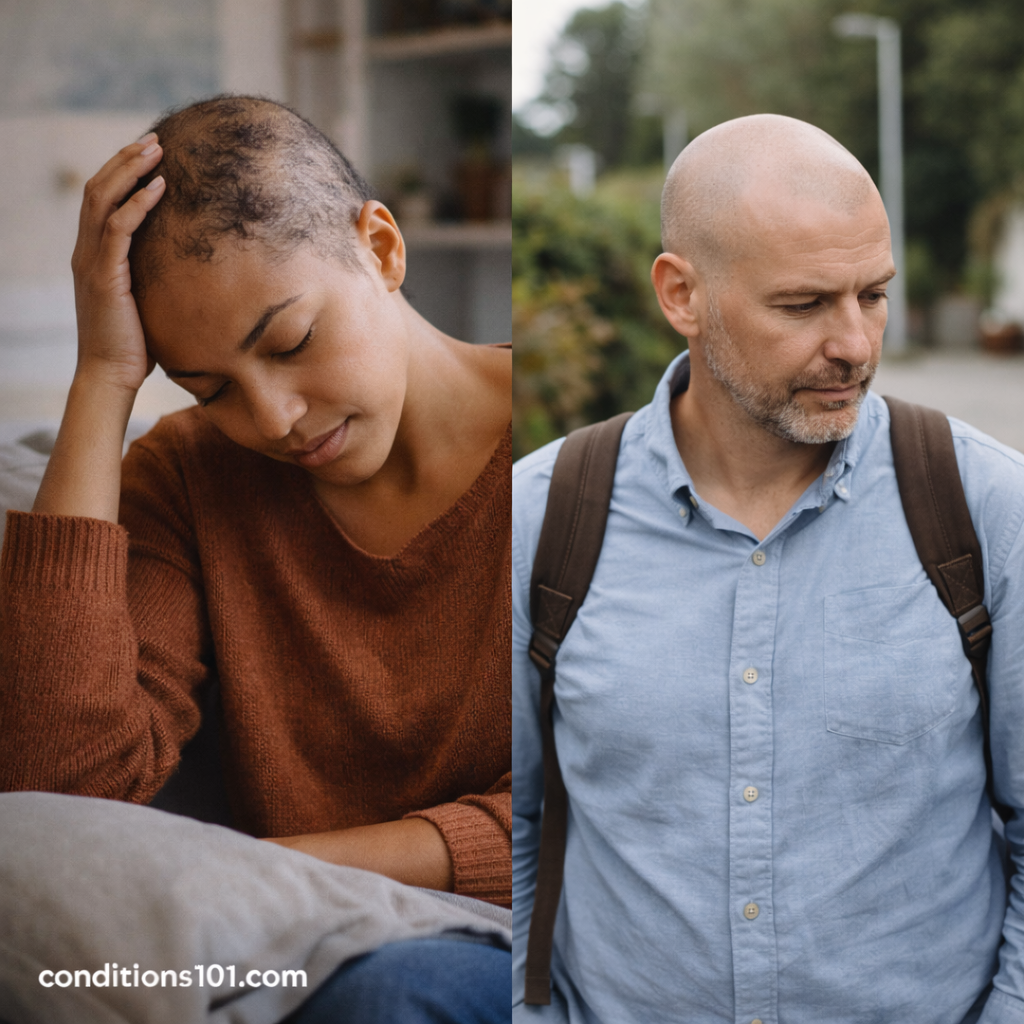
Hair often plays a role in personal identity and self-expression. As a result, hair loss can affect individuals in different ways beyond physical appearance.
Possible effects include:
- Changes in self-image or confidence
- Increased time spent on grooming or styling
- Emotional stress or frustration
- Adjustments in clothing, accessories, or hairstyles
Responses to hair loss vary widely, and experiences are highly individual.
Is Alopecia Common?
Alopecia is relatively common and can occur at different stages of life. Some forms are more widespread than others, and patterns may differ between individuals.
Hair loss can affect people regardless of gender, age, or ethnicity, although the type and progression may vary.
Temporary vs. Long-Term Hair Loss
Not all hair loss is permanent. Some forms of alopecia may resolve over time, while others may be ongoing.
General distinctions include:
- Temporary hair loss – hair may regrow after the underlying cause changes
- Long-term hair loss – hair loss may persist or progress over time
The course of alopecia depends on its type and contributing factors.
When Professional Evaluation Matters
This article is intended for educational purposes only. Ongoing, sudden, or distressing hair loss is a signal that should be evaluated by a qualified professional who can consider individual circumstances.
Key Points to Remember
- Alopecia is a general term for hair loss
- There are multiple types with different patterns and causes
- Hair loss may be temporary or long-term
- Alopecia can affect appearance and emotional well-being
- Experiences with hair loss vary from person to person
Understanding what alopecia is can help build awareness and support informed conversations about hair, appearance, and overall well-being.