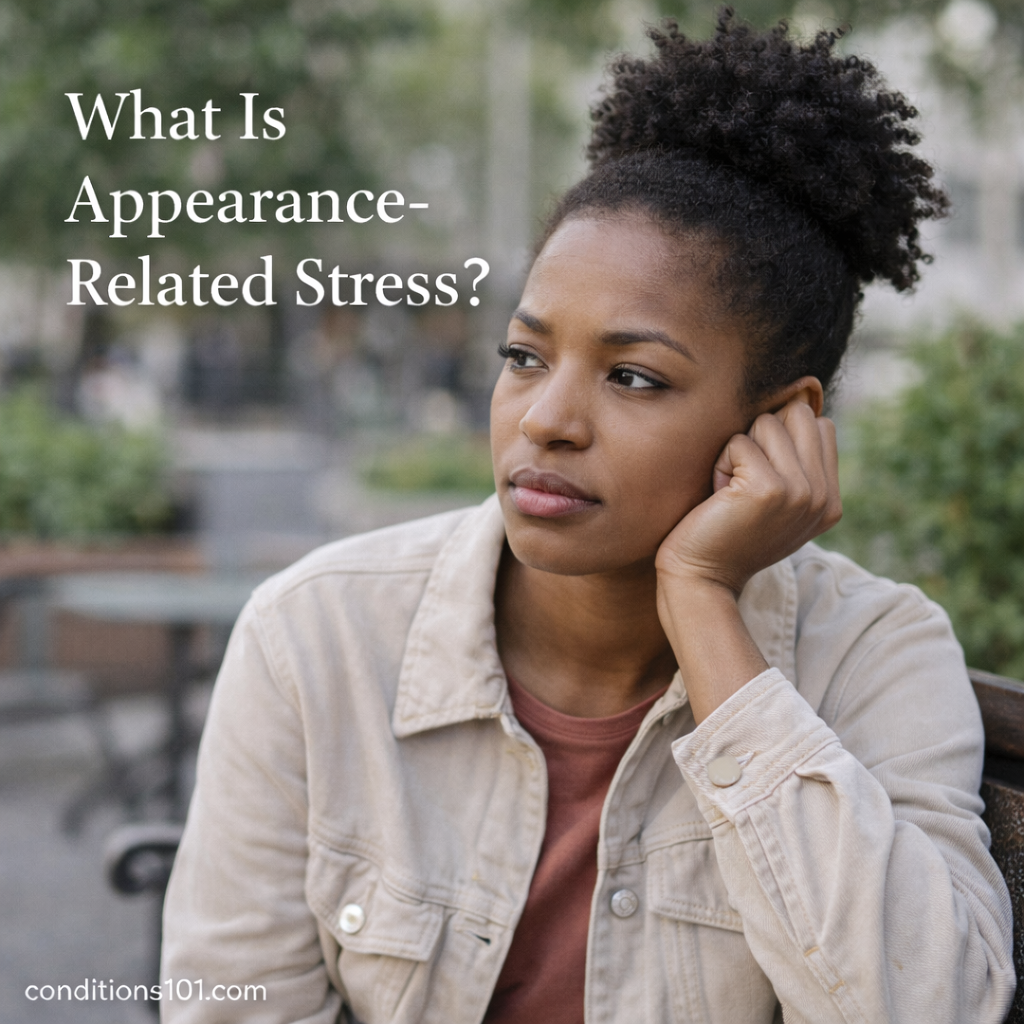
Appearance-related stress refers to emotional or mental strain linked to concerns about physical appearance. This type of stress can involve how a person looks, how they believe others perceive them, or how their appearance compares to personal or societal expectations.
It is a descriptive, educational concept often discussed in psychology, sociology, and general health contexts. Appearance-related stress is not a medical diagnosis and does not imply a specific condition or treatment.
How Appearance-Related Stress Develops
Concerns about appearance are common and can arise from many everyday influences. Stress related to appearance typically develops when attention to physical traits becomes emotionally taxing or persistent.
Common sources include:
- Social expectations or beauty standards
- Personal self-image and self-evaluation
- Comparisons with others
- Changes in appearance over time
These influences can interact and vary widely between individuals.
Common Areas of Focus
Appearance-related stress may center on different physical features depending on personal values, experiences, and environment.
Examples include:
- Skin appearance
- Hair texture, thickness, or styling
- Body shape or size
- Facial features
- Signs of aging
- Clothing or overall presentation
The focus does not need to involve a visible issue; perceived differences alone can be enough to create stress.
Appearance-Related Stress in Daily Life
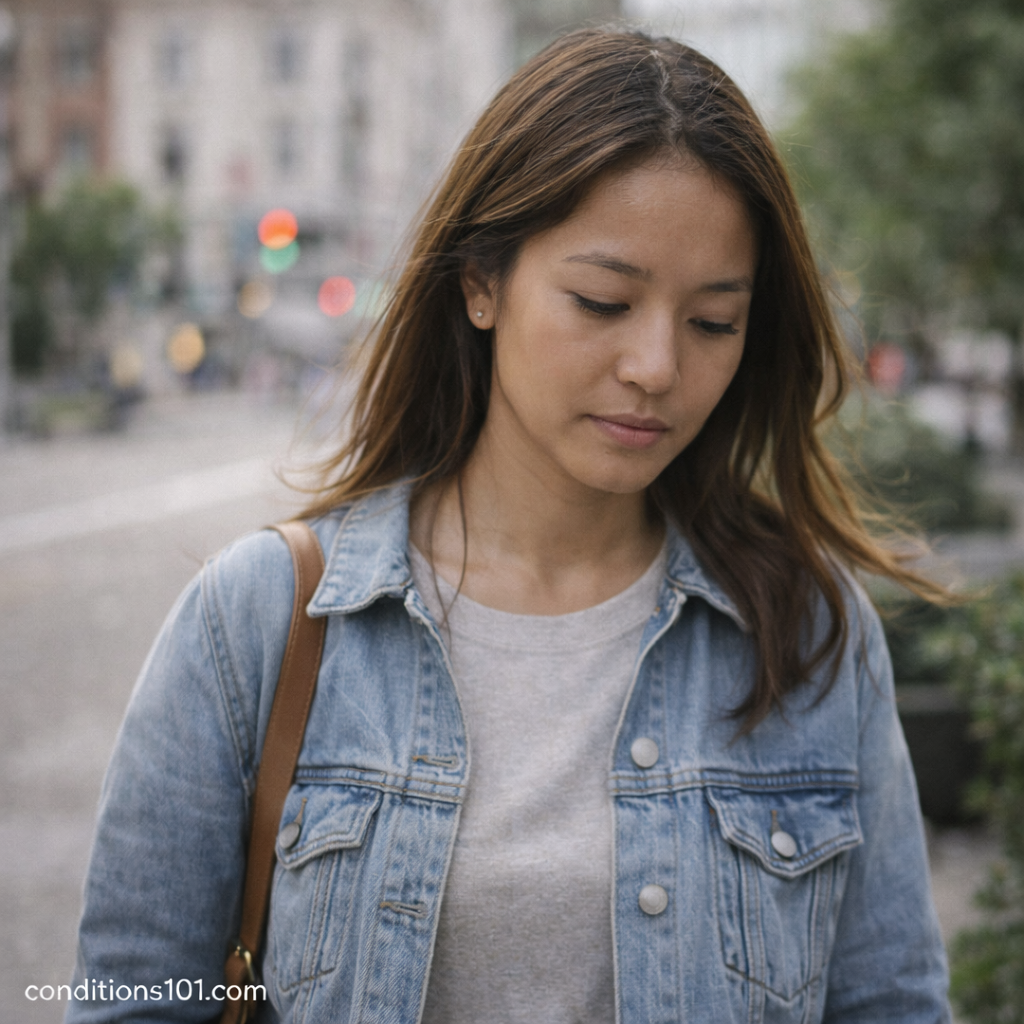
This type of stress often shows up in subtle, everyday situations rather than extreme moments.
Examples may include:
- Feeling self-conscious in social settings
- Spending excessive time thinking about appearance before events
- Avoiding activities due to appearance concerns
- Difficulty focusing because of persistent self-evaluation
These experiences exist along a spectrum and can fluctuate over time.
The Role of Social and Cultural Influences
Social and cultural environments play a significant role in shaping appearance-related stress.
Media and Visual Exposure
Modern media environments frequently emphasize curated images and idealized appearances. Repeated exposure can influence:
- Perceived norms
- Expectations of appearance
- Self-comparison habits
This influence does not affect everyone equally, but it can contribute to stress for some individuals.
Social Feedback and Perception
Feedback from others—whether direct or implied—can impact how appearance is interpreted.
This may include:
- Comments or reactions from peers
- Workplace or social norms
- Online interactions
Even neutral feedback can sometimes be interpreted negatively, depending on context and mindset.
Appearance-Related Stress vs. Body Image
Appearance-related stress and body image are related but not identical concepts.
- Body image refers to how a person perceives and feels about their physical self
- Appearance-related stress focuses on the emotional strain caused by those perceptions
Someone may have a generally neutral body image but still experience stress in specific situations.
Temporary vs. Ongoing Appearance-Related Stress
Appearance-related stress can be short-term or more persistent.
Situational Stress
Short-term stress may occur around:
- Special events
- Life transitions
- Temporary appearance changes
This type of stress often resolves as circumstances change.
Ongoing Stress
Longer-lasting stress may involve:
- Repeated self-comparison
- Persistent concern about certain features
- Heightened awareness in social environments
Even ongoing stress can vary in intensity over time.
Factors That Influence Appearance-Related Stress
Several non-medical factors can shape how appearance-related stress is experienced.
These may include:
- Personality traits
- Past experiences
- Cultural background
- Social environment
- Personal values
There is no universal level of concern that defines what is “normal” or “excessive.”
Common Misunderstandings
Appearance-related stress is often misunderstood.
- It does not require vanity or superficiality
- It is not limited to any gender or age group
- It does not mean someone dislikes their appearance overall
- It does not automatically indicate a mental health condition
It is best understood as a response to internal and external pressures rather than a flaw.
Why the Concept Is Discussed
The term helps describe a shared human experience in neutral language.
It is often used to:
- Frame conversations about self-perception
- Explain emotional responses to appearance-related situations
- Encourage awareness of social influences
Because it is descriptive, it allows discussion without assigning blame or diagnosis.
Key Takeaways
- Appearance-related stress refers to emotional strain connected to concerns about physical appearance
- It can involve skin, hair, body shape, facial features, or overall presentation
- Social, cultural, and personal factors all play a role
- The experience varies widely and can change over time
Understanding appearance-related stress can help place common self-image concerns into context and support more informed discussions about appearance and well-being.