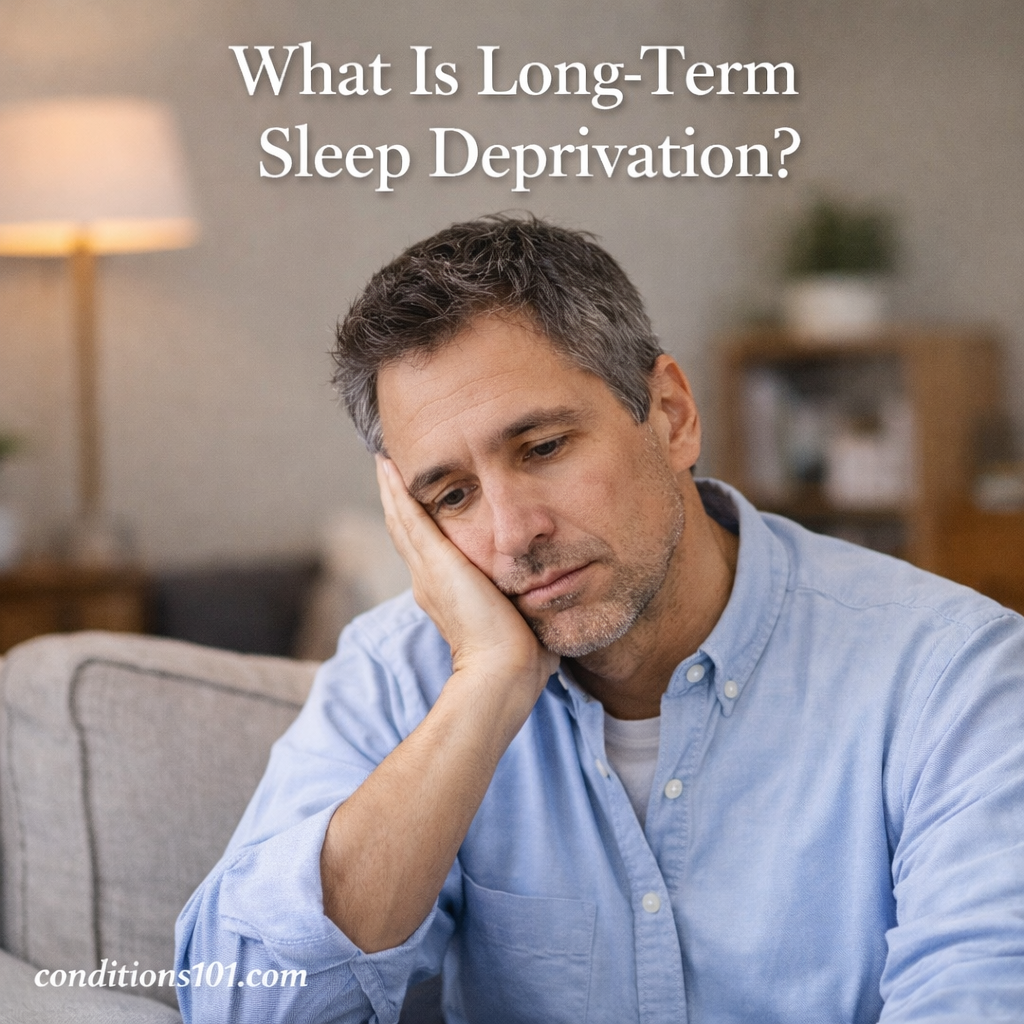
Long-term sleep deprivation refers to a prolonged period of consistently getting less sleep than the body needs to function well. Unlike short-term sleep loss, which may last a night or two, long-term sleep deprivation develops over weeks, months, or even years.
This pattern of insufficient sleep can affect how the body and brain operate on a daily basis, often in subtle ways that build gradually over time.
How Long-Term Sleep Deprivation Develops
Long-term sleep deprivation does not always result from staying awake for extended periods. More often, it occurs when someone regularly sleeps fewer hours than their individual needs.
Common contributors include:
- Ongoing work or school demands
- Irregular schedules or shift work
- Caregiving responsibilities
- Chronic stress or mental overload
- Lifestyle habits that delay sleep
- Environmental factors such as noise or light
Because sleep loss accumulates, even small nightly deficits can add up over time.
Short-Term vs Long-Term Sleep Deprivation
Sleep deprivation is often described based on duration.
Short-Term Sleep Deprivation
This typically involves:
- One or several nights of limited sleep
- Temporary tiredness or reduced alertness
- Effects that improve after rest
Long-Term Sleep Deprivation
This involves:
- Persistent lack of adequate sleep
- Ongoing daytime fatigue
- Changes that may feel “normal” over time due to adaptation
The body can partially adjust to reduced sleep, which can make long-term deprivation harder to recognize.
How the Body Responds to Ongoing Sleep Loss
Sleep supports many essential processes, including attention, memory, energy regulation, and emotional balance. When sleep is consistently limited, the body adapts in ways that may mask fatigue but reduce overall efficiency.
Common responses include:
- Slower reaction times
- Reduced concentration
- Increased reliance on stimulants
- Fluctuating energy levels
- Changes in motivation or mood
These effects often appear gradually rather than all at once.
Cognitive and Mental Effects
Long-term sleep deprivation can influence how the brain processes information.
People may notice:
- Difficulty focusing for extended periods
- Slower decision-making
- Forgetfulness or mental fog
- Reduced creativity or problem-solving ability
Because these changes can become familiar, they are sometimes attributed to stress or aging rather than sleep patterns.
Physical Sensations Linked to Chronic Sleep Loss
Ongoing sleep deprivation can also affect how the body feels during the day.
These sensations may include:
- Persistent tiredness even after rest
- Heaviness or low energy
- Increased sensitivity to discomfort
- Reduced physical endurance
These experiences can vary widely from person to person.
Why Long-Term Sleep Deprivation Is Often Overlooked

Many people adapt their routines around fatigue, adjusting expectations or pacing activities differently. As a result, long-term sleep deprivation may not feel like an obvious problem.
Factors that contribute to it being overlooked include:
- Gradual onset
- Social norms around being “busy”
- Belief that functioning equals being well-rested
- Irregular sleep schedules that still feel routine
This makes awareness and education especially important.
Sleep Needs Vary Between Individuals
Not everyone requires the same amount of sleep. Genetics, age, lifestyle, and daily demands all influence how much rest a person needs to feel alert and balanced.
Because of this variability:
- One person may function well on fewer hours
- Another may experience fatigue with the same schedule
- Comparing sleep needs across people can be misleading
Long-term sleep deprivation is best understood in relation to personal sleep requirements rather than a fixed number of hours.
Key Takeaways
- Long-term sleep deprivation involves ongoing insufficient sleep over extended periods
- It often develops gradually due to lifestyle or routine demands
- Effects can impact attention, energy, and daily functioning
- The body may adapt, making deprivation harder to recognize
- Sleep needs vary, so experiences differ between individuals