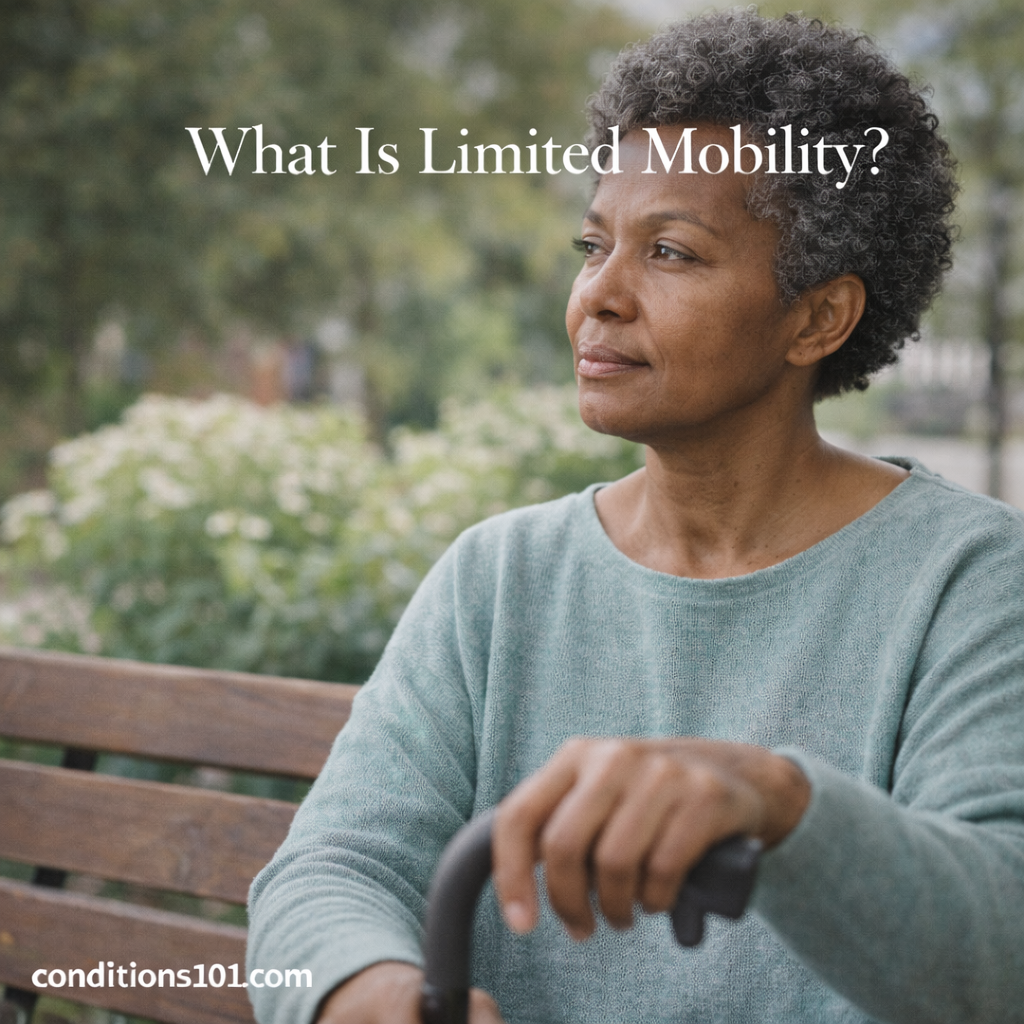
Physical limitation refers to a reduced ability to perform certain physical actions or movements that most people can typically do without difficulty. These limitations can affect strength, flexibility, endurance, coordination, balance, or mobility. They may be temporary or long-term and can range from mild restrictions to more significant challenges in daily activities.
In an educational context, physical limitation is a descriptive term—not a diagnosis. It is used to explain how physical function may be affected, without identifying a specific cause or medical condition.
How Physical Limitations Show Up in Daily Life

Physical limitations can influence everyday tasks in subtle or noticeable ways. The impact depends on the type and degree of limitation.
Common examples include:
- Difficulty walking long distances or standing for extended periods
- Reduced ability to lift, carry, or grip objects
- Limited range of motion in joints such as shoulders, knees, or hips
- Challenges with balance or coordination
- Fatigue during routine physical activities
For some people, these limitations are situational, while for others they may be consistent over time.
Common Categories of Physical Limitation
Physical limitations are often grouped based on how they affect the body.
Mobility-Related Limitations
These involve movement from one place to another.
Examples include:
- Difficulty walking or climbing stairs
- Reduced speed or stability while moving
- Challenges with changing positions, such as sitting to standing
Strength and Endurance Limitations
These affect how much force or sustained effort a person can produce.
Examples include:
- Trouble lifting or carrying objects
- Fatigue during normal physical tasks
- Reduced stamina over the course of a day
Flexibility and Range of Motion Limitations
These involve restricted movement in joints or muscles.
Examples include:
- Stiffness that limits bending or reaching
- Difficulty turning the neck or torso
- Reduced joint mobility
Coordination and Balance Limitations
These affect body control and stability.
Examples include:
- Frequent stumbling or loss of balance
- Difficulty with precise movements
- Challenges with tasks requiring fine motor skills
Temporary vs. Long-Term Physical Limitations
Physical limitations can differ in duration and stability.
Temporary Limitations
These may occur due to short-term factors such as:
- Physical strain or overuse
- Recovery from injury or surgery
- Periods of reduced activity
Temporary limitations often improve as the body recovers or adapts.
Long-Term Limitations
These may persist over time and can be influenced by:
- Ongoing physical conditions
- Structural or functional changes in the body
- Age-related changes in strength or mobility
Long-term limitations can vary in severity and may remain stable or change gradually.
Physical Limitation vs. Disability
While the terms are sometimes used interchangeably, they are not the same.
- Physical limitation describes a functional restriction in movement or physical ability.
- Disability is a broader concept that often includes how limitations interact with environmental, social, or accessibility factors.
A person can experience physical limitations without identifying as disabled, and experiences vary widely.
How Physical Limitations Are Commonly Described
In everyday and educational settings, physical limitations may be discussed using functional language rather than medical labels.
Examples of descriptive phrases include:
- “Reduced mobility”
- “Limited range of motion”
- “Difficulty with prolonged physical activity”
- “Restricted physical function”
These descriptions focus on what a person can or cannot do, rather than why the limitation exists.
Why Understanding Physical Limitation Matters
Understanding physical limitation helps promote clearer communication and realistic expectations in daily life, work, and public spaces.
It can support:
- Better planning of activities and environments
- Increased awareness of accessibility needs
- More inclusive conversations about physical capability
Recognizing physical limitations as part of human variation encourages practical, respectful understanding without assumptions or labels.
Key Takeaways
- Physical limitation refers to reduced physical ability, not a medical diagnosis
- Limitations can affect mobility, strength, flexibility, coordination, or endurance
- They may be temporary or long-term and vary widely between individuals
- Understanding physical limitation supports clarity, accessibility, and informed discussion