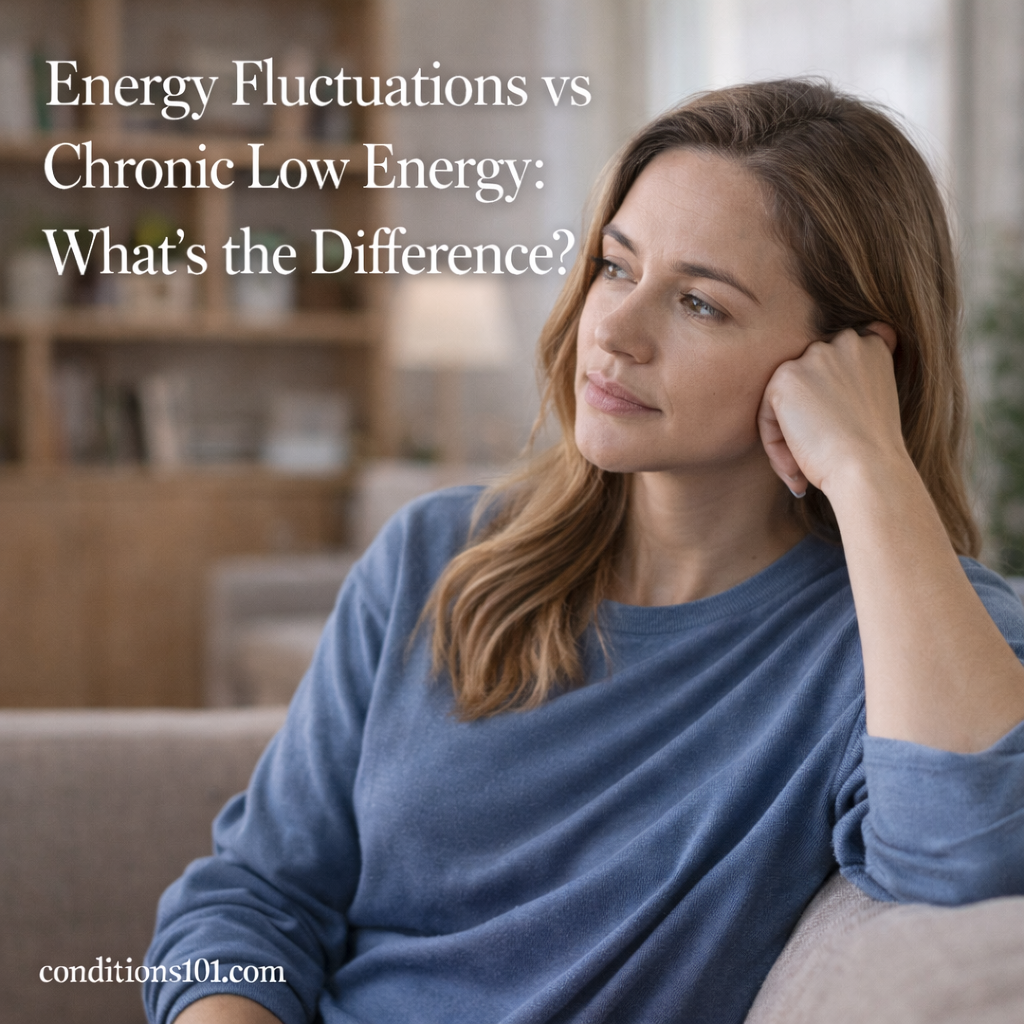
Energy levels naturally rise and fall throughout the day and across different periods of life. Feeling energetic one moment and tired the next is a common human experience. However, some people notice a more consistent pattern of low energy that does not seem to improve with rest or routine changes.
This article provides an educational comparison between energy fluctuations and chronic low energy. It explains how these concepts differ, what patterns are commonly associated with each, and why understanding the distinction can be helpful. This content is for general information only and does not provide medical advice, diagnosis, or treatment.
Understanding Energy as a Biological Concept
Energy, in everyday terms, refers to the body’s capacity to perform physical and mental tasks. It is influenced by multiple systems working together, including:
- Metabolic processes
- Sleep and circadian rhythms
- Nervous system activity
- Hormonal signaling
- Daily physical and mental demands
Because these systems are dynamic, changes in energy are expected rather than unusual.
What Are Energy Fluctuations?
Energy fluctuations describe temporary and variable changes in energy levels. These shifts often follow predictable patterns and are influenced by daily life factors.
Common characteristics of energy fluctuations include:
- Short-term changes (hours or days)
- Clear connections to activities or routines
- Improvement after rest, sleep, or breaks
- Variability rather than consistency
Energy fluctuations are considered a normal part of how the body responds to internal and external demands.
Common Causes of Energy Fluctuations
Energy fluctuations often occur in response to routine factors rather than underlying problems.
Examples include:
- Sleep quality or sleep timing
- Work schedules or workload changes
- Physical activity levels
- Stressful or mentally demanding tasks
- Dietary patterns and hydration
- Daily circadian rhythms
For instance, many people experience higher energy in the morning and lower energy in the afternoon or evening.
What Is Chronic Low Energy?
Chronic low energy refers to a persistent sense of low energy that lasts for an extended period of time. The term “chronic” describes duration, not cause.
From an educational perspective, chronic low energy may involve:
- Ongoing fatigue or low stamina
- Minimal improvement with rest
- Consistent low energy across many days or weeks
- Reduced variability compared to normal fluctuations
It is a descriptive concept used to explain patterns, not a diagnosis or condition.
Key Differences Between Energy Fluctuations and Chronic Low Energy

Understanding how these two concepts differ can help clarify personal experiences.
Duration
- Energy fluctuations: Short-lived and temporary
- Chronic low energy: Long-lasting and persistent
Predictability
- Energy fluctuations: Often linked to specific activities or times
- Chronic low energy: Less clearly tied to daily routines
Recovery
- Energy fluctuations: Improve with rest or sleep
- Chronic low energy: May not noticeably improve with rest
Variability
- Energy fluctuations: Energy levels rise and fall
- Chronic low energy: Energy remains consistently low
These differences describe patterns, not underlying reasons.
How Daily Rhythms Affect Energy
The body follows internal timing systems that influence alertness and fatigue.
Circadian Rhythms
Circadian rhythms regulate sleep–wake cycles and influence energy throughout the day. Natural dips and peaks are expected.
Ultradian Rhythms
Shorter cycles within the day can affect focus and stamina, often lasting 90 to 120 minutes.
Energy fluctuations often align with these rhythms, while chronic low energy may appear less responsive to them.
Mental vs. Physical Energy
Energy is not a single experience. People often notice differences between mental and physical energy.
- Mental energy: Focus, concentration, and cognitive stamina
- Physical energy: Muscle endurance and physical motivation
Energy fluctuations may affect one type more than the other, while chronic low energy may feel more global and persistent.
Lifestyle Factors That Influence Energy Patterns
Many non-medical factors can shape how energy feels over time.
Examples include:
- Work schedules and screen time
- Physical activity habits
- Sleep consistency
- Stress exposure
- Environmental stimulation
- Social demands
Understanding these influences can help explain why energy fluctuates or feels consistently low without drawing conclusions.
Tracking Energy Patterns Over Time
Observing patterns is often more informative than focusing on isolated moments.
Educational tracking may include:
- Time of day energy changes
- Relationship between sleep and energy
- Effects of workload or stress
- Differences between weekdays and weekends
Pattern awareness supports clearer descriptions without interpretation or self-diagnosis.
Common Misconceptions About Low Energy
Low energy is often misunderstood or oversimplified.
Common misconceptions include:
- Low energy always means illness
- Energy should feel the same every day
- Feeling tired means something is wrong
- Rest always fixes low energy immediately
In reality, energy is influenced by many interacting systems and varies widely between individuals.
Energy Fluctuations vs. Chronic Low Energy in Daily Life
Energy Fluctuations in Practice
Someone experiencing energy fluctuations might:
- Feel alert in the morning and tired in the afternoon
- Notice energy changes after busy days
- Regain energy after rest or sleep
Chronic Low Energy in Practice
Someone experiencing chronic low energy might:
- Feel persistently drained across many days
- Notice little change after rest
- Experience low motivation or stamina consistently
These examples describe experiences, not causes.
When Educational Awareness Is Helpful
Understanding the difference between fluctuating and persistent low energy can help people:
- Describe their experiences more clearly
- Notice long-term patterns
- Avoid unnecessary assumptions
- Communicate observations effectively
Educational awareness supports understanding without replacing professional evaluation.
Energy Patterns and Professional Evaluation
While learning about energy differences can be informative, interpretation and medical assessment should always be handled by qualified professionals.
Educational information can help individuals:
- Provide accurate descriptions
- Ask informed questions
- Separate observation from diagnosis
- Avoid self-treatment decisions
Key Takeaways
- Energy fluctuations are normal and temporary
- Chronic low energy describes persistent low energy over time
- Duration and recovery patterns are key differences
- Energy is influenced by daily rhythms and lifestyle factors
- Educational awareness does not replace medical evaluation
Final Thoughts
Energy fluctuations and chronic low energy represent two different patterns of how energy can feel over time. Fluctuations are a normal response to daily demands, while chronic low energy describes a longer-lasting experience. Understanding these distinctions provides clarity and perspective, helping individuals observe patterns without drawing medical conclusions.