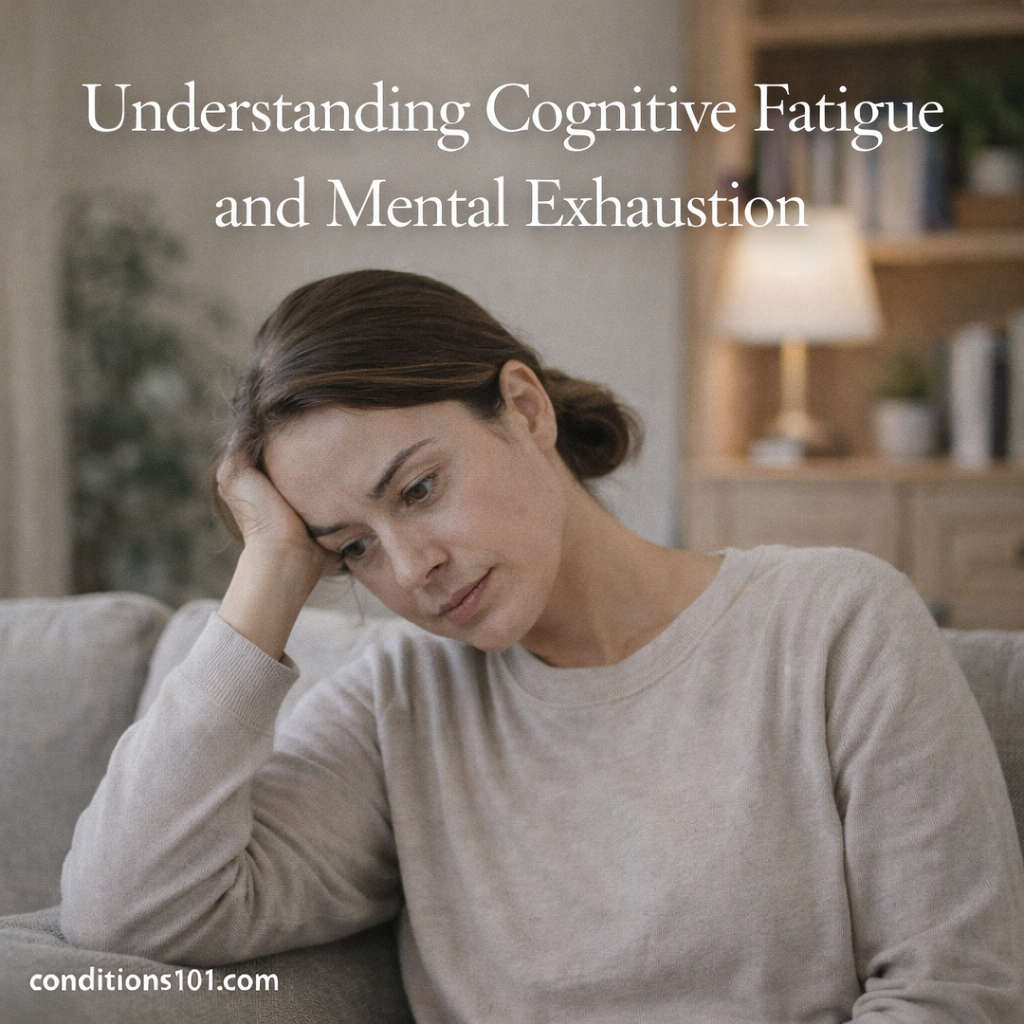
Cognitive fatigue and mental exhaustion refer to states of reduced mental energy that affect thinking, focus, and mental clarity. These experiences are often described as feeling mentally drained, overwhelmed, or unable to concentrate effectively, even when physical energy may still be present.
Although the terms are sometimes used interchangeably, they are best understood as closely related concepts that describe how prolonged mental effort, sustained attention, or ongoing cognitive demands can impact mental functioning over time.
This article provides education-only, evergreen information and does not offer medical advice, diagnosis, or treatment.
What Cognitive Fatigue Means
Cognitive fatigue specifically relates to diminished mental performance after extended periods of thinking, focusing, or processing information. It reflects how the brain responds when cognitive resources are taxed without sufficient recovery.
Common features of cognitive fatigue include:
- Difficulty maintaining attention
- Slower thinking or processing speed
- Reduced mental flexibility
- Increased effort required for simple tasks
Cognitive fatigue may develop gradually and can fluctuate throughout the day depending on mental demands.
What Is Mental Exhaustion?
Mental exhaustion is a broader term that describes an overall sense of mental depletion. It often includes cognitive fatigue but may also involve emotional strain, reduced motivation, or a feeling of being mentally overwhelmed.
Mental exhaustion is commonly associated with:
- Prolonged stress or mental pressure
- Continuous decision-making or multitasking
- Limited mental downtime
- Ongoing emotional or cognitive demands
While cognitive fatigue focuses more on performance and thinking, mental exhaustion reflects a wider state of mental depletion.
How Cognitive Fatigue and Mental Exhaustion Are Related

Cognitive fatigue and mental exhaustion often overlap and influence each other.
- Cognitive fatigue can contribute to mental exhaustion over time
- Mental exhaustion can make cognitive fatigue more noticeable
- Both involve reduced mental efficiency and increased mental effort
They are not separate conditions but rather different ways of describing mental tiredness that exists along a spectrum.
Common Signs of Cognitive Fatigue and Mental Exhaustion
People may notice a range of experiences when dealing with cognitive fatigue or mental exhaustion, including:
- Trouble focusing on conversations or tasks
- Forgetfulness or difficulty recalling information
- Feeling mentally “foggy” or slowed down
- Reduced patience or mental resilience
- Avoidance of mentally demanding activities
These signs may vary in intensity and may not always be present at the same time.
Situations That Commonly Contribute to Mental Fatigue
Cognitive fatigue and mental exhaustion are often linked to everyday mental demands rather than a single event.
Common contributing situations include:
- Extended work or study sessions
- Continuous screen exposure
- High information intake without breaks
- Repetitive problem-solving or analysis
- Constant task-switching or interruptions
Modern environments frequently place sustained demands on attention and thinking, making these experiences increasingly common.
Cognitive Fatigue vs Physical Fatigue
Although they may occur together, cognitive fatigue and physical fatigue are distinct.
Cognitive fatigue primarily affects:
- Thinking and focus
- Mental clarity
- Decision-making
Physical fatigue primarily affects:
- Muscle strength and endurance
- Physical movement and stamina
- Bodily sensations of tiredness
It is possible to feel mentally exhausted while still being physically capable, or physically tired without mental fatigue.
How Cognitive Fatigue Can Affect Daily Life
Over time, cognitive fatigue and mental exhaustion may influence everyday functioning in subtle ways, such as:
- Taking longer to complete tasks
- Making more small errors
- Feeling less mentally creative or adaptable
- Becoming easily overwhelmed by routine decisions
These effects often build gradually, making them harder to notice at first.
Short-Term vs Ongoing Mental Fatigue
Short-Term Cognitive Fatigue
Often linked to:
- Intense focus over a limited period
- A mentally demanding day
- Temporary changes in routine
Mental clarity may return with reduced demands or rest.
Ongoing Mental Exhaustion
May involve:
- Repeated mental overload
- Limited opportunities for mental recovery
- Long-term cognitive strain
In these cases, mental tiredness may feel persistent rather than situational.
Common Misconceptions About Mental and Cognitive Fatigue
- Mental fatigue is not laziness or lack of effort
- Cognitive fatigue does not reflect intelligence or capability
- Mental exhaustion can occur even in high-performing individuals
- These experiences are shaped by context and mental load, not just motivation
Understanding these points helps normalize cognitive fatigue as a common human experience.
Why Cognitive Fatigue Is Increasingly Common
Daily life often involves constant information processing, digital engagement, and decision-making. These conditions place ongoing demands on attention and mental resources, making cognitive fatigue and mental exhaustion more noticeable.
This reflects how the brain adapts to sustained mental effort rather than indicating something abnormal.
Key Takeaways
- Cognitive fatigue refers to reduced mental performance after prolonged thinking
- Mental exhaustion is a broader sense of mental depletion
- The two experiences often overlap and reinforce each other
- Sustained mental demands are a common contributing factor
- Cognitive fatigue exists on a spectrum and varies by individual
Final Thoughts
Understanding cognitive fatigue and mental exhaustion helps place mental tiredness in context as a common response to sustained cognitive demands. While these experiences can be frustrating, they are shaped by everyday mental workloads and modern environments. Viewing them through an educational lens supports awareness without implying diagnosis or treatment.