Sleep disruption and sleep disorder are terms that are often used interchangeably, but they describe different concepts. Both relate to difficulties with sleep, yet they differ in cause, duration, and how they are typically discussed in educational and clinical contexts.
Understanding the distinction can help clarify why occasional sleep problems are common, while ongoing sleep difficulties may be described differently. This article provides an educational overview and does not offer medical advice, diagnosis, or treatment.
Understanding Sleep in General
Sleep is a complex biological process that supports physical restoration, cognitive function, emotional regulation, and overall well-being. Sleep patterns naturally vary from person to person and can change due to lifestyle, environment, stress, and life stage.
Not all sleep difficulties indicate a disorder. Many sleep changes are temporary and resolve on their own.
What Is Sleep Disruption?
Sleep disruption refers to temporary or situational interruptions in normal sleep patterns. It describes what happens to sleep, not a formal condition.
Common Characteristics of Sleep Disruption
- Short-term or occasional
- Often linked to identifiable factors
- May resolve when circumstances change
- Does not necessarily follow a consistent pattern
Common Causes of Sleep Disruption
- Stress or emotional strain
- Changes in routine or schedule
- Travel or time zone changes
- Noise, light, or environmental disturbances
- Temporary illness or discomfort
Sleep disruption is common and widely experienced at different points in life.
What Is a Sleep Disorder?
A sleep disorder is a broader term used to describe ongoing patterns of sleep difficulty that follow recognized classifications. In educational contexts, sleep disorders are discussed as conditions involving persistent sleep-related challenges.
General Features of Sleep Disorders
- Ongoing or recurring sleep difficulties
- Patterns that persist over time
- Effects that extend into daytime functioning
- Often categorized into specific types
Sleep disorders are typically defined by established criteria, though this article does not diagnose or describe specific conditions.
Key Differences Between Sleep Disruption and Sleep Disorder
Understanding how these terms differ can help place sleep experiences in context.
Duration
- Sleep disruption is usually short-term
- Sleep disorders involve longer-lasting patterns
Predictability
- Sleep disruption often has a clear trigger
- Sleep disorders may persist without obvious daily triggers
Impact
- Sleep disruption may cause temporary tiredness
- Sleep disorders may affect mood, concentration, and daily routines more consistently
Classification
- Sleep disruption is a descriptive experience
- Sleep disorders are formal categories used in health discussions
Examples for Comparison (Educational Only)
Sleep Disruption Examples
- Difficulty sleeping before an important event
- Waking during the night due to noise
- Temporary changes in sleep after travel
Sleep Disorder Context (General)
- Repeated difficulty sleeping over long periods
- Ongoing sleep–wake rhythm disturbances
- Persistent daytime effects linked to sleep patterns
These examples are for understanding differences, not for diagnosis.
Why the Distinction Matters
Distinguishing between sleep disruption and sleep disorder helps avoid unnecessary concern while also recognizing when sleep issues may be more persistent.
Educational clarity can:
- Normalize short-term sleep changes
- Reduce confusion around sleep terminology
- Encourage better understanding of sleep patterns
- Support informed conversations about sleep
Sleep Changes Are Common
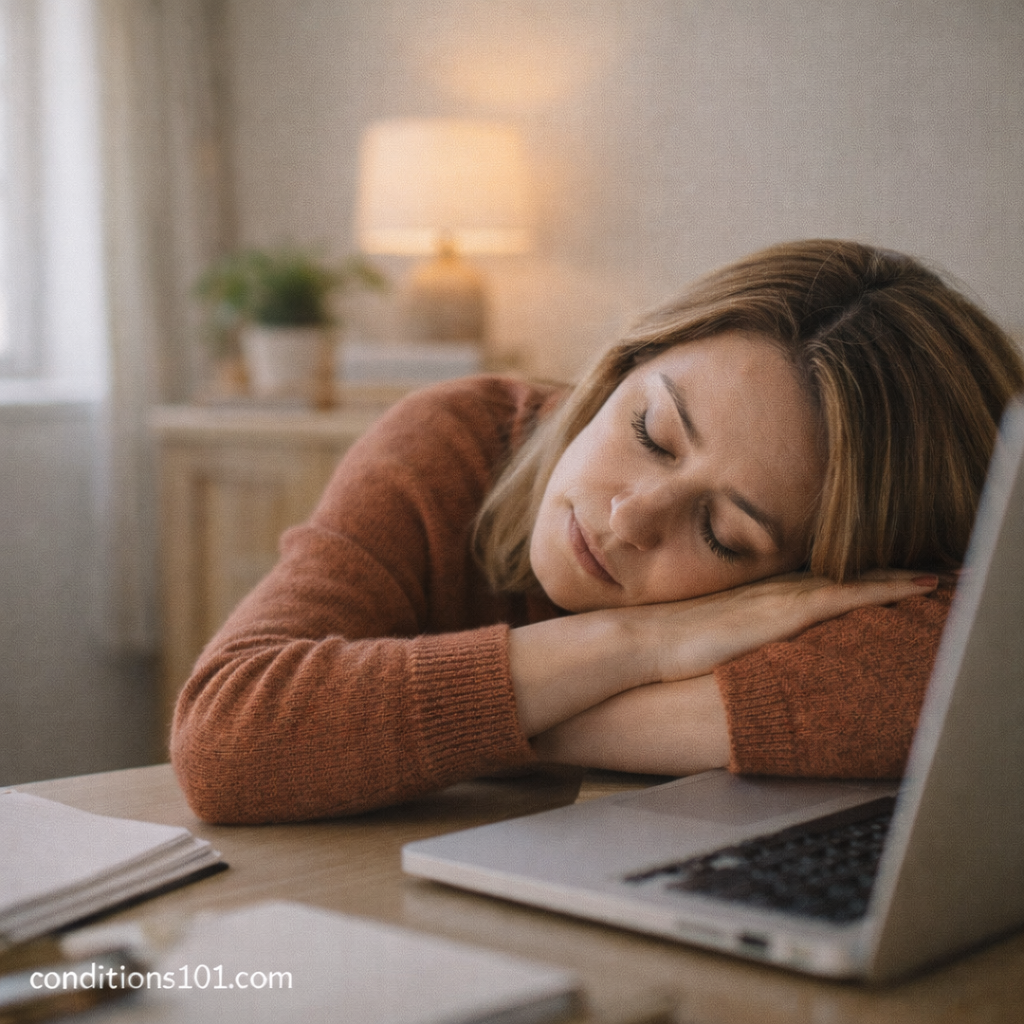
Sleep is sensitive to many influences. Changes in sleep quality or timing do not automatically indicate a disorder.
Sleep disruption is especially common during:
- High-stress periods
- Major life transitions
- Schedule or routine changes
- Environmental changes
In many cases, sleep returns to baseline once these factors resolve.
Common Misconceptions About Sleep Problems
Myth: Any poor sleep means a disorder
Short-term sleep difficulty is very common and often situational.
Myth: Sleep disorders are always obvious
Some sleep disorders involve subtle or gradual patterns.
Myth: Sleep disruption and sleep disorder mean the same thing
They describe different levels and patterns of sleep difficulty.
Educational Perspective on Sleep Terminology
In health education, precise language helps distinguish between experiences and conditions.
- Sleep disruption describes temporary sleep interruption
- Sleep disorder describes ongoing patterns recognized in health frameworks
Both terms acknowledge real sleep challenges, but they are not interchangeable.
Key Takeaways
- Sleep disruption is typically short-term and situational
- Sleep disorders involve longer-lasting, patterned difficulties
- Not all sleep problems indicate a disorder
- Duration, impact, and consistency help differentiate the two
- Understanding the difference supports clearer sleep discussions
Sleep disruption and sleep disorder exist on a spectrum of sleep experiences. Recognizing how they differ can help people better understand their own sleep patterns and reduce confusion around common sleep-related terms.