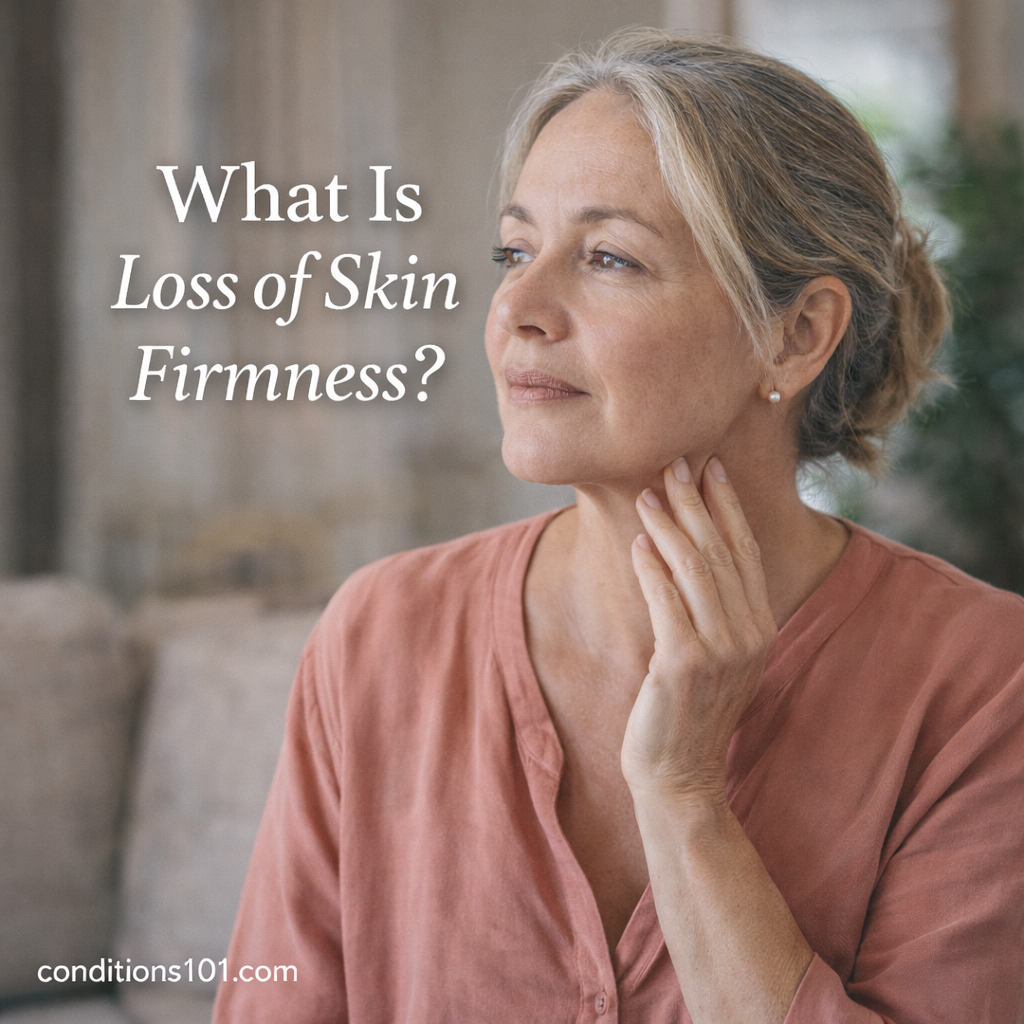
Loss of skin firmness is a commonly used term that describes changes in how the skin feels, looks, or maintains its structure over time. It is often discussed in educational, cosmetic, and general health contexts to explain why skin may appear less tight, less resilient, or more lax than it once was.
This article explains the concept of loss of skin firmness in a clear, educational way for general informational purposes only.
Understanding Skin Firmness
Skin firmness refers to the skin’s ability to maintain its shape, elasticity, and resistance to sagging. Firm skin typically feels smooth, resilient, and able to return to its original position after movement or pressure.
Firmness is influenced by several structural components within the skin, including:
- Collagen fibers, which provide strength and support
- Elastin fibers, which allow the skin to stretch and recoil
- The skin’s underlying supportive layers
- Overall hydration and skin structure
Loss of skin firmness occurs when these supportive elements change over time.
What Loss of Skin Firmness Means
Loss of skin firmness describes a gradual reduction in the skin’s tightness or structural resilience compared to earlier stages of life. The term is descriptive and does not indicate a disease or medical condition on its own.
Important characteristics of the term include:
- It is a general description, not a diagnosis
- It can be mild or more noticeable
- It often develops gradually rather than suddenly
- It may affect different areas of the body differently
Loss of skin firmness is commonly discussed as part of natural skin aging and appearance changes.
Common Signs Associated With Loss of Skin Firmness
In educational and cosmetic discussions, loss of skin firmness may be described using visual or tactile characteristics rather than clinical criteria.
Commonly mentioned signs include:
- Skin that appears looser or less taut
- Reduced bounce or elasticity when the skin is moved
- Sagging in certain areas, such as the face, neck, arms, or abdomen
- Changes in skin texture or contour
These descriptions are observational and vary widely between individuals.
Why Skin Firmness Changes Over Time
Loss of skin firmness is often associated with natural biological changes that occur throughout life. These changes are influenced by a combination of internal and external factors.
Factors commonly discussed in educational contexts include:
- Natural aging processes
- Long-term environmental exposure
- Changes in skin structure over time
- Lifestyle and daily habits
- Genetic differences between individuals
No single factor explains skin firmness changes for everyone.
Loss of Skin Firmness and Aging

Loss of skin firmness is frequently mentioned in discussions about aging because structural changes in the skin tend to become more noticeable over time. However, the rate and extent of these changes differ from person to person.
In general health education, age-related skin changes are described as:
- Gradual and progressive
- Highly individual
- Influenced by both intrinsic and extrinsic factors
Loss of skin firmness is considered a common and expected part of the skin’s natural evolution.
Areas Commonly Affected
Loss of skin firmness does not occur uniformly across the body. Some areas are more commonly discussed due to their visibility or movement.
These areas often include:
- Face and jawline
- Neck and décolletage
- Upper arms
- Abdomen
- Thighs
The appearance and degree of firmness loss vary based on anatomy and lifestyle.
Loss of Skin Firmness vs Skin Conditions
Loss of skin firmness should not be confused with skin diseases or medical conditions.
Key distinctions include:
- Loss of firmness is an appearance-related description
- Skin conditions involve specific diagnoses and criteria
- Changes in firmness alone do not indicate illness
In educational writing, the term is used to explain appearance-related changes rather than health disorders.
Why the Term Is Used in Education and Media
The phrase “loss of skin firmness” is commonly used because it provides a neutral, non-clinical way to discuss changes in skin appearance.
It helps:
- Describe visible changes without medical labeling
- Support discussions about aging and appearance
- Improve understanding of skin structure
- Communicate cosmetic and lifestyle concepts clearly
Clear terminology allows readers to better interpret information without misunderstanding its purpose.
What Loss of Skin Firmness Is Not
To avoid confusion, it is helpful to understand what this term does not mean.
Loss of skin firmness:
- Is not a medical diagnosis
- Does not indicate disease or injury
- Is not the same for everyone
- Does not follow a fixed timeline
The term is meant to describe a pattern, not define outcomes.
Key Takeaways
- Loss of skin firmness refers to reduced skin tightness or resilience over time
- It is commonly discussed in aging and appearance-related education
- The term is descriptive and non-diagnostic
- Changes vary widely between individuals
- Loss of firmness is a natural and common skin change