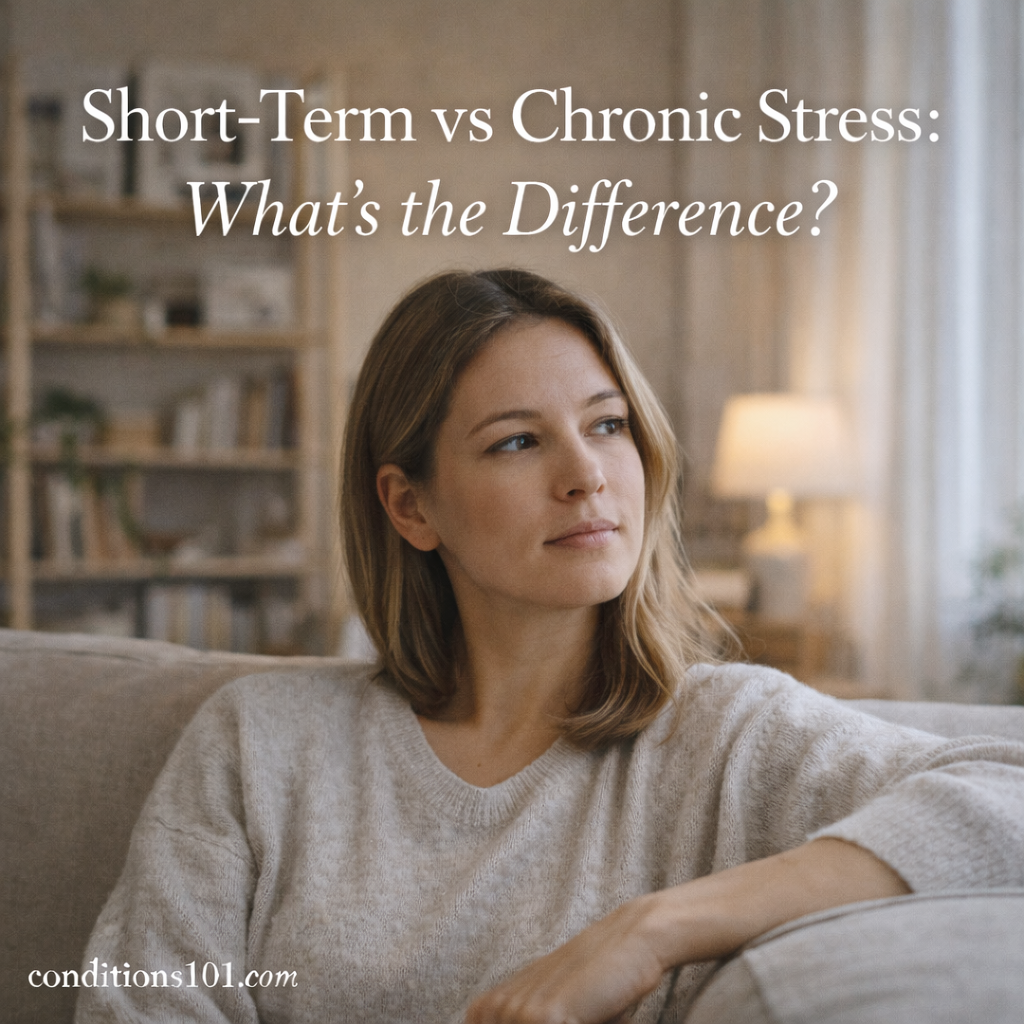
Stress is a natural response to demands, changes, or challenges. It affects everyone at different times and in different ways. While stress is often discussed as a single experience, it is commonly described in two broad forms: short-term stress and chronic stress.
This article explains the differences between short-term and chronic stress in a clear, educational way. It does not provide medical advice, diagnosis, or treatment.
What Is Short-Term Stress?
Short-term stress, sometimes called acute stress, refers to stress that arises in response to a specific situation and resolves once that situation passes. It is typically temporary and closely tied to identifiable events.
Short-term stress is often described as:
- Brief and situational
- Triggered by immediate challenges or pressures
- Resolving once the situation ends
- Part of normal daily life
Examples of situations that may involve short-term stress include deadlines, unexpected tasks, difficult conversations, or temporary disruptions to routine.
What Is Chronic Stress?
Chronic stress describes stress that feels ongoing or persistent over a long period of time. Instead of being linked to a single event, it is often associated with repeated or continuous pressures.
Chronic stress is commonly described as:
- Long-lasting or recurring
- Tied to ongoing demands or circumstances
- Difficult to fully “switch off”
- Accumulating over time
This type of stress is often discussed in the context of sustained workloads, long-term responsibilities, or environments that do not allow sufficient recovery.
Key Differences Between Short-Term and Chronic Stress
Although both involve the body’s stress response, short-term and chronic stress differ in duration, intensity, and impact on daily life.
Duration
- Short-term stress is temporary and typically lasts minutes, hours, or days.
- Chronic stress can persist for weeks, months, or longer.
Triggers
- Short-term stress is usually linked to a clear, identifiable situation.
- Chronic stress often stems from ongoing circumstances rather than a single trigger.
Recovery
- Short-term stress generally fades once the situation is resolved.
- Chronic stress may feel continuous, with limited periods of full relief.
Day-to-Day Experience
- Short-term stress may feel intense but brief.
- Chronic stress may feel less intense at any single moment but more draining over time.
How the Body Responds to Stress Over Time
The body uses similar internal systems to respond to both short-term and chronic stress. The difference lies in how long these systems remain active.
With short-term stress:
- The body activates a response
- The situation passes
- The body returns toward a resting state
With chronic stress:
- Stress responses may be activated repeatedly or continuously
- The body has fewer opportunities to fully reset
- The sense of pressure may feel ongoing
This distinction helps explain why chronic stress is often described as more exhausting, even if it feels less dramatic moment to moment.
Why Short-Term Stress Can Feel Useful
Short-term stress is often described as adaptive. In everyday discussions, it is sometimes associated with:
- Increased alertness
- Heightened focus
- Temporary motivation to act or respond
Because it is brief, the body is usually able to recover once the stressor is removed.
Why Chronic Stress Feels More Draining
Chronic stress is commonly described as wearing or taxing. Over time, it may affect how people perceive their energy, focus, or sense of balance.
People often describe chronic stress as:
- Mentally tiring
- Emotionally heavy
- Difficult to separate from daily routines
- More subtle but persistent
These descriptions reflect duration rather than severity.
Short-Term vs. Chronic Stress in Everyday Language
People often use different words when talking about each type of stress.
Short-term stress may be described as:
- Pressure
- Nerves
- Tension
- Being “stressed out” briefly
Chronic stress may be described as:
- Constant stress
- Ongoing strain
- Feeling overwhelmed long-term
- Never fully relaxing
These phrases help convey how the experiences differ in daily life.
Can Short-Term Stress Become Chronic?
Short-term stress can feel like chronic stress when stressful situations occur repeatedly with little time to recover in between. In these cases, the distinction becomes less clear, and stress may feel continuous even if individual stressors are temporary.
This highlights the role of recovery, routine, and pacing in how stress is experienced over time.
Short-Term vs. Chronic Stress as an Educational Comparison
Comparing short-term and chronic stress helps clarify:
- Why stress can feel manageable at times and overwhelming at others
- How duration changes the experience of stress
- Why context matters more than intensity alone
This comparison is meant to support understanding, not self-diagnosis.
Common Misunderstandings About Stress Duration
Misunderstanding 1: Chronic stress is always intense
Chronic stress may feel subtle or background rather than extreme.
Misunderstanding 2: Short-term stress is always harmful
Short-term stress is a normal part of life and often resolves naturally.
Misunderstanding 3: Stress is the same for everyone
People experience and describe stress differently depending on context and circumstances.
Key Takeaways
- Short-term stress is temporary and situation-specific
- Chronic stress is ongoing or recurring over time
- Duration is the main difference between the two
- Both involve similar stress responses, but recovery differs
- Understanding the distinction helps explain different stress experiences