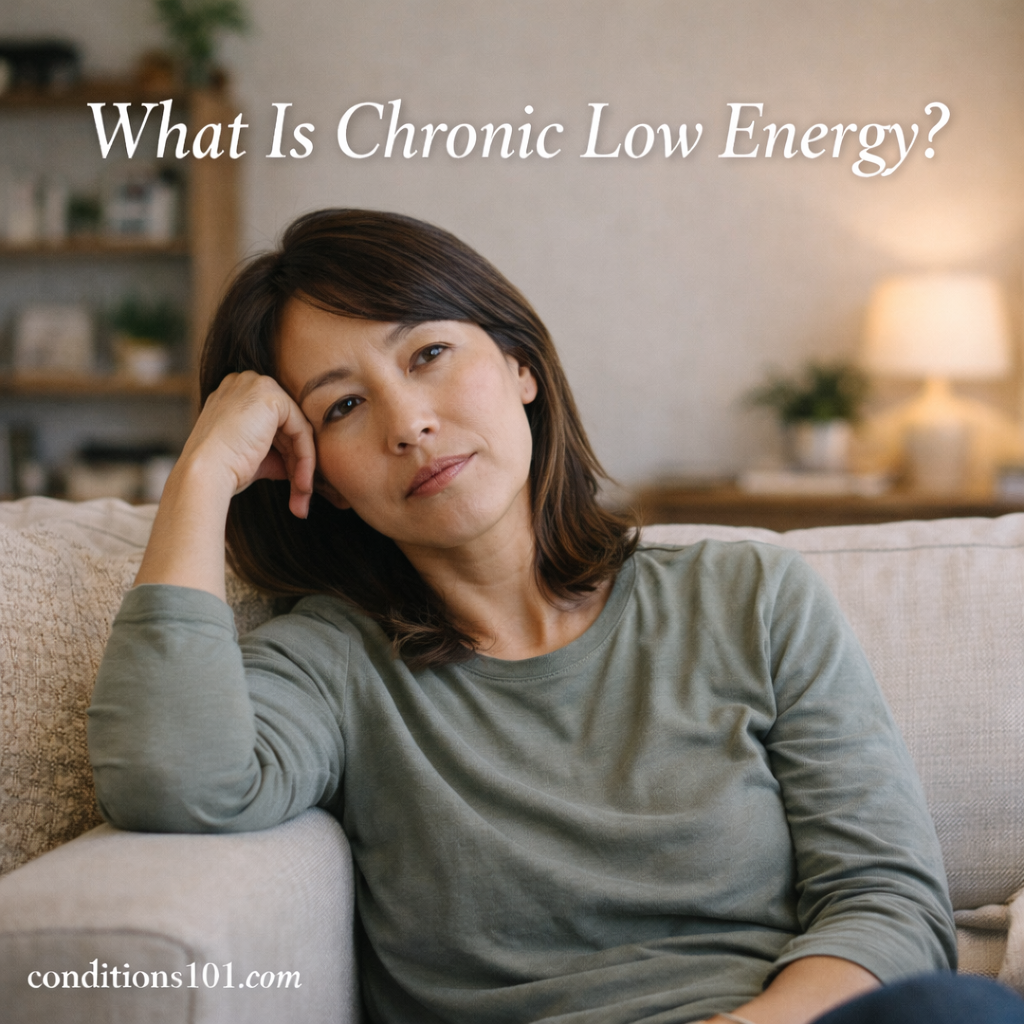
Chronic low energy is a non-medical, descriptive term used to explain a persistent sense of tiredness, sluggishness, or reduced stamina that lasts over an extended period of time. People who describe chronic low energy often feel consistently drained, even when daily demands are relatively light.
This concept is educational rather than diagnostic. It helps explain an experience many people relate to without referring to a specific medical condition, diagnosis, or treatment.
How Chronic Low Energy Is Commonly Described
Chronic low energy is usually explained in everyday language rather than clinical terms. It differs from short-term tiredness caused by a late night or a busy day.
People often describe it as:
- Feeling tired most days
- Having limited physical or mental stamina
- Needing more effort to complete routine tasks
- Lacking a sense of refreshment after rest
- Experiencing low motivation tied to fatigue
These experiences can vary in intensity and may fluctuate from day to day.
Chronic Low Energy vs. Normal Tiredness
Everyone feels tired occasionally. Chronic low energy is typically discussed when fatigue feels ongoing rather than situational.
Key differences include:
- Normal tiredness improves with rest or sleep
- Chronic low energy may persist despite downtime
- Normal fatigue is often linked to a clear cause
- Chronic low energy may feel harder to pinpoint
This distinction helps explain why some people feel worn down even without obvious overexertion.
Factors Commonly Associated With Chronic Low Energy

Chronic low energy is rarely linked to a single factor. It is often associated with a combination of physical, mental, and lifestyle influences.
Sleep Quality and Sleep Patterns
Even when sleep duration seems adequate, quality matters.
- Irregular sleep schedules
- Frequent nighttime disruptions
- Light or fragmented sleep
- Difficulty feeling restored after waking
Poor sleep quality can contribute to ongoing low energy levels.
Daily Mental and Emotional Load
Sustained mental effort can affect perceived energy.
- Ongoing responsibilities
- High cognitive demands
- Extended periods of focus
- Emotional strain or pressure
Mental fatigue can blend with physical tiredness, creating an overall sense of low energy.
Activity Levels and Movement Patterns
Energy levels are influenced by how the body is used throughout the day.
- Long periods of inactivity
- Repetitive movements
- Limited variation in daily activity
- Overexertion followed by extended rest
Both low and inconsistent activity patterns can contribute to feelings of fatigue.
Lifestyle and Routine Factors
Daily habits often play a role.
- Irregular schedules
- Inconsistent meal timing
- Limited downtime
- Disrupted routines
Over time, these patterns can affect how energetic or depleted a person feels.
Why Chronic Low Energy Can Feel Persistent
One defining feature of chronic low energy is its persistence. Rather than coming and going quickly, it may linger across weeks or months.
This persistence can be influenced by:
- Repeated daily strain
- Limited recovery periods
- Ongoing routine disruptions
- Compounding lifestyle factors
Because multiple systems contribute to energy levels, small daily stresses can add up over time.
Chronic Low Energy as an Educational Concept
Chronic low energy is useful as an educational framework because it:
- Describes a common experience without medical labeling
- Encourages awareness of energy patterns
- Helps people articulate long-term fatigue
- Avoids assumptions about cause or diagnosis
It allows for informed discussion while recognizing that experiences differ widely between individuals.
Common Misunderstandings About Chronic Low Energy
Misunderstanding 1: Low energy always means laziness
Chronic low energy reflects how the body and mind respond to sustained demands, not effort or motivation.
Misunderstanding 2: More rest always solves the issue
While rest is important, low energy can persist even with adequate downtime.
Misunderstanding 3: Energy levels should stay the same every day
Energy naturally fluctuates, and chronic low energy often involves variability rather than constant exhaustion.
When Chronic Low Energy Is Often Discussed
Chronic low energy is commonly mentioned during:
- Prolonged busy periods
- Extended routine changes
- Long-term mental demands
- Ongoing lifestyle adjustments
These situations highlight how energy is shaped by cumulative factors rather than single events.
Building Awareness Around Energy Levels
Understanding chronic low energy can help people notice patterns related to:
- Sleep quality
- Daily routines
- Mental workload
- Activity balance
This awareness supports clearer communication and informed decision-making without replacing professional guidance.
Key Takeaways
- Chronic low energy describes persistent tiredness or reduced stamina
- It is not a medical diagnosis
- Experiences vary between individuals
- Multiple lifestyle and routine factors may contribute
- The term supports awareness rather than medical conclusions