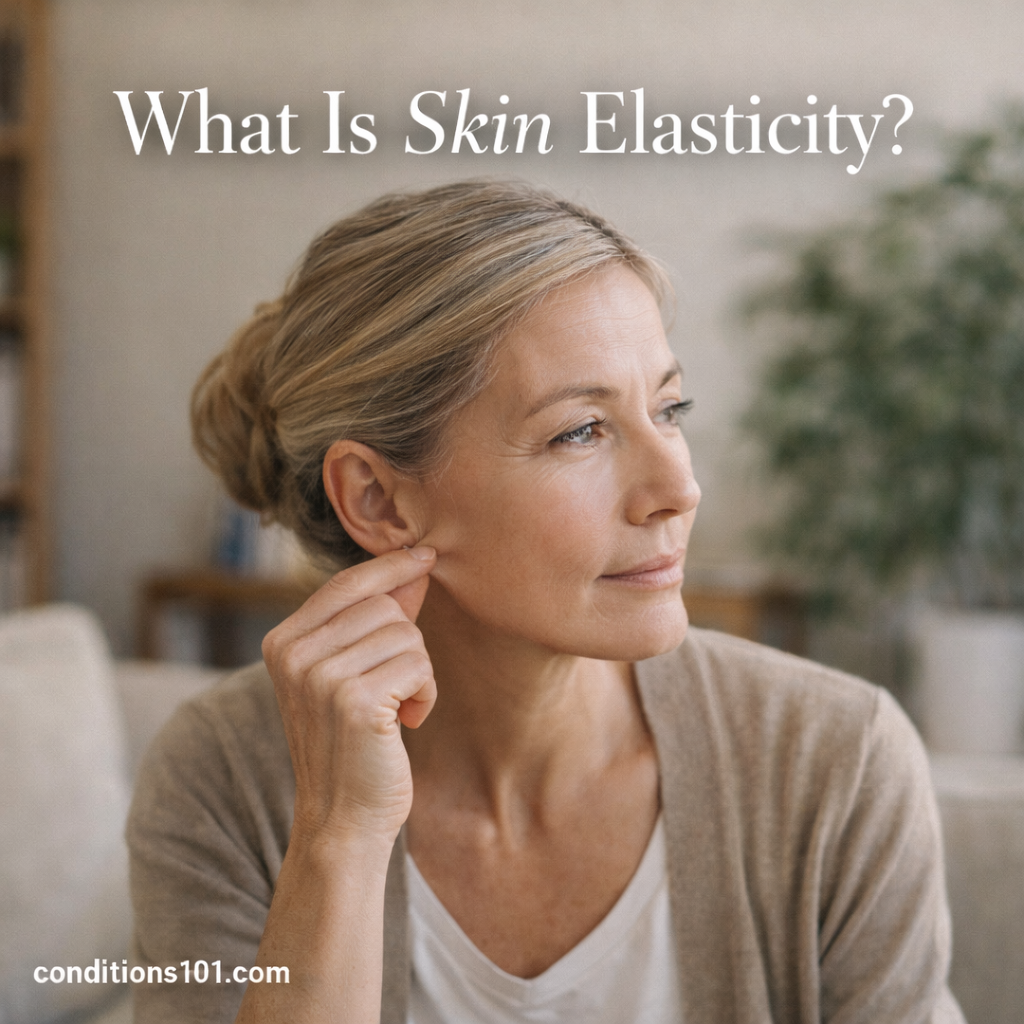
Skin elasticity refers to the skin’s ability to stretch and then return to its original shape. It describes how firm, resilient, and flexible the skin is when it is gently pulled, pressed, or moved during normal activity.
In general health and educational contexts, skin elasticity is discussed as a physical property of the skin rather than a medical condition. It is commonly mentioned in relation to aging, appearance, and overall skin characteristics, without implying disease, diagnosis, or treatment.
This article explains what skin elasticity means, how it is commonly described, and why it is an important concept in understanding skin health and appearance.
Understanding Skin Elasticity
Skin elasticity reflects how well the skin can adapt to movement and tension. When skin has good elasticity, it stretches easily and quickly returns to its usual position once the tension is released.
This property helps the skin:
- Move comfortably with facial expressions and body motion
- Maintain a smooth, firm appearance
- Resist prolonged sagging after stretching
- Adapt to daily physical activity
Elasticity is a natural characteristic of healthy skin, though it can change over time.
How Skin Elasticity Is Commonly Described
People often describe skin elasticity in simple, visual terms rather than scientific ones. Common descriptions include:
- Skin that feels firm or springy
- Skin that bounces back quickly when touched
- Skin that appears smooth and resilient
- Skin that does not remain creased after gentle pressure
These descriptions are subjective and can vary based on age, body area, and individual perception.
Skin Elasticity vs. Skin Firmness
Although closely related, skin elasticity and skin firmness are not exactly the same.
Skin elasticity
- Refers to how well skin stretches and returns to shape
- Focuses on flexibility and rebound
- Describes movement and responsiveness
Skin firmness
- Refers to how tight or solid the skin feels
- Focuses on resistance to pressure
- Describes structural support
Skin can feel firm but less elastic, or elastic but not particularly firm, depending on various factors.
Factors Commonly Linked to Skin Elasticity
In educational discussions, skin elasticity is influenced by multiple non-medical factors. These may include:
- Natural aging processes
- Genetics and inherited skin traits
- Sun exposure over time
- Environmental conditions
- Lifestyle patterns
- Skin hydration levels
These factors can affect how elastic the skin appears and feels, but they do not automatically indicate a health problem.
Skin Elasticity and Aging
Skin elasticity naturally changes with age. Over time, the skin’s supportive structures may gradually lose some of their ability to stretch and rebound.
Common age-related changes may include:
- Slower return of skin after stretching
- Increased appearance of fine lines
- Subtle sagging in certain areas
- Changes in texture or firmness
These changes are considered a normal part of aging and vary widely from person to person.
Skin Elasticity in Different Areas of the Body
Skin elasticity is not uniform across the entire body. Some areas naturally have more elasticity than others.
For example:
- Facial skin often shows elasticity changes earlier
- Neck and hand skin may be more delicate
- Skin over joints stretches frequently and adapts to movement
- Thicker skin areas may feel firmer but less flexible
Differences in elasticity across body areas are normal and expected.
Is Skin Elasticity a Medical Condition?
Skin elasticity itself is not a medical condition or diagnosis. It is a physical property used to describe how skin behaves.
In educational and informational content, skin elasticity is discussed to help people understand appearance-related changes and normal skin characteristics. It does not imply illness, damage, or the need for treatment.
Common Misunderstandings About Skin Elasticity
Several misconceptions exist about skin elasticity.
“Loss of elasticity means unhealthy skin”
Changes in elasticity are often part of natural aging and do not automatically signal poor health.
“Skin elasticity is the same for everyone”
Elasticity varies based on genetics, age, and environmental exposure.
“Elasticity only matters for appearance”
While often discussed in cosmetic contexts, elasticity also helps skin move comfortably with the body.
Why Skin Elasticity Is Used in Skin Education
The term skin elasticity is widely used because it provides a simple way to describe how skin changes and behaves over time.
It helps readers:
- Understand natural skin changes
- Learn the difference between flexibility and firmness
- Interpret common skincare terminology
- Set realistic expectations about appearance
This makes it a useful concept in skin, hair, and appearance education.
Key Takeaways
- Skin elasticity refers to the skin’s ability to stretch and return to its original shape.
- It is a physical characteristic, not a medical condition.
- Skin elasticity naturally changes with age and environmental factors.
- It differs from skin firmness, though the two are related.
- Variations in skin elasticity are normal and expected.
Understanding skin elasticity can help make sense of how skin looks, feels, and changes over time.