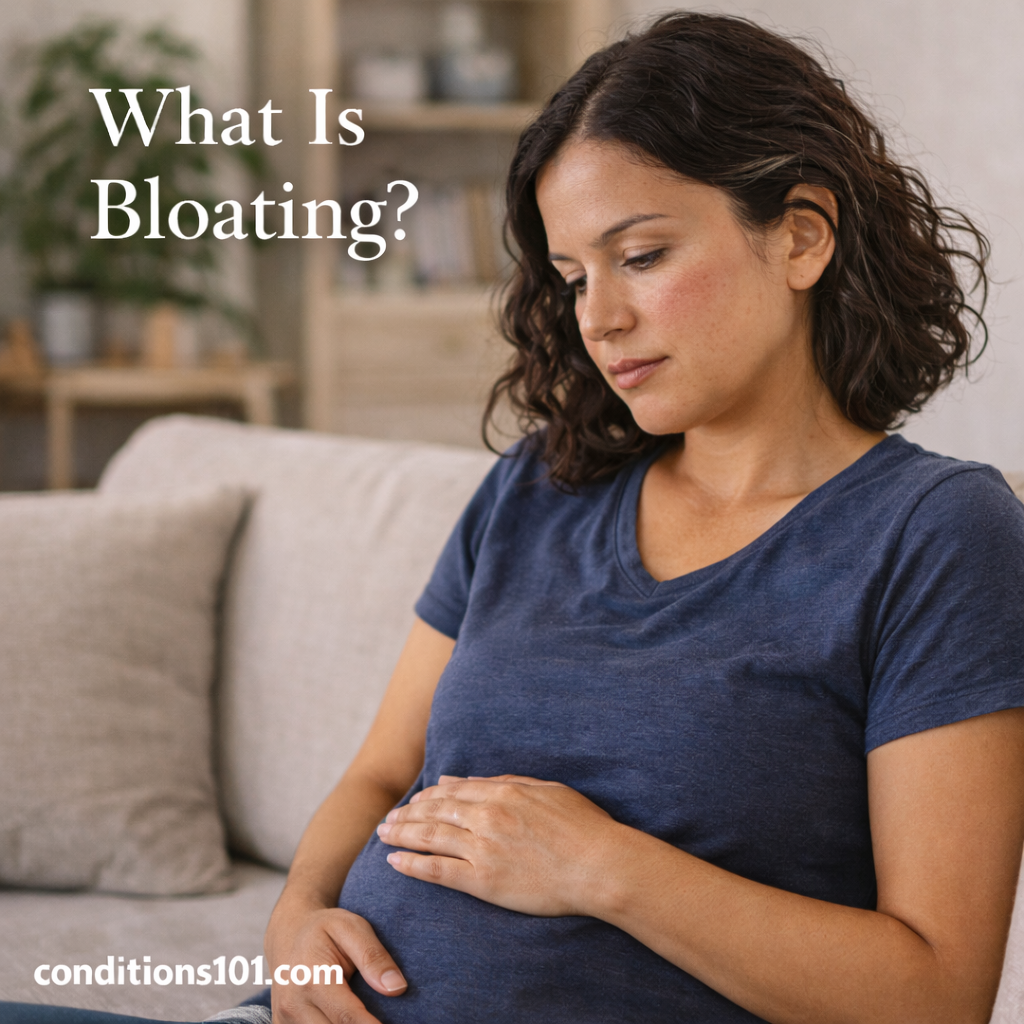
Bloating is a common digestive experience characterized by a feeling of fullness, tightness, or pressure in the abdomen. Many people describe bloating as a sensation that the stomach is swollen or stretched, even if there is no visible change in size. It can occur occasionally or more frequently, depending on individual digestive patterns and lifestyle factors.
This article provides a clear, educational explanation of bloating for general informational purposes. It does not offer medical advice, diagnosis, or treatment.
Understanding Bloating
Bloating is often related to how the digestive system processes food, fluids, and gas. It can occur when the gastrointestinal tract becomes temporarily distended or when digestion feels slower or less comfortable than usual.
Bloating is a symptom rather than a condition itself, meaning it describes how the body feels rather than a specific disease.
What Does Bloating Feel Like?
People experience bloating in different ways, but common sensations include:
- Abdominal fullness or pressure
- Tightness around the stomach or waist
- A sensation of trapped gas
- Mild discomfort after eating
- A feeling that the abdomen is larger than usual
Bloating may come and go throughout the day and is often more noticeable after meals.
Common Causes Associated With Bloating
Bloating can be influenced by many everyday factors related to digestion and lifestyle.
Digestive-related factors
- Swallowing air while eating or drinking
- Gas produced during digestion
- Slower movement of food through the digestive tract
- Sensitivity to certain foods
Dietary patterns
- Large meals
- High-fat foods
- Carbonated beverages
- Foods that ferment in the gut
- Rapid eating
Lifestyle and routine factors
- Physical inactivity
- Changes in daily routine
- Stress affecting digestion
- Irregular eating schedules
Not everyone reacts the same way to these factors.
Bloating vs. Abdominal Distension
Bloating and abdominal distension are sometimes used interchangeably, but they are not always the same.
- Bloating refers to the sensation of fullness or pressure
- Abdominal distension refers to a visible increase in abdominal size
A person may feel bloated without visible swelling, or notice swelling without significant discomfort.
Temporary vs. Ongoing Bloating
Bloating can occur occasionally or more regularly.
- Temporary bloating often follows meals, certain foods, or short-term digestive changes
- Ongoing bloating may occur more frequently and follow a recurring pattern
Recognizing patterns over time can help distinguish between occasional digestive discomfort and more persistent symptoms.
How Bloating Can Affect Daily Life
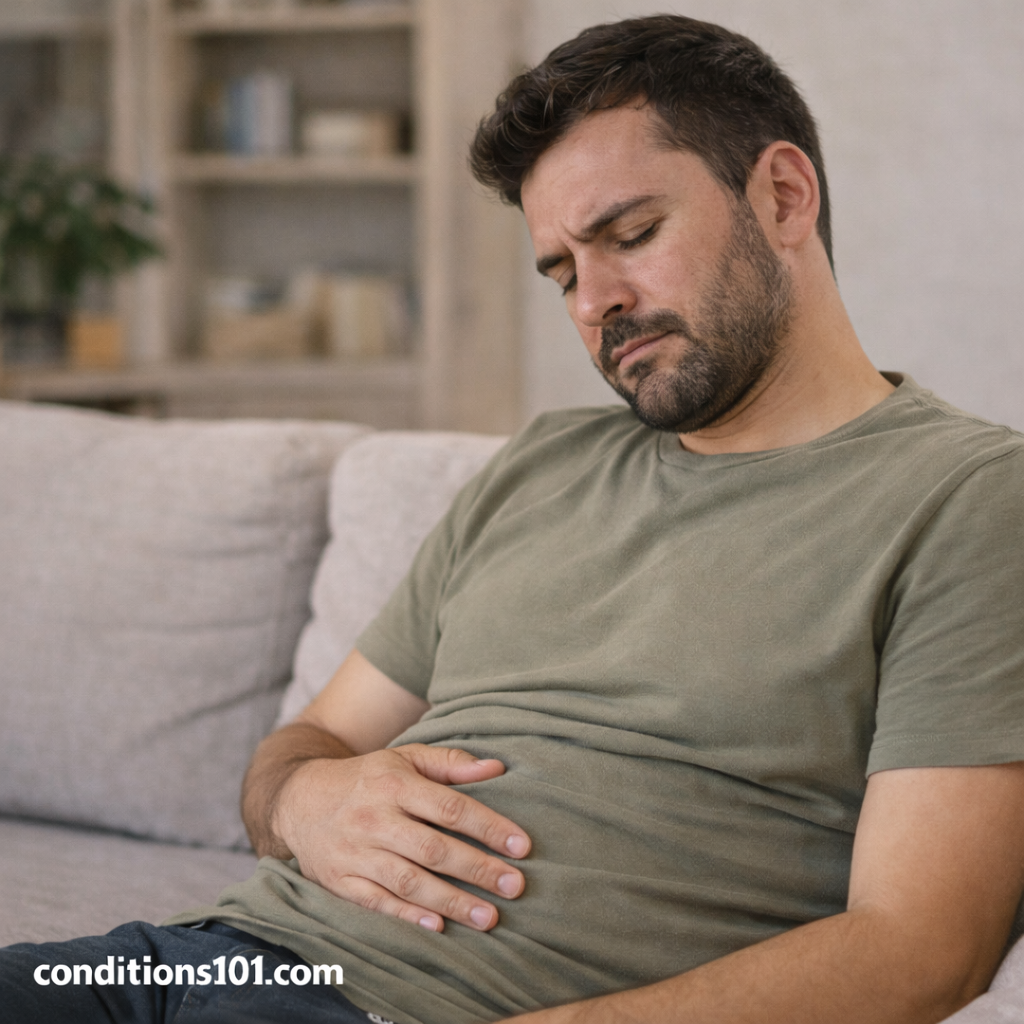
While bloating is often not serious, it can still impact daily comfort and routines.
Some people report:
- Feeling uncomfortable in certain clothing
- Reduced appetite
- Disrupted concentration
- Changes in meal timing or food choices
- Mild impact on physical activity
The degree to which bloating affects daily life varies widely.
Bloating and the Digestive Process
Digestion involves breaking down food, absorbing nutrients, and moving waste through the intestines. Gas is a normal byproduct of this process.
Bloating may occur when:
- Gas accumulates faster than it can move through the digestive system
- Digestion slows temporarily
- The gut becomes more sensitive to normal digestive activity
These changes are often influenced by diet, stress, and individual digestive differences.
Common Misconceptions About Bloating
There are several misunderstandings about bloating.
- “Bloating always means weight gain.”
Bloating is usually temporary and unrelated to body weight changes. - “Only certain people get bloated.”
Bloating is common and affects people of all ages. - “Bloating is always caused by one specific food.”
Multiple factors often contribute, not a single cause.
Understanding these misconceptions can improve digestive awareness.
Bloating as a Digestive Health Concept
Bloating is best understood as a common digestive experience rather than a standalone condition. It reflects how the digestive system responds to food, movement, stress, and daily habits.
Learning about bloating supports better awareness of digestive patterns and helps people recognize what is typical for their own bodies.
Key Takeaways
- Bloating is a feeling of fullness, tightness, or pressure in the abdomen
- It is a symptom, not a disease
- Bloating can be influenced by digestion, diet, and daily routines
- It may occur occasionally or more frequently
- Experiences of bloating vary from person to person