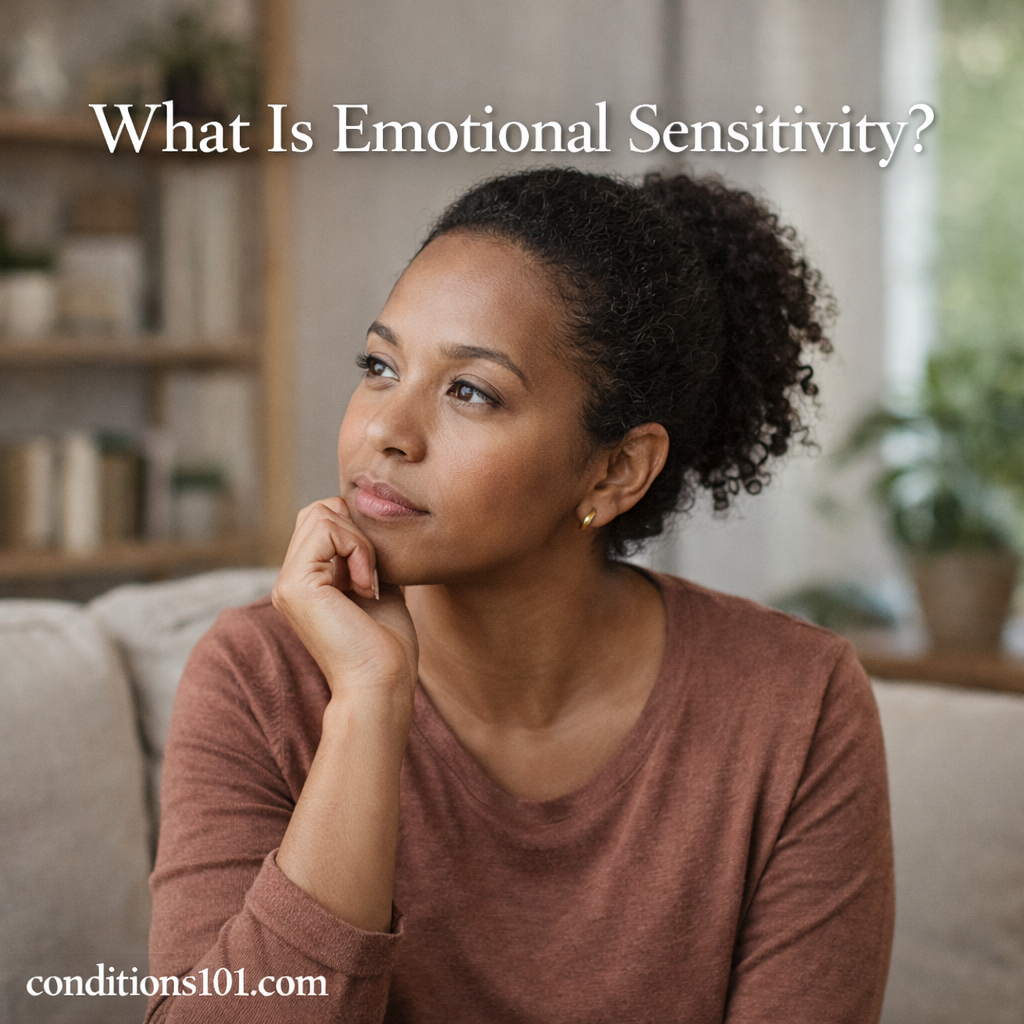
Emotional sensitivity refers to a person’s tendency to notice, feel, and respond to emotions more deeply or more quickly than others. It involves heightened awareness of one’s own emotions as well as sensitivity to the emotional cues of people and environments around them.
In educational and psychological contexts, emotional sensitivity is viewed as a personality and emotional processing trait, not automatically a problem or disorder. It exists on a spectrum and can vary widely from person to person.
Understanding Emotional Sensitivity
At its core, emotional sensitivity relates to how strongly someone experiences emotional input. This can include reactions to:
- Personal experiences
- Interactions with others
- Social situations
- Environmental stimuli
- Emotional content such as conversations, stories, or media
Emotionally sensitive individuals may register emotional changes more quickly or experience them more intensely, even when situations seem minor to others.
Emotional Sensitivity as a Spectrum

Emotional sensitivity is not an all-or-nothing trait. People can fall anywhere along a broad range.
Lower Emotional Sensitivity
- Emotions may feel muted or less intense
- Emotional shifts may take longer to register
- External emotional cues may be less noticeable
Higher Emotional Sensitivity
- Emotions may feel strong or immediate
- Emotional reactions may occur quickly
- Subtle emotional cues are often noticed
Most people experience emotional sensitivity in some situations but not others, depending on context, stress levels, and personal factors.
Common Characteristics Associated With Emotional Sensitivity
The following characteristics are commonly discussed in educational resources and do not apply to everyone:
- Strong emotional reactions to events or interactions
- Heightened empathy toward others
- Awareness of mood changes in people or environments
- Emotional responses that linger longer than expected
- Feeling emotionally impacted by words, tone, or expressions
These traits describe how emotions are processed, not how someone behaves or functions overall.
Emotional Sensitivity vs. Emotional Reactivity
Although they are sometimes confused, emotional sensitivity and emotional reactivity are not the same.
Emotional Sensitivity
- Refers to noticing and feeling emotions
- Involves awareness and perception
- Can exist without outward expression
Emotional Reactivity
- Refers to outward responses or behaviors
- Involves how emotions are expressed
- Can be influenced by coping skills and context
A person can be emotionally sensitive without being emotionally reactive.
Emotional Sensitivity in Mental and Cognitive Contexts
In mental and cognitive health education, emotional sensitivity is often discussed alongside topics such as:
- Emotional regulation
- Cognitive processing styles
- Stress response patterns
- Personality traits
- Interpersonal awareness
It may influence how individuals interpret situations, process feedback, or respond to social environments, but it does not define mental health status on its own.
Factors That May Influence Emotional Sensitivity
Educational research suggests that emotional sensitivity can be influenced by multiple factors, including:
- Temperament and personality
- Early life experiences
- Learning and conditioning
- Cultural and social norms
- Current stress levels
These factors interact in complex ways, which is why emotional sensitivity looks different across individuals.
Is Emotional Sensitivity Always Negative?
No. Emotional sensitivity is generally considered value-neutral. It can be experienced as challenging in some contexts and beneficial in others.
Potential strengths associated with emotional sensitivity include:
- Empathy and compassion
- Emotional insight
- Strong interpersonal awareness
- Creativity and emotional expression
At the same time, heightened sensitivity can feel overwhelming in emotionally intense or stressful situations.
Emotional Sensitivity vs. Emotional Disorders
It’s important to distinguish between emotional sensitivity and mental health conditions.
- Emotional sensitivity is a trait or tendency
- Mental health conditions involve defined patterns and criteria
- One does not automatically indicate the other
Educational discussions focus on describing traits, not diagnosing or labeling conditions.
How Emotional Sensitivity Is Commonly Described
You may encounter emotional sensitivity described using phrases such as:
- “Emotionally attuned”
- “Highly empathetic”
- “Emotionally aware”
- “Sensitive to emotional cues”
These terms are descriptive and meant to explain experience, not assign judgment.
Why Understanding Emotional Sensitivity Matters
Understanding emotional sensitivity can help people:
- Interpret emotional experiences more clearly
- Understand differences in emotional responses
- Navigate social and emotional information
- Engage with mental health education more confidently
Awareness encourages clarity rather than comparison.
Key Takeaways
- Emotional sensitivity involves heightened awareness or intensity of emotions
- It exists on a broad spectrum
- It is a trait, not a diagnosis
- It can be both challenging and beneficial depending on context
- It plays a role in emotional and cognitive processing
Final Thoughts
Emotional sensitivity is best understood as a natural variation in emotional experience and perception. It shapes how people process feelings, respond to others, and engage with their environments. In mental and cognitive health education, the focus is on understanding this trait—not labeling or treating it.
By viewing emotional sensitivity through a neutral, educational lens, it becomes easier to appreciate emotional diversity and individual differences.