Stress and anxiety are often discussed together, and their symptoms can look very similar. While the terms are sometimes used interchangeably in everyday conversation, stress symptoms and anxiety symptoms are described differently in health education based on duration, triggers, and overall patterns.
This article explains how stress symptoms and anxiety symptoms are commonly described, how they overlap, and what distinguishes them in general educational contexts. It is for informational purposes only and does not provide medical advice, diagnosis, or treatment.
Understanding Stress and Anxiety
Stress and anxiety both involve the body’s response to perceived challenges or demands, but they are framed differently in health discussions.
- Stress is typically linked to an identifiable external situation
- Anxiety is often described as a more persistent internal state
Both can affect physical sensations, thoughts, emotions, and behavior.
What Are Stress Symptoms?
Stress symptoms are commonly described as responses to specific pressures or situations.
Common Stress Symptoms
People may associate stress with symptoms such as:
- Muscle tension
- Headaches or tight shoulders
- Irritability or frustration
- Difficulty concentrating
- Feeling overwhelmed or mentally overloaded
- Changes in sleep during stressful periods
Stress symptoms often appear in response to a clear trigger, such as deadlines, conflicts, or major life changes.
What Are Anxiety Symptoms?
Anxiety symptoms are often described as more ongoing or anticipatory, even when there is no immediate external stressor.
Common Anxiety Symptoms
People may describe anxiety-related symptoms like:
- Persistent worry or nervousness
- Restlessness or feeling on edge
- Racing thoughts
- Heightened alertness
- Difficulty relaxing
- Ongoing sleep disruption
Anxiety symptoms may feel less tied to one situation and more present across different settings.
Key Differences Between Stress and Anxiety Symptoms
Although they overlap, stress and anxiety symptoms are often distinguished by a few key characteristics.
Triggers
- Stress symptoms usually have an identifiable cause
- Anxiety symptoms may occur without a clear or immediate trigger
Duration
- Stress symptoms often ease when the stressful situation resolves
- Anxiety symptoms may persist even after stressors pass
Focus
- Stress tends to focus on external demands
- Anxiety often centers on internal worry or anticipation
How Stress and Anxiety Symptoms Overlap
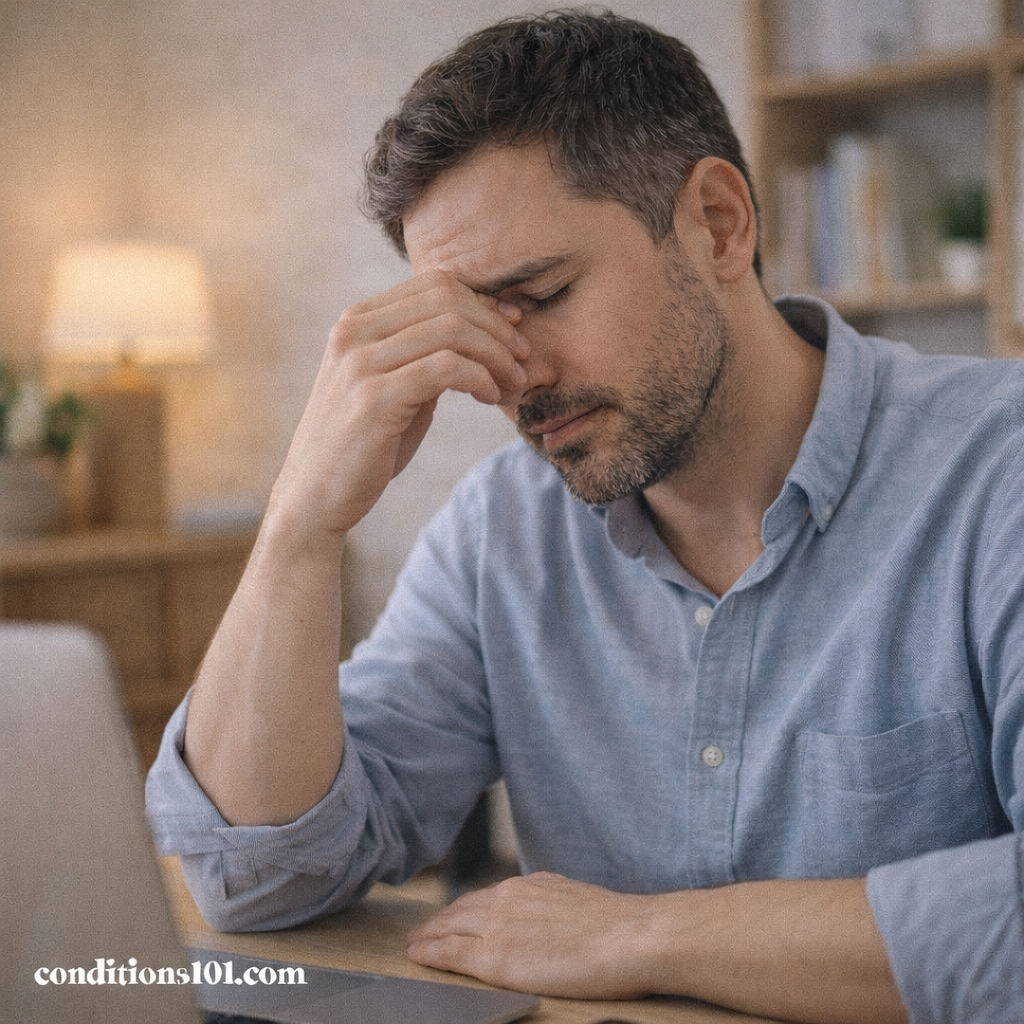
Many symptoms are shared between stress and anxiety, which can make them hard to tell apart.
Shared symptoms may include:
- Fatigue
- Trouble concentrating
- Muscle tension
- Sleep changes
- Irritability
Because of this overlap, people often use the terms interchangeably in casual conversation.
Physical vs. Mental Experiences
Both stress and anxiety can affect the body and mind.
Physical Experiences
These may include:
- Tight muscles
- Shallow breathing
- Restlessness
- Digestive discomfort
Mental and Emotional Experiences
These may include:
- Feeling overwhelmed
- Difficulty focusing
- Mental tension
- Heightened emotional responses
The difference often lies in pattern and persistence, not the type of symptom.
Situational vs. Ongoing Patterns
Stress symptoms are frequently described as situational.
Examples include:
- Stress during exams or work deadlines
- Temporary stress during major life events
Anxiety symptoms are often described as ongoing or recurring, even during routine or calm periods.
Stress, Anxiety, and Daily Life
In everyday life, stress and anxiety symptoms may influence:
- Productivity
- Sleep quality
- Social interactions
- Overall sense of well-being
Educational discussions focus on understanding these patterns rather than labeling experiences.
Why the Difference Matters in Education
Understanding the difference between stress and anxiety symptoms helps:
- Clarify conversations about mental well-being
- Reduce confusion around terminology
- Encourage accurate self-awareness
The distinction is descriptive, not diagnostic.
Are Stress and Anxiety the Same Thing?
No, but they are closely related.
- Stress and anxiety can occur together
- One can influence the other
- Both are part of normal human experience
They are described separately to better explain how and why symptoms appear, not to define a condition.
Key Takeaways
- Stress symptoms are usually linked to specific external pressures
- Anxiety symptoms are often more persistent or internally driven
- Many symptoms overlap between stress and anxiety
- Duration and triggers are key differences
- The distinction is educational, not diagnostic
Final Thoughts
Stress symptoms and anxiety symptoms share many similarities, which is why they are often confused. In general health education, the main difference lies in what triggers the symptoms and how long they last. Understanding these distinctions can make discussions about mental and emotional experiences clearer and more approachable.
This article is intended for general educational purposes only and does not provide medical advice, diagnosis, or treatment.