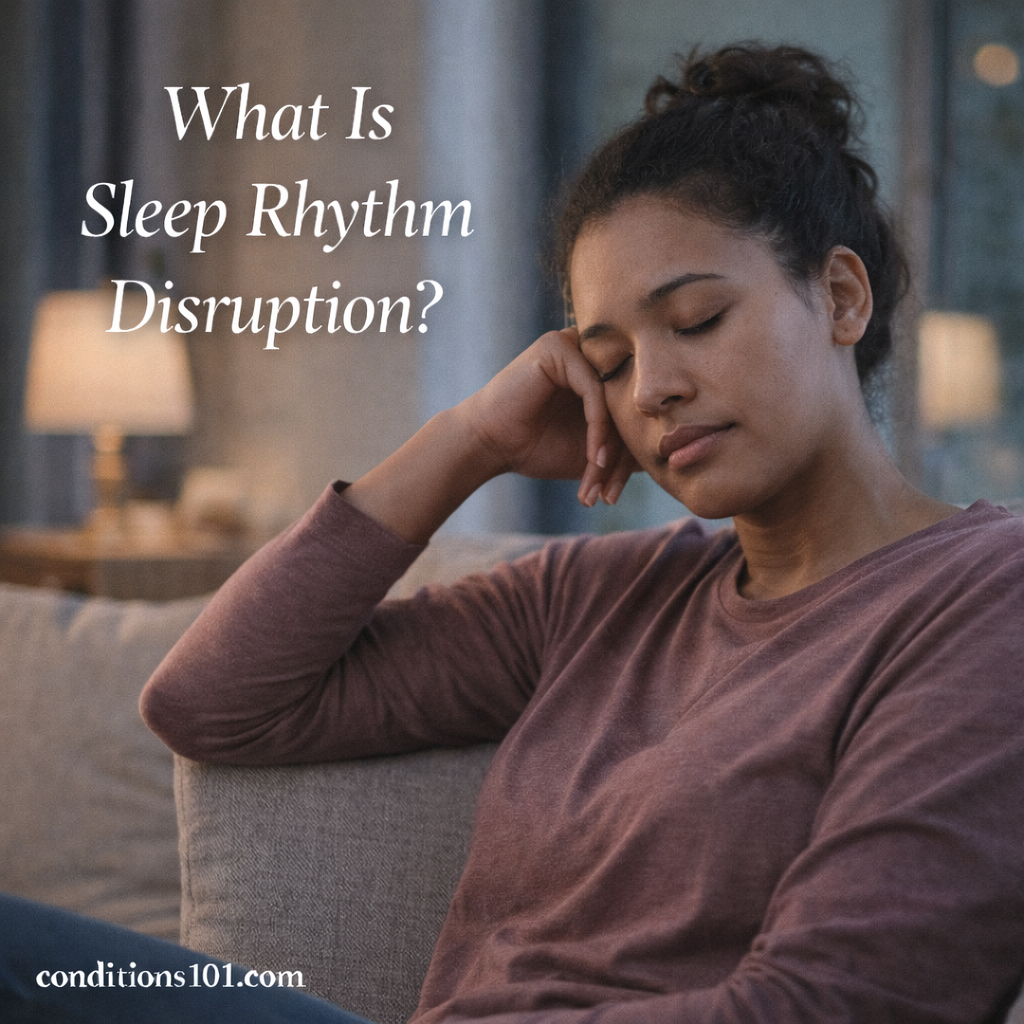
Sleep rhythm disruption refers to a disturbance in the body’s natural sleep–wake cycle, also known as the circadian rhythm. This cycle helps regulate when a person feels alert and when they feel sleepy over a 24-hour period. When the rhythm is disrupted, sleep timing, duration, or quality may become inconsistent or misaligned with daily routines.
Sleep rhythm disruption is not a diagnosis. It is a descriptive term used to explain patterns of irregular or shifted sleep that differ from what feels typical for an individual.
Understanding Sleep Rhythms
The sleep rhythm is part of the body’s internal timing system. It is influenced by environmental cues, daily habits, and biological processes.
Key factors that help regulate sleep rhythms include:
- Exposure to light and darkness
- Consistent sleep and wake times
- Daily routines and activity patterns
- Social and environmental schedules
When these cues are consistent, the body often follows a predictable sleep pattern. When they change or conflict, the rhythm may become disrupted.
What Happens During Sleep Rhythm Disruption
Sleep rhythm disruption occurs when the timing of sleep no longer aligns smoothly with the body’s internal clock or daily demands. This may involve difficulty falling asleep, waking earlier or later than intended, or feeling out of sync with typical day–night patterns.
Common experiences may include:
- Feeling sleepy at unusual times
- Trouble maintaining a regular sleep schedule
- Sleeping at different hours from day to day
- Feeling alert late at night but tired during the day
These patterns may be temporary or recur over time.
Common Situations Linked to Sleep Rhythm Disruption
Sleep rhythm disruption can happen in many everyday situations and does not always indicate an underlying condition.
Schedule Changes
Alterations in daily schedules can affect sleep timing, such as:
- Shift work or rotating work hours
- Travel across time zones
- Irregular work or school schedules
- Social or family obligations that alter sleep times
Light Exposure Patterns
Light plays a key role in regulating sleep rhythms. Changes in light exposure may influence sleep timing, including:
- Extended screen use at night
- Limited daylight exposure during the day
- Seasonal changes in daylight hours
Lifestyle and Routine Factors
Daily habits may also influence sleep rhythm consistency, such as:
- Inconsistent bedtimes
- Irregular meal timing
- Variable activity levels
- Changes in stress or routine
Sleep Rhythm Disruption vs. Poor Sleep Quality
Sleep rhythm disruption and poor sleep quality are related but distinct concepts.
- Sleep rhythm disruption focuses on timing and alignment of sleep
- Poor sleep quality focuses on how restful or restorative sleep feels
A person may sleep for several hours but still feel misaligned with their natural rhythm, or they may have a consistent schedule but experience unrefreshing sleep.
Short-Term vs. Ongoing Disruption
Sleep rhythm disruption can be short-term or more persistent, depending on circumstances.
Short-term disruption may occur after:
- Travel
- Temporary schedule changes
- Occasional late nights
Ongoing disruption may be discussed when irregular patterns continue over time and affect daily routines or energy levels.
The distinction is often based on duration and consistency rather than severity.
Common Misconceptions About Sleep Rhythm Disruption
“Everyone should have the same sleep schedule”
Sleep timing varies between individuals. What matters most is consistency relative to one’s own rhythm, not matching a universal schedule.
“Disrupted sleep rhythm always means insomnia”
Sleep rhythm disruption refers to timing misalignment, not necessarily difficulty sleeping. Some people sleep well but at unconventional hours.
“It only happens to people with night jobs”
While shift work is a common factor, sleep rhythm disruption can affect anyone whose routine or environment changes.
Sleep Rhythm Disruption in Daily Life

Sleep rhythm disruption often becomes noticeable when it interferes with daily activities, such as work, school, or social commitments. People may feel out of sync with their environment even if they are getting some sleep.
Everyday effects may include:
- Difficulty feeling alert at expected times
- Changes in energy throughout the day
- Challenges maintaining routines
- Increased awareness of sleep timing
These experiences highlight how closely sleep rhythms are tied to daily structure.
Why the Term “Sleep Rhythm Disruption” Is Used
The term “sleep rhythm disruption” provides a neutral way to describe irregular sleep timing without assigning a diagnosis. It helps explain patterns of misalignment rather than labeling a specific sleep disorder.
It is often used in educational and general health contexts to discuss sleep timing and routine consistency.
Sleep Rhythm Disruption as a Pattern
Sleep rhythm disruption is best understood as a pattern rather than a fixed state. Sleep timing can shift in response to life changes, environmental factors, or routine adjustments.
These patterns may improve, change, or resolve as schedules and cues stabilize.
Key Takeaways About Sleep Rhythm Disruption
- Sleep rhythm disruption refers to irregular or misaligned sleep–wake timing
- It involves changes in when sleep occurs, not just how long or how well
- Light exposure, schedules, and routines all influence sleep rhythms
- Disruption may be temporary or ongoing
- It is a descriptive term, not a diagnosis
Understanding sleep rhythm disruption supports awareness of how daily habits and environments interact with natural sleep patterns.