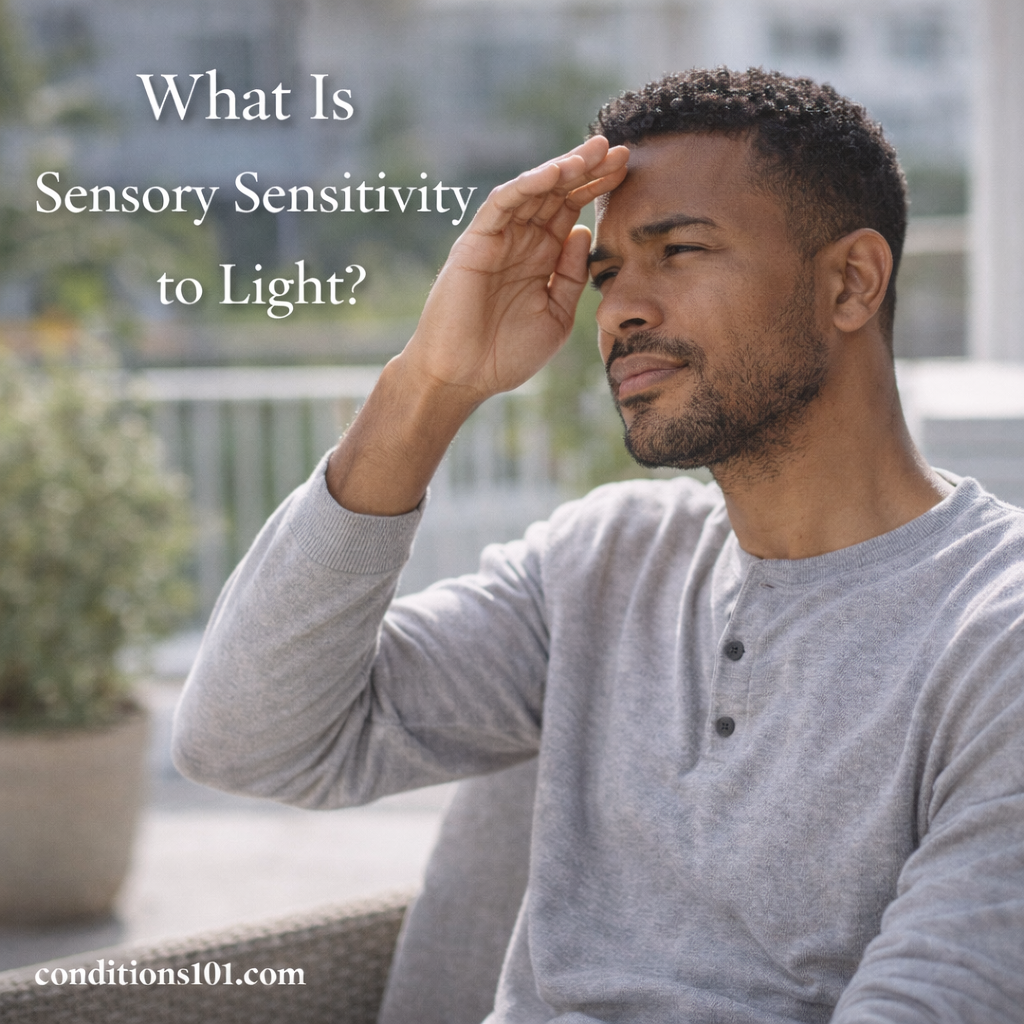
Sensory sensitivity to light refers to an increased responsiveness or discomfort when exposed to certain levels or types of light. It is a general, non-clinical term used in educational contexts to describe how some people perceive light more intensely than others.
This sensitivity can affect how comfortable a person feels in everyday environments, especially those with bright, flickering, or harsh lighting.
How Light Sensitivity Is Experienced
People experience sensory sensitivity to light in different ways. The response is related to how the brain processes visual input rather than to the light itself being harmful.
Common descriptions include:
- Feeling overwhelmed by bright or artificial lighting
- Discomfort in environments with glare or reflections
- Preference for dimmer or natural light
- Difficulty adjusting between dark and bright spaces
The experience can vary depending on the environment and individual perception.
Types of Light That May Feel More Intense
Certain lighting conditions are more commonly associated with sensory sensitivity.
Bright or Direct Light
- Sunlight on reflective surfaces
- Overhead lights in indoor spaces
Artificial Lighting
- Fluorescent or LED lights
- Flickering or uneven lighting
Visual Overload
- Screens with high brightness
- Multiple light sources in busy environments
These situations may feel more noticeable or uncomfortable for people with higher light sensitivity.
Sensory Processing and Light Sensitivity
Sensory sensitivity to light is often discussed as part of sensory processing, which refers to how the nervous system receives and interprets sensory information from the environment.
In this context:
- Light is one of many sensory inputs
- Sensitivity reflects how strongly the brain reacts to that input
- Responses can differ widely between individuals
Some people may be more sensitive to sound, texture, or movement as well as light.
Everyday Situations Where Light Sensitivity May Be Noticed
Light sensitivity is often discussed in relation to common daily settings, such as:
- Offices with bright overhead lighting
- Stores or public spaces with intense illumination
- Outdoor environments on sunny days
- Screen use in low-light rooms
These situations can make sensory sensitivity more noticeable, even during routine activities.
Temporary vs Ongoing Light Sensitivity
Sensory sensitivity to light can be situational or more consistent over time.
Educational discussions often distinguish between:
- Temporary sensitivity linked to fatigue or environmental changes
- Ongoing sensitivity that is part of an individual’s sensory profile
This distinction helps explain why light sensitivity may fluctuate.
Why Sensory Sensitivity to Light Is Discussed in Health Education
Light sensitivity is commonly mentioned in health and sensory education because it affects daily comfort and environmental interaction. Understanding the concept helps explain why people may prefer certain lighting conditions or need adjustments in their surroundings.
The term is descriptive and focuses on perception, not diagnosis.
Sensory Sensitivity to Light in Daily Life
People with light sensitivity often develop personal preferences or habits, such as choosing softer lighting, wearing hats or sunglasses outdoors, or adjusting screen brightness. These behaviors reflect comfort needs rather than a problem that must be fixed.
Educational discussions emphasize awareness and understanding of sensory differences.
Key Takeaways
- Sensory sensitivity to light involves heightened responsiveness to light
- Experiences vary widely between individuals
- Bright, artificial, or flickering light may feel more intense
- Sensory processing influences how light is perceived
- The concept is descriptive, not diagnostic